Mirror emotion practice
0–6 个月Emotional Wellbeing所需材料:Mirror
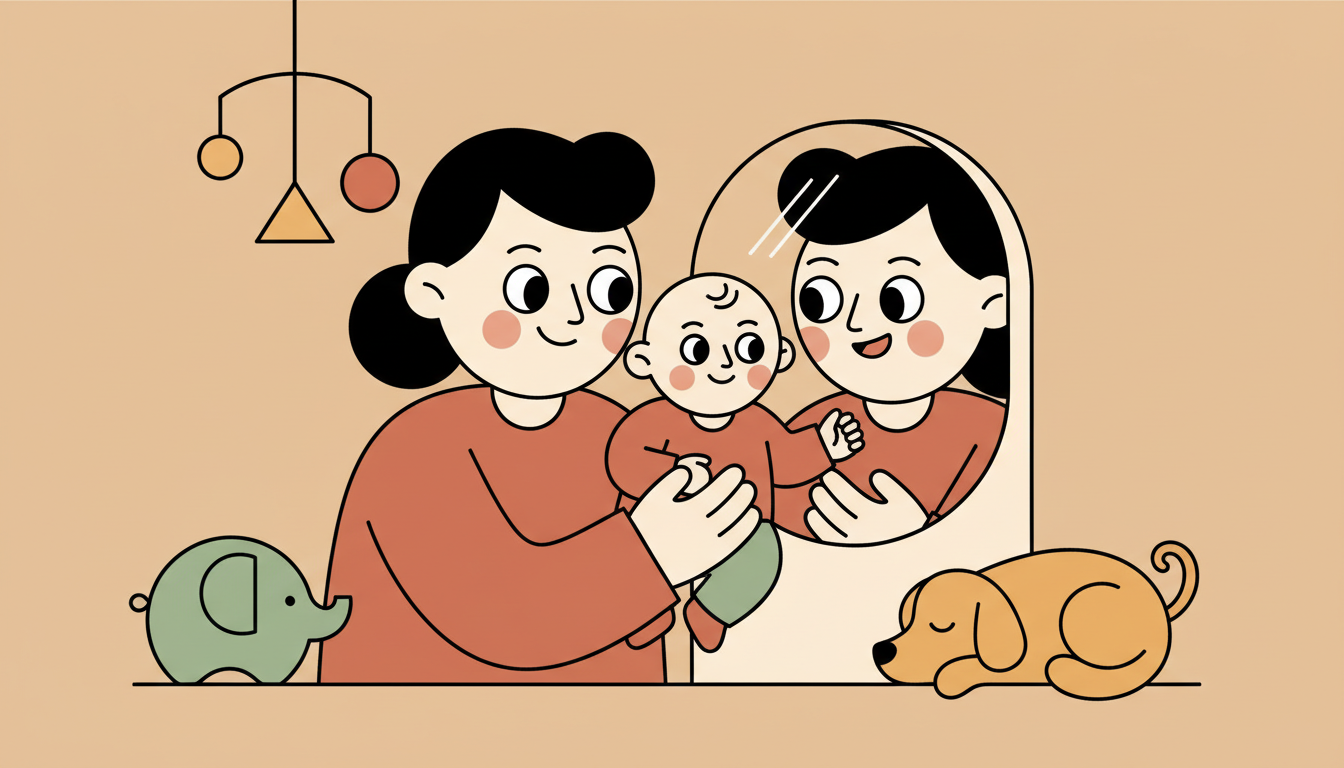
Hold your child in front of a mirror during a calm moment. Make gentle facial expressions and wait for them to respond. Try a smile, then a surprised face, then back to calm. This helps them see emotions change and return to baseline. Name the emotions simply like happy or surprised. This early emotion recognition supports their developing ability to understand and regulate feelings.
Steadily发育旅程的一部分——为你孩子量身定制。
如何进行这项活动
Hold your child in front of a mirror during a calm moment. Make gentle facial expressions and wait for them to respond. Try a smile, then a surprised face, then back to calm. This helps them see emotions change and return to baseline. Name the emotions simply like happy or surprised. This early emotion recognition supports their developing ability to understand and regulate feelings.
为什么有效
Recognizing and experiencing different emotions in a safe context builds emotional regulation skills. When children see emotions change and resolve, they begin to understand that feelings are temporary and manageable. This supports the development of resilience through emotional awareness and regulation. Research demonstrates that children with higher emotional resilience show significantly better outcomes, with early emotional regulation predicting later adaptive functioning (Liew et al., 2008). The responsive interaction and emotion modeling during this activity create neural pathways for understanding and managing emotional states.
家长小贴士
Keep expressions gentle and changes slow. Big dramatic faces may startle young infants.
Watch their reaction. If they seem uncertain, return to smiling right away.
Do this when they are content, not when they are upset or tired.
所需材料
Mirror
学习方法
Responsive InteractionMovement-Based Learning

喜欢这个活动吗?让我们为你做好规划。
Steadily 为你的孩子个性化定制每一项活动——结合他们的兴趣、成长阶段以及正在塑造的特质——让游戏时间更有趣,让每一刻都富有价值。
了解 Steadily 的运作方式 →