The frustration practice
4–5 岁Success Mindset所需材料:Materials for chosen challenge such as shoes with laces, small pitcher and cups, or paper and child-safe scissors
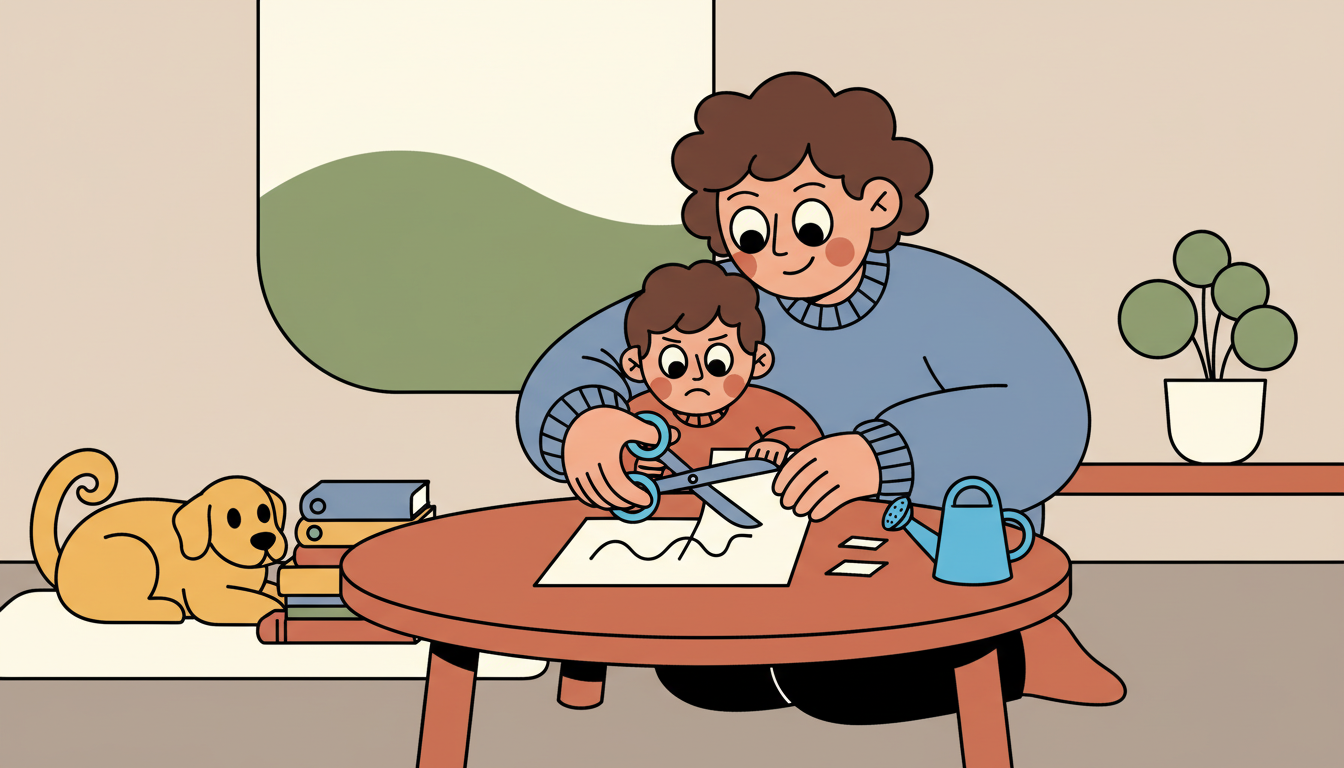
Introduce an activity that is just beyond your child's current ability. It might be tying shoes, pouring water without spilling, or cutting along a curved line. Expect mistakes and plan for them. When frustration appears, name it together. Say 'This is the learning feeling. Your brain is working hard.' Practice for just a few minutes, then stop before meltdown occurs. Return to it the next day. Over time, your child learns that frustration is temporary and practice makes difficult things easier.
Steadily发育旅程的一部分——为你孩子量身定制。
如何进行这项活动
Introduce an activity that is just beyond your child's current ability. It might be tying shoes, pouring water without spilling, or cutting along a curved line. Expect mistakes and plan for them. When frustration appears, name it together. Say 'This is the learning feeling. Your brain is working hard.' Practice for just a few minutes, then stop before meltdown occurs. Return to it the next day. Over time, your child learns that frustration is temporary and practice makes difficult things easier.
为什么有效
Learning to work through frustration and boredom is essential for developing grit. Research shows that gritty students are 30-40% more likely to complete challenging tasks, with effects beginning in early childhood through persistence on challenging tasks (Duckworth et al., 2007). By deliberately practicing with difficult tasks in a supported environment, children learn that frustration is a normal part of learning rather than a signal to quit. This aligns with evidence showing that perseverance of effort has stronger correlations with academic achievement than natural ability. Teaching children to recognize and work through frustration builds the perseverance component of grit.
家长小贴士
Keep sessions very short at first. Two to three minutes of productive struggle is better than 15 minutes of tears.
Celebrate small wins within the larger challenge. Notice when they got closer, even if not perfect.
Share stories of things that were once hard for you but became easy with practice.
所需材料
Materials for chosen challenge such as shoes with laces, small pitcher and cups, or paper and child-safe scissors
学习方法
Project-Based and Thematic LearningGuided Discovery and InquiryMetacognitive Strategies

喜欢这个活动吗?让我们为你做好规划。
Steadily 为你的孩子个性化定制每一项活动——结合他们的兴趣、成长阶段以及正在塑造的特质——让游戏时间更有趣,让每一刻都富有价值。
了解 Steadily 的运作方式 →