The feelings faces practice
3–4 岁Family Connection所需材料:Paper and crayons or markers
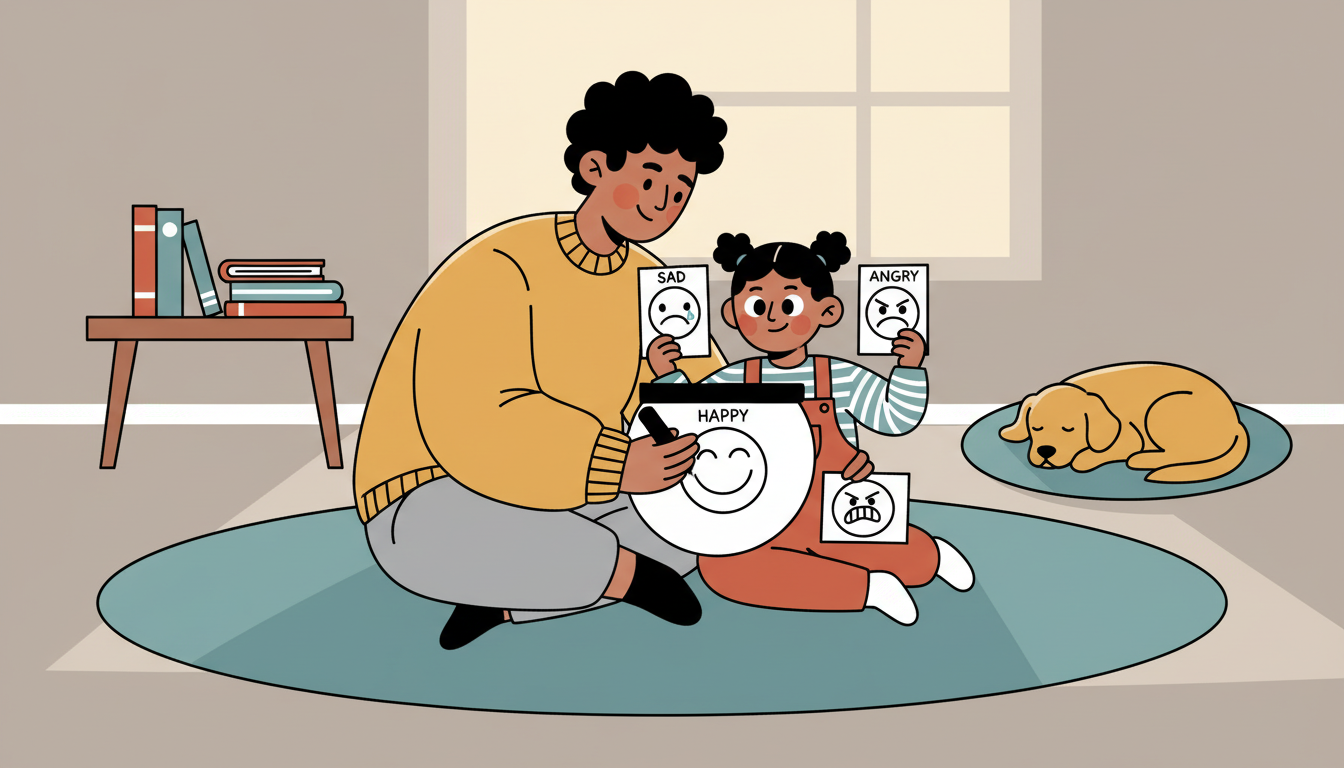
Make simple drawings of faces showing different emotions: happy, sad, angry, frustrated. When conflicts happen, ask your child to point to how they feel. Then you point to how you feel. This helps them understand that both people have feelings in a disagreement. Talk about how to make the sad or angry faces turn into happy faces together.
Steadily发育旅程的一部分——为你孩子量身定制。
如何进行这项活动
Make simple drawings of faces showing different emotions: happy, sad, angry, frustrated. When conflicts happen, ask your child to point to how they feel. Then you point to how you feel. This helps them understand that both people have feelings in a disagreement. Talk about how to make the sad or angry faces turn into happy faces together.
为什么有效
Understanding emotions is essential for effective conflict resolution. Children who learn to identify and express feelings show 30% better emotional regulation (Shantz, 1987). At this age, children are developing theory of mind and can begin to understand that others have different feelings. The visual faces make abstract emotions concrete and easier to discuss.
家长小贴士
Keep the face drawings simple. Even basic circles with different mouths work well.
Use the faces during small, everyday conflicts to build the habit.
Validate whatever feeling your child identifies. All feelings are okay, even if the behavior needs to change.
所需材料
Paper and crayons or markers
学习方法
Collaborative and Cooperative PlayNarrative and Literacy-Rich ExperiencesStructured Learning Activities

喜欢这个活动吗?让我们为你做好规划。
Steadily 为你的孩子个性化定制每一项活动——结合他们的兴趣、成长阶段以及正在塑造的特质——让游戏时间更有趣,让每一刻都富有价值。
了解 Steadily 的运作方式 →