Puzzle persistence practice
3–4 岁Success Mindset所需材料:Simple puzzle with six to 10 pieces
Start a simple puzzle together with six to 10 pieces. Before completing it, suggest taking a break to do something else, like have a drink of water. Tell your child you'll finish the puzzle after the break. This teaches that stopping an enjoyable activity and returning to it later is possible, building task persistence and delayed completion satisfaction.
Steadily发育旅程的一部分——为你孩子量身定制。
如何进行这项活动
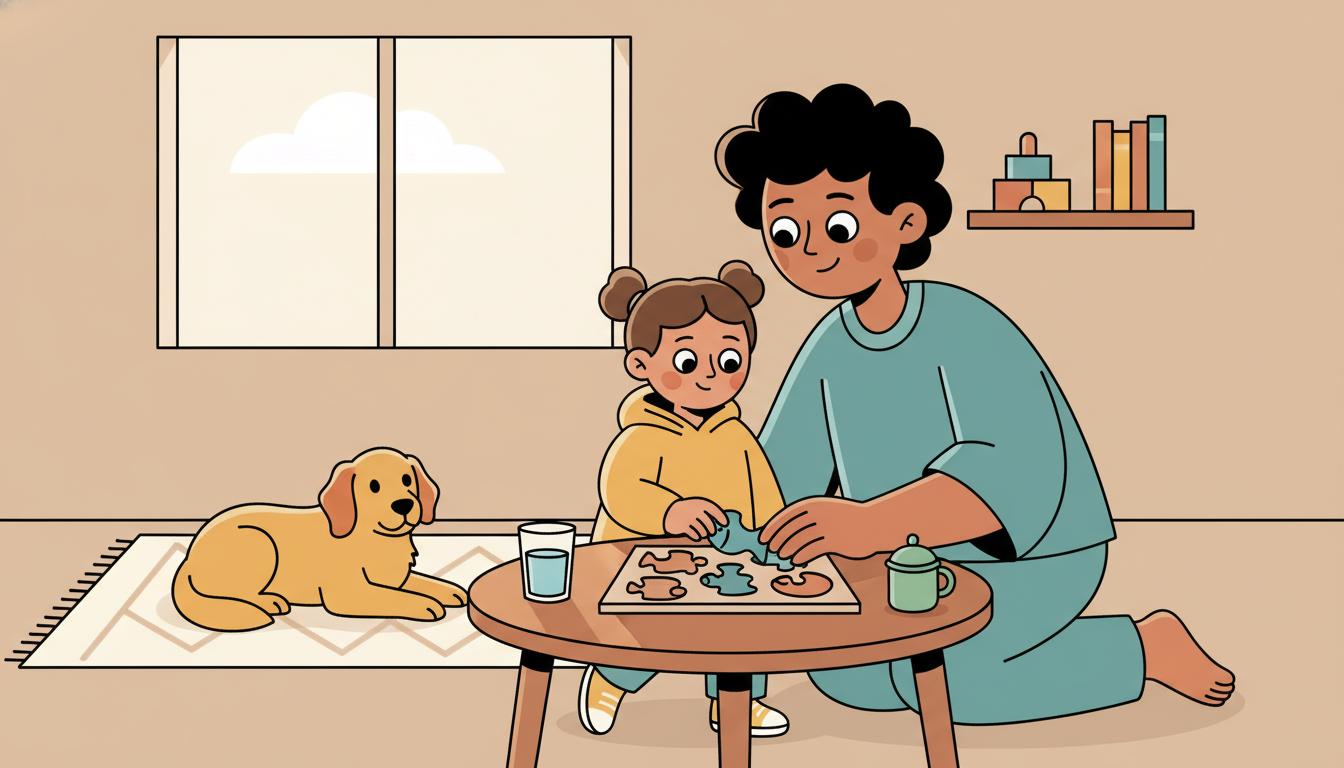
Start a simple puzzle together with six to 10 pieces. Before completing it, suggest taking a break to do something else, like have a drink of water. Tell your child you'll finish the puzzle after the break. This teaches that stopping an enjoyable activity and returning to it later is possible, building task persistence and delayed completion satisfaction.
为什么有效
Task persistence in early childhood contributes to academic success and later educational attainment (Duckworth & Carlson, 2013). This activity teaches your child that they can pause a task and return to it, building both self-control and sustained attention. At 36-48 months, children are developing the ability to plan and follow through on activities, and this practice strengthens those emerging skills.
家长小贴士
Choose a puzzle at your child's skill level so the activity stays positive.
Keep the break short, just one to two minutes, so your child can successfully return to the task.
When you resume, acknowledge that waiting was hard but celebrate finishing together.
所需材料
Simple puzzle with six to 10 pieces
学习方法
Structured Learning ActivitiesCollaborative and Cooperative PlayInquiry-Based Learning

喜欢这个活动吗?让我们为你做好规划。
Steadily 为你的孩子个性化定制每一项活动——结合他们的兴趣、成长阶段以及正在塑造的特质——让游戏时间更有趣,让每一刻都富有价值。
了解 Steadily 的运作方式 →