Pretend play perspectives
3–4 岁Family Connection所需材料:Toys for pretend play
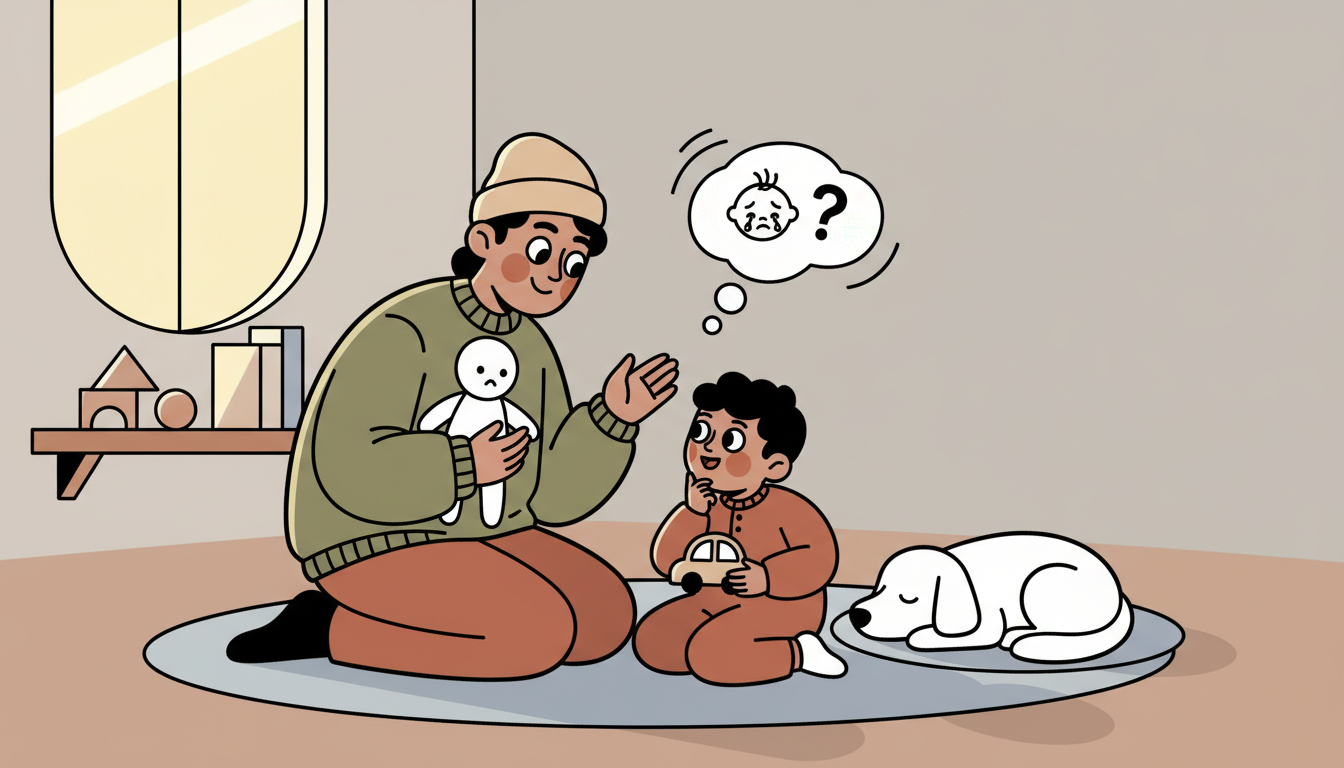
During pretend play time, take on different roles and talk about how each character feels. If you're playing house, you might say, 'I'm the baby and I'm hungry. How does the baby feel?' Then switch roles and ask your child, 'Now you're the parent. How do you think the parent feels when the baby cries?' This role-switching helps your child practice seeing situations from different viewpoints. Keep the scenarios simple and based on familiar experiences.
Steadily发育旅程的一部分——为你孩子量身定制。
如何进行这项活动
During pretend play time, take on different roles and talk about how each character feels. If you're playing house, you might say, 'I'm the baby and I'm hungry. How does the baby feel?' Then switch roles and ask your child, 'Now you're the parent. How do you think the parent feels when the baby cries?' This role-switching helps your child practice seeing situations from different viewpoints. Keep the scenarios simple and based on familiar experiences.
为什么有效
Cognitive empathy mediates the association between positive family climate and children's social competence (Sánchez-Pérez et al., 2018). Pretend play provides a natural context for perspective-taking practice. At 36-48 months, children develop the cognitive ability to understand that others have different thoughts and feelings. By explicitly discussing characters' emotions during play, you help your child practice the mental flexibility needed for empathy in real social situations.
家长小贴士
Let your child choose the pretend play scenario to increase engagement.
Switch roles frequently so your child experiences multiple perspectives.
Ask questions like 'How does your character feel about what just happened?' throughout the play.
所需材料
Toys for pretend play
学习方法
Narrative and Literacy-Rich ExperiencesCollaborative and Cooperative PlayInquiry-Based Learning

喜欢这个活动吗?让我们为你做好规划。
Steadily 为你的孩子个性化定制每一项活动——结合他们的兴趣、成长阶段以及正在塑造的特质——让游戏时间更有趣,让每一刻都富有价值。
了解 Steadily 的运作方式 →