Happy ending stories
2–3 岁Emotional Wellbeing所需材料:Picture books or none for made-up stories
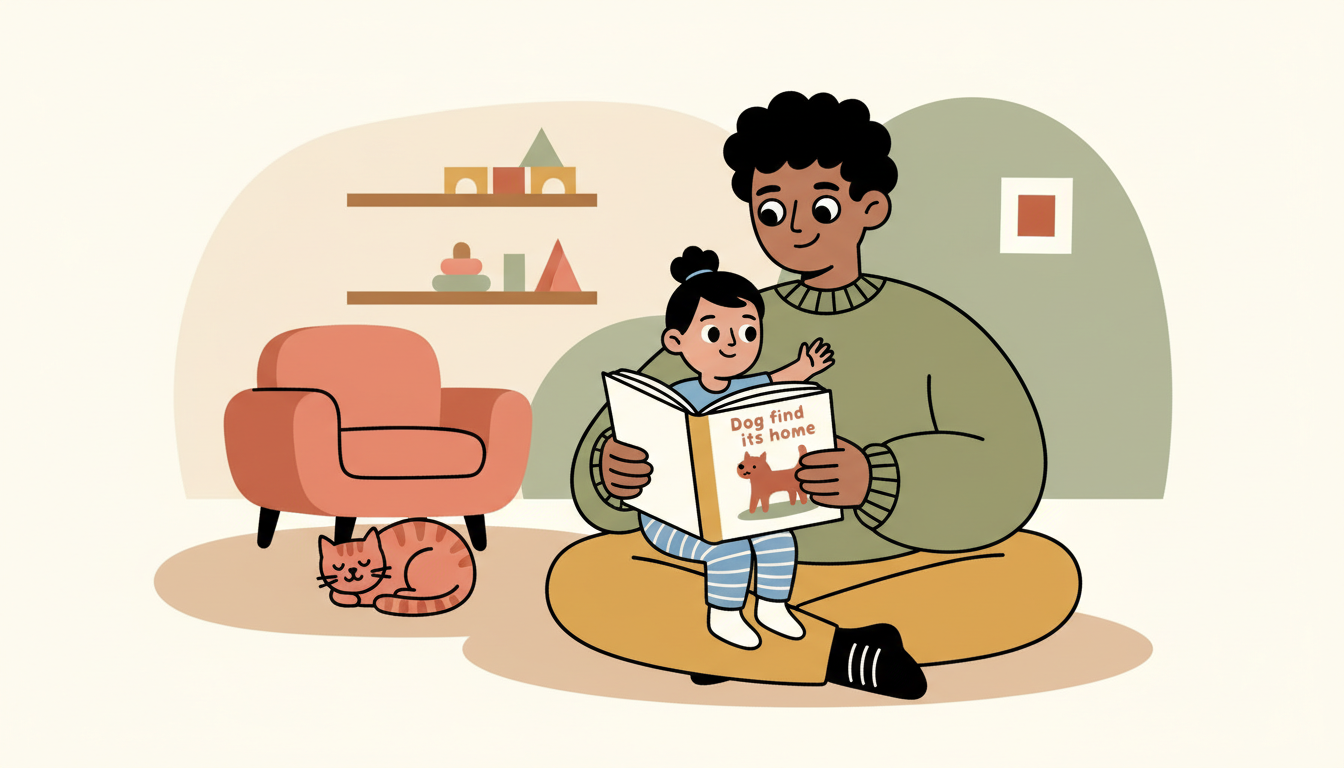
Read or tell simple stories where characters face small challenges but things work out well. For example, "The puppy was lost, but then he found his way home." Keep stories short and clear. Point out how things got better at the end. This teaches your child that problems can have positive solutions.
Steadily发育旅程的一部分——为你孩子量身定制。
如何进行这项活动
Read or tell simple stories where characters face small challenges but things work out well. For example, "The puppy was lost, but then he found his way home." Keep stories short and clear. Point out how things got better at the end. This teaches your child that problems can have positive solutions.
为什么有效
Stories with positive resolutions help children develop optimistic expectations about outcomes. Research demonstrates that learned optimism can be taught and significantly improves confidence and perseverance (Seligman, M. E. P., Ernst, R. M., Gillham, J., Reivich, K., & Linkins, M. (2009). Positive education: Positive psychology and classroom interventions. Oxford Review of Education, 35(3), 293-311.). At this age, narrative learning is powerful because children are beginning to understand simple cause and effect, and positive story patterns shape their expectations about how situations resolve.
家长小贴士
Use picture books you already have, or make up simple stories about everyday situations.
Emphasize the positive resolution. You might say, "See, it was okay in the end."
Connect stories to your child's experiences when possible. This helps them see how positive outcomes happen in real life too.
所需材料
Picture books or none for made-up stories
学习方法
Songs, Stories, and RhymesSymbolic and Pretend PlaySocial Learning Through Peers

喜欢这个活动吗?让我们为你做好规划。
Steadily 为你的孩子个性化定制每一项活动——结合他们的兴趣、成长阶段以及正在塑造的特质——让游戏时间更有趣,让每一刻都富有价值。
了解 Steadily 的运作方式 →