Feelings in disagreements
4–5 岁Family Connection无需任何材料
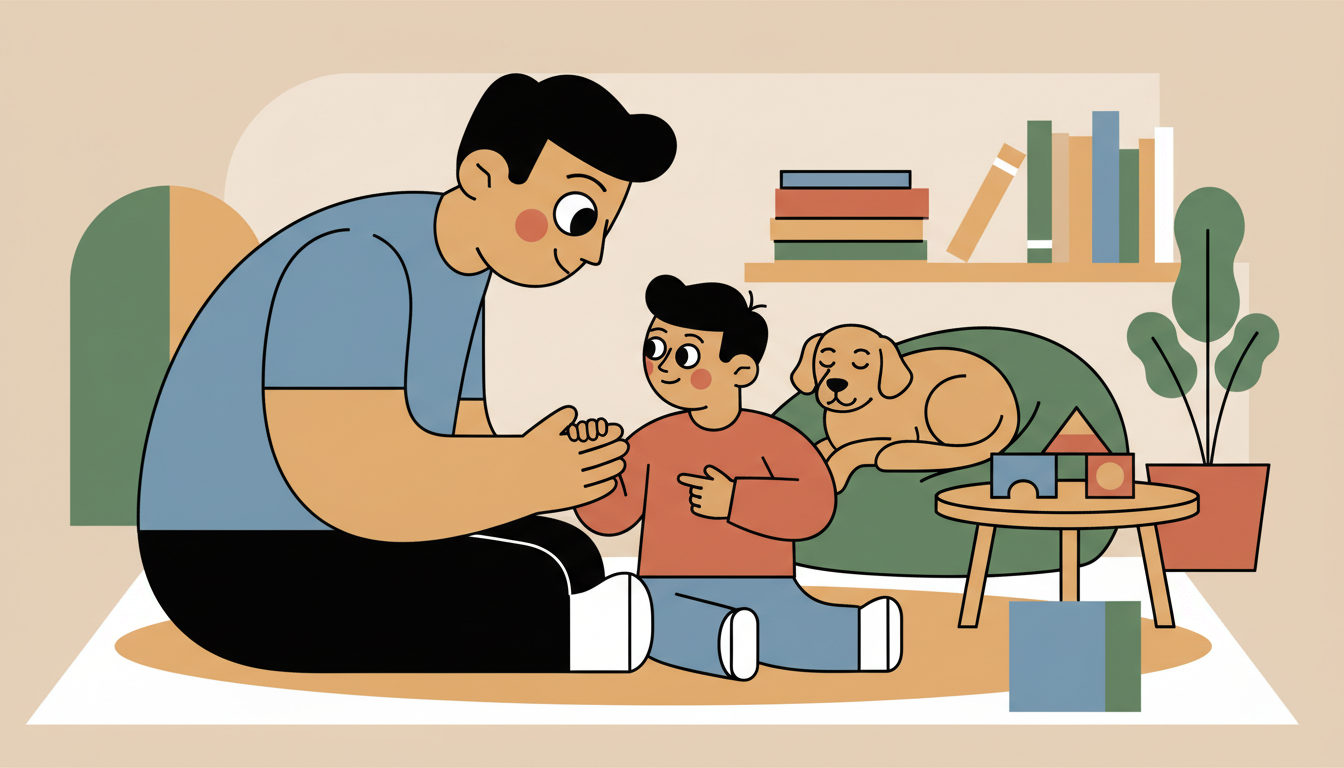
When a conflict happens, help your child name their feelings and needs before solving the problem. Ask simple questions like what happened, how they feel, and what they need. Then help them understand the other person's feelings too. This builds the foundation for solving conflicts in ways that respect everyone's emotions. Keep it brief and match your child's emotional state.
Steadily发育旅程的一部分——为你孩子量身定制。
如何进行这项活动
When a conflict happens, help your child name their feelings and needs before solving the problem. Ask simple questions like what happened, how they feel, and what they need. Then help them understand the other person's feelings too. This builds the foundation for solving conflicts in ways that respect everyone's emotions. Keep it brief and match your child's emotional state.
为什么有效
Adults who effectively manage disagreements with parents report higher relationship satisfaction and 45% lower stress levels, with strong conflict resolution skills significantly predicting positive parent-child relationships into adulthood (Laursen & Collins, 2009). Teaching children to identify emotions and needs during conflicts builds emotional awareness that supports long-term relationship skills. At this age, children are developing metacognitive abilities and can begin reflecting on their own emotional experiences.
家长小贴士
Start with your child's feelings first, then gradually introduce the other perspective.
Use simple feeling words like mad, sad, frustrated, or disappointed.
Validate feelings even when you cannot give them what they want.
所需材料
None
学习方法
Cooperative LearningMetacognitive StrategiesStructured Academic Learning

喜欢这个活动吗?让我们为你做好规划。
Steadily 为你的孩子个性化定制每一项活动——结合他们的兴趣、成长阶段以及正在塑造的特质——让游戏时间更有趣,让每一刻都富有价值。
了解 Steadily 的运作方式 →