Feelings and thinking connection
4–5 岁Emotional Wellbeing无需任何材料
When your child experiences different emotions, talk together about how their thoughts affect their feelings. Use concrete examples from their day. Ask, 'What were you thinking when you felt happy?' or 'What thought made you feel worried?' Help them notice that changing their thoughts can change how they feel. Keep these conversations brief and tied to real situations rather than abstract.
Steadily发育旅程的一部分——为你孩子量身定制。
如何进行这项活动
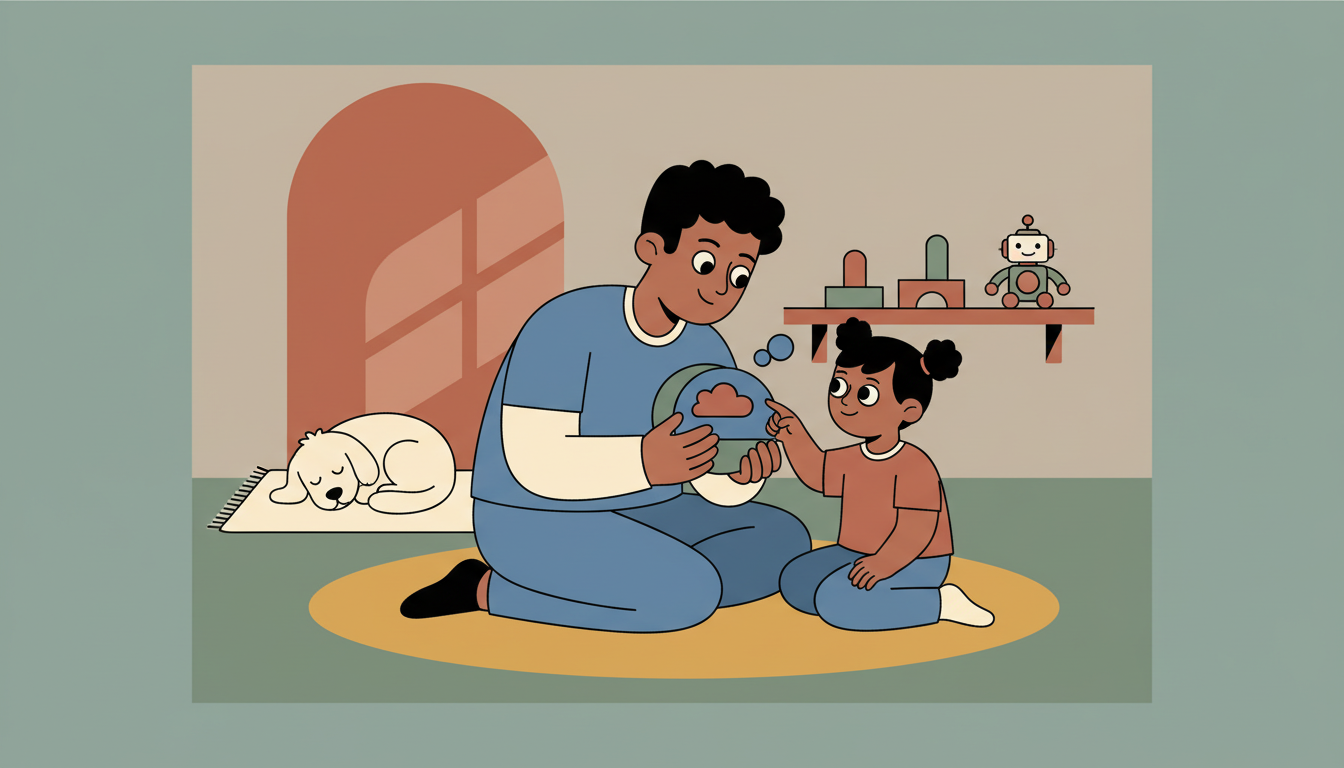
When your child experiences different emotions, talk together about how their thoughts affect their feelings. Use concrete examples from their day. Ask, 'What were you thinking when you felt happy?' or 'What thought made you feel worried?' Help them notice that changing their thoughts can change how they feel. Keep these conversations brief and tied to real situations rather than abstract.
为什么有效
Understanding that thoughts influence feelings gives children a tool for managing their emotional experience and developing a more optimistic outlook. When children recognize they can choose how to think about situations, they gain agency over their emotional life. Learned optimism training has been shown to significantly improve achievement motivation, confidence, and perseverance by teaching children how their thinking patterns affect their feelings and actions (Seligman, Ernst, Gillham, Reivich, & Linkins, 2009). This awareness is foundational for developing resilience.
家长小贴士
Start with positive emotions. It is easier to notice the connection between thoughts and feelings when the feeling is good.
Use simple language that matches your child's understanding. Think-feel connections are complex, so keep explanations concrete.
Share your own think-feel connections too. Your examples help your child understand this is something everyone experiences.
所需材料
None
学习方法
Metacognitive StrategiesCooperative LearningGuided Discovery and Inquiry

喜欢这个活动吗?让我们为你做好规划。
Steadily 为你的孩子个性化定制每一项活动——结合他们的兴趣、成长阶段以及正在塑造的特质——让游戏时间更有趣,让每一刻都富有价值。
了解 Steadily 的运作方式 →