Feeling faces pretend play
2–3 岁Family Connection所需材料:Stuffed animals or dolls
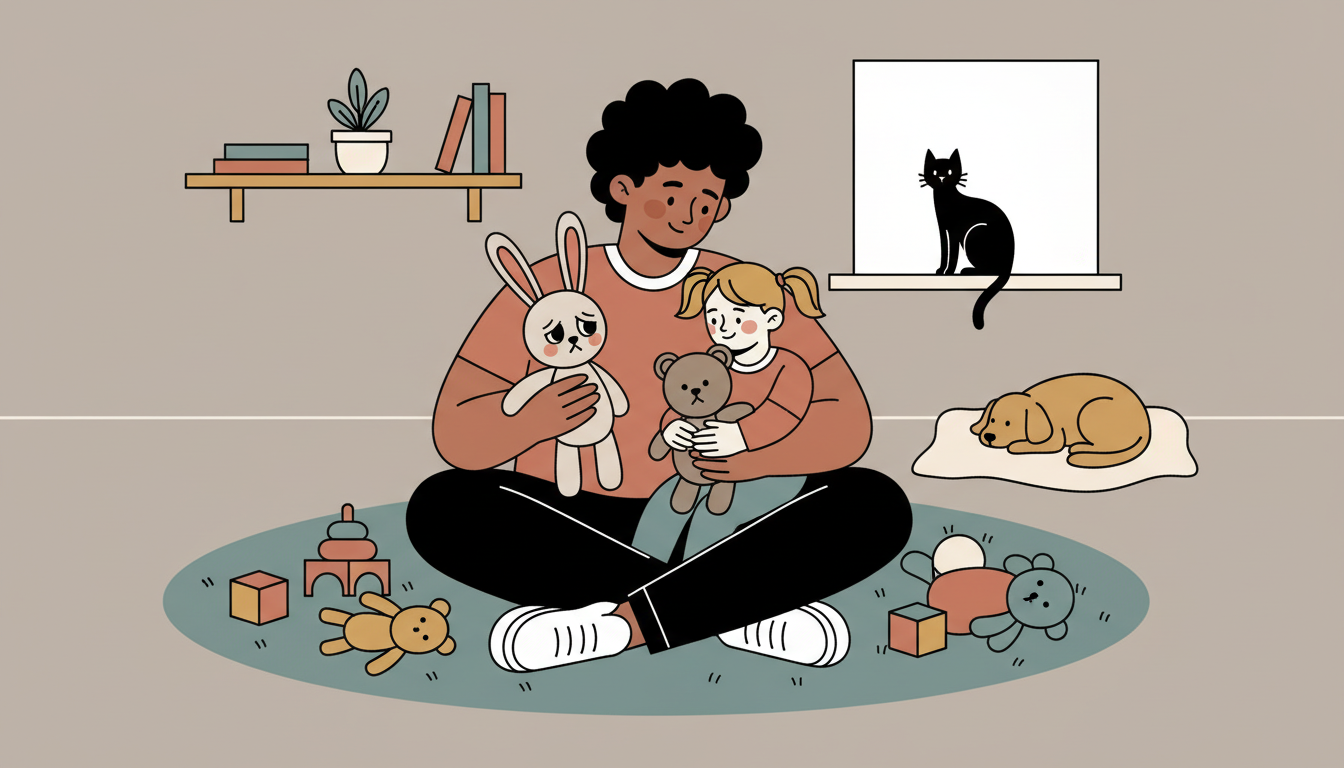
Use stuffed animals or dolls to act out different feelings during play. Make one toy sad and have it go to another toy for a hug. Say "Bunny feels sad. Bunny goes to mama for a cuddle." Then invite your child to help the sad toy feel better. This teaches that coming to someone you trust when you feel bad is a healthy way to cope.
Steadily发育旅程的一部分——为你孩子量身定制。
如何进行这项活动
Use stuffed animals or dolls to act out different feelings during play. Make one toy sad and have it go to another toy for a hug. Say "Bunny feels sad. Bunny goes to mama for a cuddle." Then invite your child to help the sad toy feel better. This teaches that coming to someone you trust when you feel bad is a healthy way to cope.
为什么有效
Pretend play helps children understand emotions and relationships in a safe context. Secure attachments help children learn to empathize, develop relationships, and cope with stress (Canadian Psychological Association, 2024). Through symbolic play, your child practices emotional expression and learns that seeking comfort from trusted adults is a positive coping strategy, which supports their developing attachment security.
家长小贴士
Name the emotions simply as you play. Use words like happy, sad, scared, or frustrated.
Show how the parent toy responds with warmth and comfort. This models the secure base your child needs.
Follow your child's lead. If they want to make all the toys happy, that's fine. The key is showing comfort works.
所需材料
Stuffed animals or dolls
学习方法
Symbolic and Pretend PlaySongs, Stories, and RhymesInteractive Play-Based Learning

喜欢这个活动吗?让我们为你做好规划。
Steadily 为你的孩子个性化定制每一项活动——结合他们的兴趣、成长阶段以及正在塑造的特质——让游戏时间更有趣,让每一刻都富有价值。
了解 Steadily 的运作方式 →