Balancing challenge
2–3 岁Emotional Wellbeing所需材料:A thick book, small step stool, or masking tape for a floor line
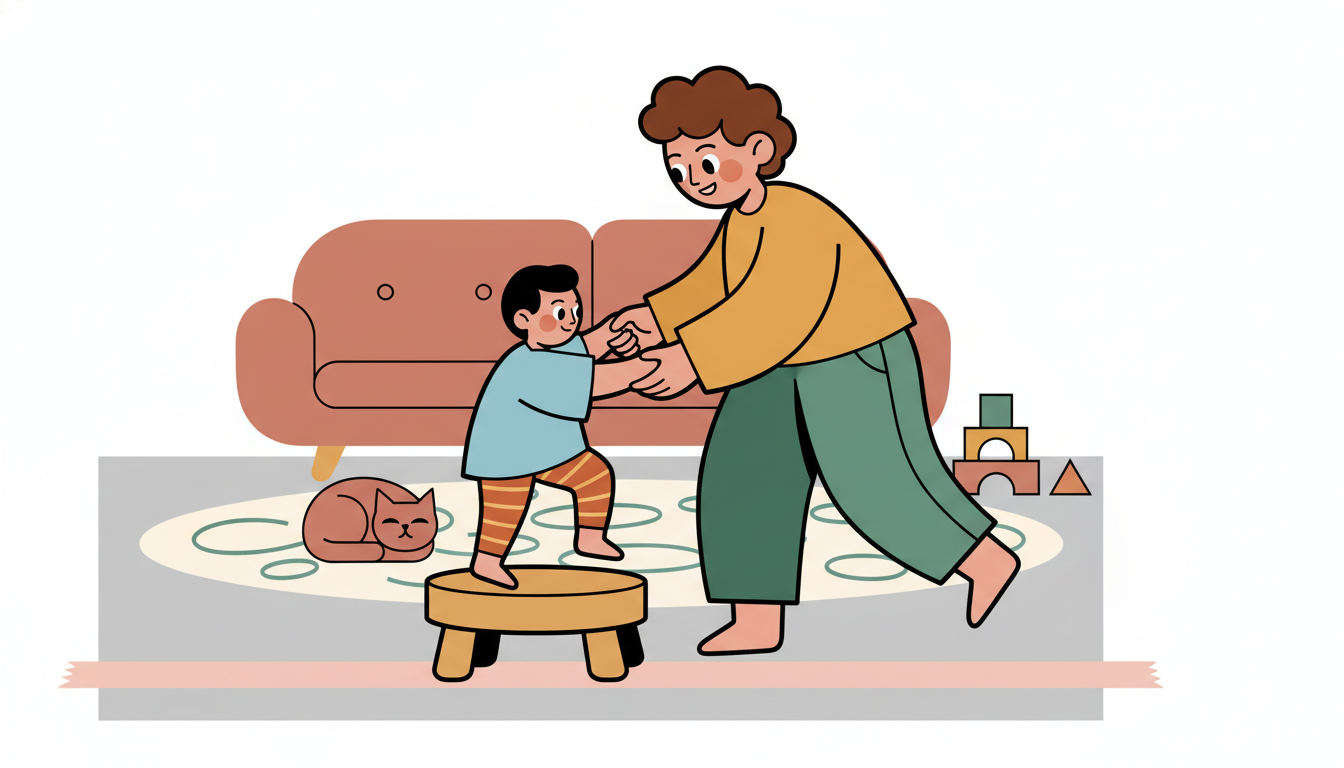
Create a simple balance challenge using a low, stable surface like a thick book or a small step stool. Hold your child's hand and let them practice stepping up and down. You can also place a piece of tape on the floor and practice walking along it. These physical challenges naturally involve wobbling and trying again, which teaches persistence through the body. The success of maintaining balance or getting back up builds confidence that effort leads to success.
Steadily发育旅程的一部分——为你孩子量身定制。
如何进行这项活动
Create a simple balance challenge using a low, stable surface like a thick book or a small step stool. Hold your child's hand and let them practice stepping up and down. You can also place a piece of tape on the floor and practice walking along it. These physical challenges naturally involve wobbling and trying again, which teaches persistence through the body. The success of maintaining balance or getting back up builds confidence that effort leads to success.
为什么有效
Physical challenges engage your child's developing gross motor skills while building resilience through natural trial and error. The neurobiology of stress and development shows that manageable physical challenges help children develop healthy stress response systems (Gunnar & Quevedo, 2007). Research confirms that children who experience supported frustration during age-appropriate challenges at age two to three show better stress management in later childhood. Your supportive presence during physical challenges teaches your child that they can handle difficult things with help nearby.
家长小贴士
Stay close and offer a hand for safety, but let your child do the work of balancing. This builds both skill and confidence.
When your child wobbles or steps off, say, 'Oops, let's try again,' in a calm, encouraging voice. Your tone teaches them that setbacks are normal.
Make it playful. Count steps together or pretend you're walking on a bridge. Play makes persistence easier.
所需材料
A thick book, small step stool, or masking tape for a floor line
学习方法
Interactive Play-Based LearningSymbolic and Pretend PlaySocial Learning Through Peers

喜欢这个活动吗?让我们为你做好规划。
Steadily 为你的孩子个性化定制每一项活动——结合他们的兴趣、成长阶段以及正在塑造的特质——让游戏时间更有趣,让每一刻都富有价值。
了解 Steadily 的运作方式 →