What can we do game
2–3 岁Emotional Wellbeing无需任何材料
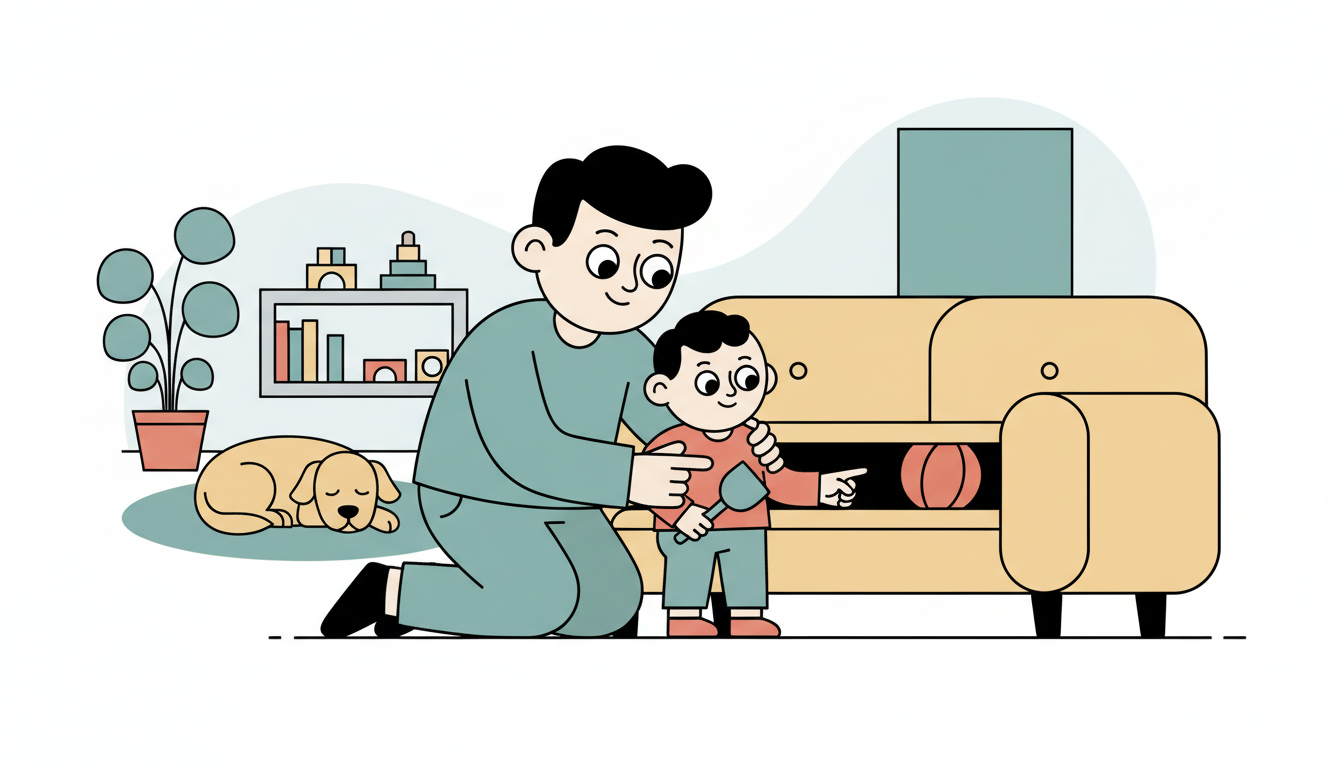
When a small problem comes up, ask your child, "What can we do?" For example, if a toy rolls under the couch, you might say, "The ball went under there. What can we do?" Offer simple options or demonstrate a solution. This shifts focus from the problem to possibilities, teaching solution-focused thinking in a way that's right for their age.
Steadily发育旅程的一部分——为你孩子量身定制。
如何进行这项活动
When a small problem comes up, ask your child, "What can we do?" For example, if a toy rolls under the couch, you might say, "The ball went under there. What can we do?" Offer simple options or demonstrate a solution. This shifts focus from the problem to possibilities, teaching solution-focused thinking in a way that's right for their age.
为什么有效
Solution-focused thinking is a key component of optimism, helping children see challenges as solvable rather than insurmountable. Research indicates that optimistic individuals develop better coping strategies when viewing difficulties as manageable (Carver, C. S., Scheier, M. F., & Segerstrom, S. C. (2010). Optimism. Clinical Psychology Review, 30(7), 879-889.). At this developmental stage, children are beginning to problem-solve through trial and error, making this the ideal time to introduce the concept that problems have solutions and we can find them together.
家长小贴士
Start with very simple, concrete problems that have obvious solutions.
Offer two simple choices if your child doesn't respond. They're still learning how to think this way.
Celebrate the solution together once you find it. Say something like, "We figured it out."
所需材料
None
学习方法
Songs, Stories, and RhymesSymbolic and Pretend PlaySocial Learning Through Peers

喜欢这个活动吗?让我们为你做好规划。
Steadily 为你的孩子个性化定制每一项活动——结合他们的兴趣、成长阶段以及正在塑造的特质——让游戏时间更有趣,让每一刻都富有价值。
了解 Steadily 的运作方式 →