The why behind feelings
3–4 岁Family Connection无需任何材料
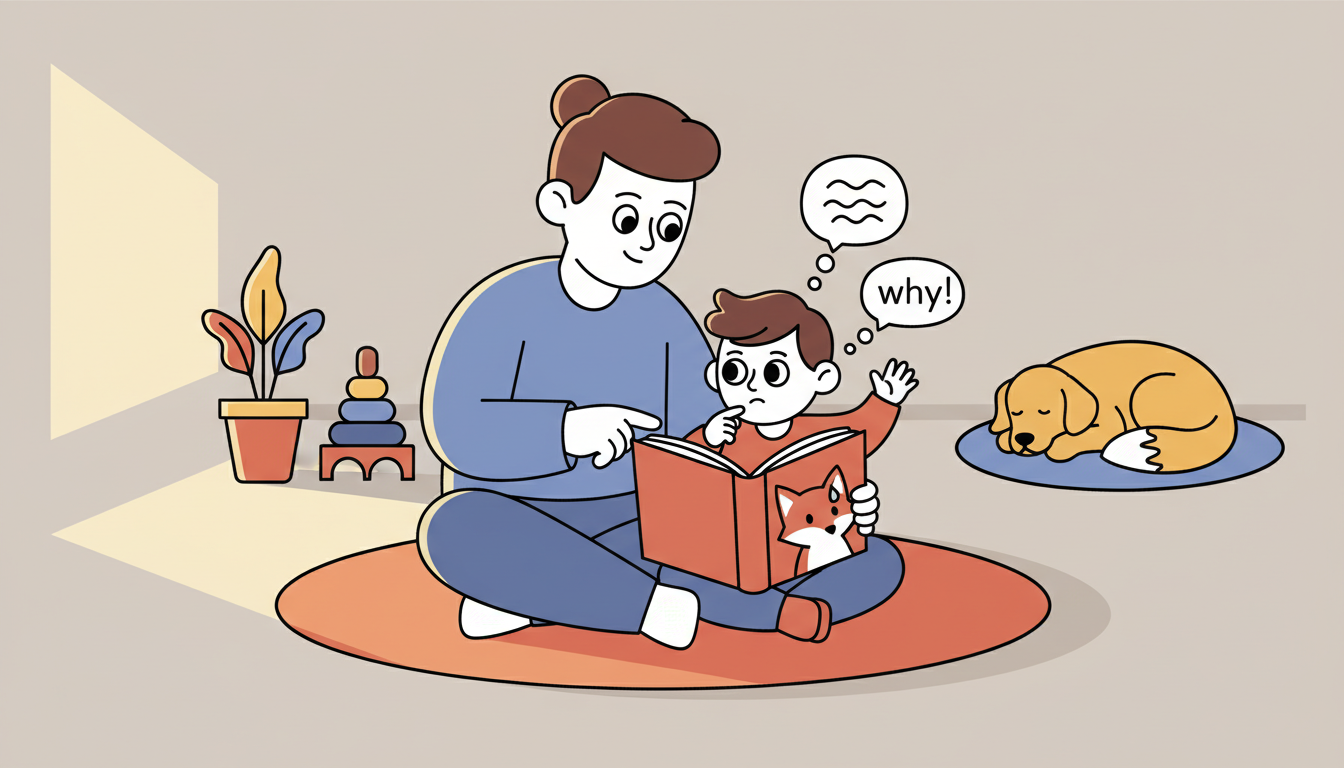
Throughout your activity time, whenever emotions come up naturally, ask your child why someone might feel that way. If your child says, 'She looks sad,' follow up with, 'What do you think made her sad?' or 'Why might she feel that way?' This moves beyond just labeling emotions to understanding their causes. You can practice with people you see, characters in books, or family members. Understanding the reasons behind feelings is a key step toward true empathy.
Steadily发育旅程的一部分——为你孩子量身定制。
如何进行这项活动
Throughout your activity time, whenever emotions come up naturally, ask your child why someone might feel that way. If your child says, 'She looks sad,' follow up with, 'What do you think made her sad?' or 'Why might she feel that way?' This moves beyond just labeling emotions to understanding their causes. You can practice with people you see, characters in books, or family members. Understanding the reasons behind feelings is a key step toward true empathy.
为什么有效
Understanding the causes of emotions is central to cognitive empathy development. Research shows that empathy plays a critical role in emotional well-being, and when parents help children understand emotions deeply, children develop better emotional regulation and social skills (Bhansali, 2023). At 36-48 months, children's cognitive abilities allow them to make simple cause-effect connections. Teaching them to link events with emotional responses builds the cognitive empathy that predicts social competence.
家长小贴士
Start with simple, obvious causes like 'He fell down, so he feels hurt.'
If your child struggles, offer two possible reasons to choose from.
Connect feelings to your child's own experiences by asking, 'Would you feel sad if that happened to you?'
所需材料
None
学习方法
Narrative and Literacy-Rich ExperiencesCollaborative and Cooperative PlayInquiry-Based Learning

喜欢这个活动吗?让我们为你做好规划。
Steadily 为你的孩子个性化定制每一项活动——结合他们的兴趣、成长阶段以及正在塑造的特质——让游戏时间更有趣,让每一刻都富有价值。
了解 Steadily 的运作方式 →