Happy words practice
3–4 岁Emotional Wellbeing无需任何材料
Throughout your time together, use optimistic language to describe everyday moments. When something small goes wrong, model hopeful responses like, we can try again, or that's okay, we'll figure it out. When talking about upcoming events, use positive phrases like, this will be fun, or I think you'll enjoy this. Your child will begin to mirror this language and internalize an optimistic way of thinking about experiences.
Steadily发育旅程的一部分——为你孩子量身定制。
如何进行这项活动
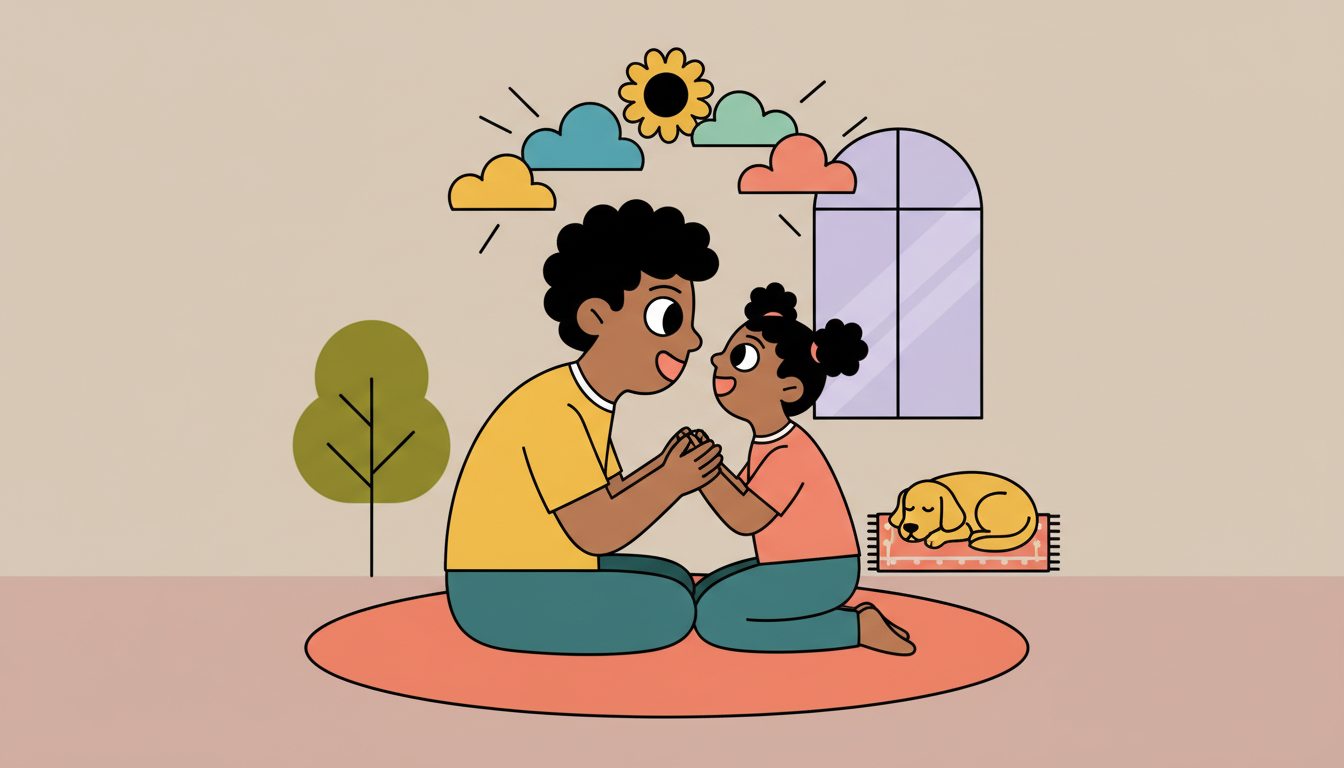
Throughout your time together, use optimistic language to describe everyday moments. When something small goes wrong, model hopeful responses like, we can try again, or that's okay, we'll figure it out. When talking about upcoming events, use positive phrases like, this will be fun, or I think you'll enjoy this. Your child will begin to mirror this language and internalize an optimistic way of thinking about experiences.
为什么有效
Children at this age absorb explanatory styles from the adults around them, and modeling optimistic language shapes their expectations about outcomes. Research shows that optimistic explanatory style predicts better outcomes and can be taught through environmental influences (Seligman et al., 2009; Carver et al., 2010). Consistent exposure to hopeful, solution-focused language helps children develop the internal dialogue that supports lasting optimism.
家长小贴士
Pay attention to your own explanatory style and consciously frame setbacks as temporary and solvable. Avoid catastrophizing small problems or using language that suggests things won't improve. Children learn optimism primarily through the models around them.
所需材料
None
学习方法
Narrative and Literacy-Rich ExperiencesInquiry-Based LearningCollaborative and Cooperative Play

喜欢这个活动吗?让我们为你做好规划。
Steadily 为你的孩子个性化定制每一项活动——结合他们的兴趣、成长阶段以及正在塑造的特质——让游戏时间更有趣,让每一刻都富有价值。
了解 Steadily 的运作方式 →