Feelings picture walk
3–4 岁Family Connection所需材料:Family photos or photo album
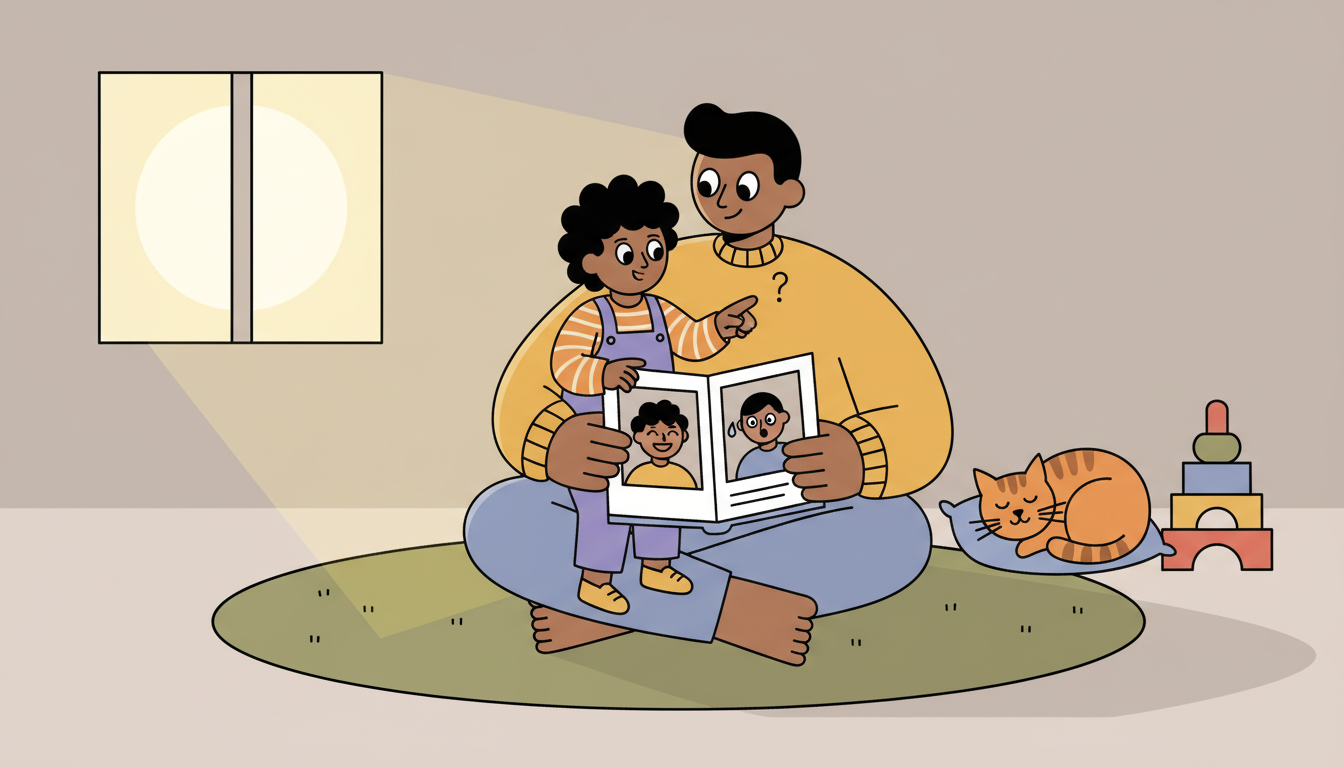
During your activity time, look at family photos together and talk about how people felt when each picture was taken. Ask your child to point out happy faces, sad faces, or surprised faces. Take turns guessing what made each person feel that way. You can say things like, 'Look at grandma's smile. How do you think she felt that day? What made her so happy?' This simple practice helps your child learn to read emotions in others.
Steadily发育旅程的一部分——为你孩子量身定制。
如何进行这项活动
During your activity time, look at family photos together and talk about how people felt when each picture was taken. Ask your child to point out happy faces, sad faces, or surprised faces. Take turns guessing what made each person feel that way. You can say things like, 'Look at grandma's smile. How do you think she felt that day? What made her so happy?' This simple practice helps your child learn to read emotions in others.
为什么有效
Recognizing and responding sensitively to others' emotions is a key childhood behavior that predicts stronger adult empathy and relationship quality (Eisenberg et al., 2015). At 36-48 months, children develop theory of mind, which allows them to understand that others have different thoughts and feelings. Looking at photos provides a safe, concrete way to practice identifying emotions in faces and body language. This skill forms the foundation for empathetic responses later.
家长小贴士
Start with obvious emotions like big smiles or tears before moving to subtle expressions.
If your child struggles, give them two choices like 'Does she look happy or sad?'
Share your own feelings from the photos to model emotional awareness.
所需材料
Family photos or photo album
学习方法
Narrative and Literacy-Rich ExperiencesCollaborative and Cooperative PlayInquiry-Based Learning

喜欢这个活动吗?让我们为你做好规划。
Steadily 为你的孩子个性化定制每一项活动——结合他们的兴趣、成长阶段以及正在塑造的特质——让游戏时间更有趣,让每一刻都富有价值。
了解 Steadily 的运作方式 →