Emotion show and tell
3–4 岁Family Connection无需任何材料
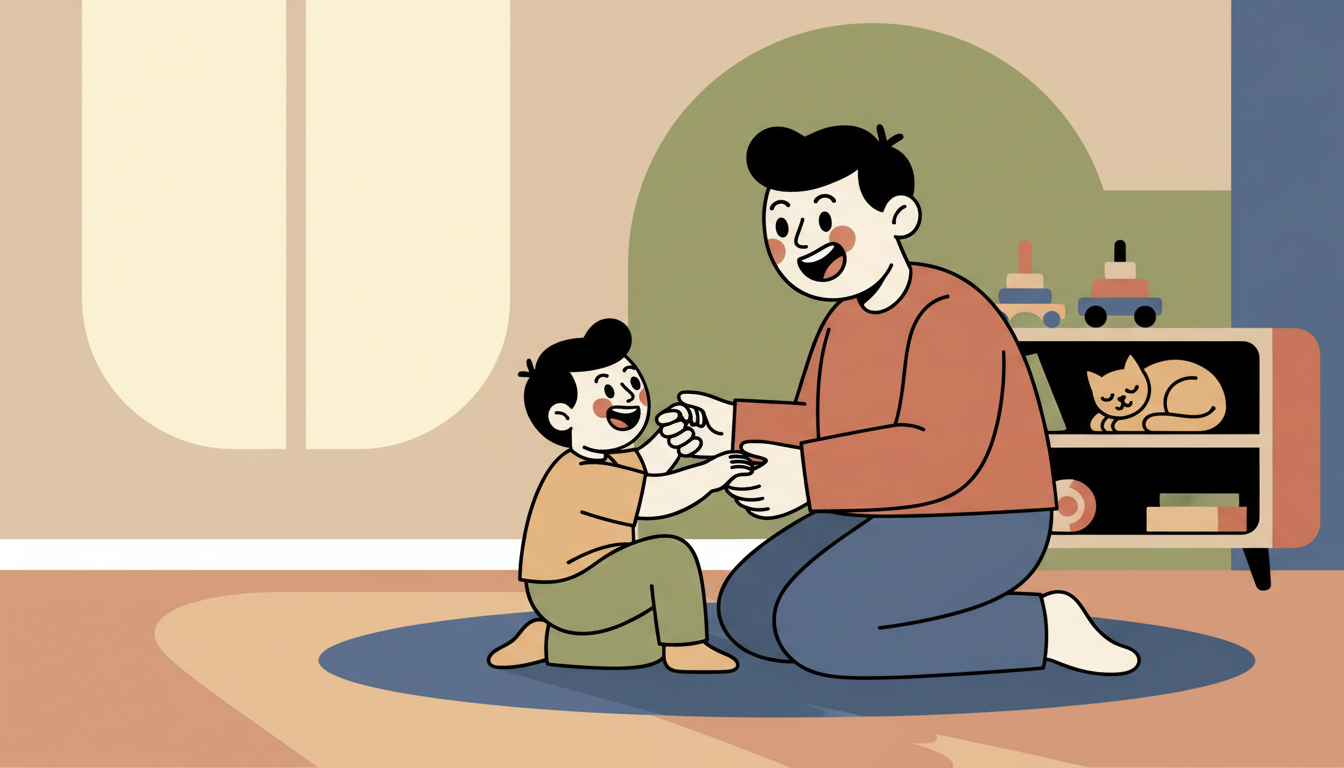
Set aside time during your activity to practice making different feeling faces together. Take turns showing emotions like happy, sad, angry, scared, or surprised with your face and body. After each one, talk about when you might feel that way. You can say, 'Show me your sad face. When do you feel sad? I feel sad when I miss someone I love.' Then ask your child to guess which emotion you're showing and share when they feel that way too.
Steadily发育旅程的一部分——为你孩子量身定制。
如何进行这项活动
Set aside time during your activity to practice making different feeling faces together. Take turns showing emotions like happy, sad, angry, scared, or surprised with your face and body. After each one, talk about when you might feel that way. You can say, 'Show me your sad face. When do you feel sad? I feel sad when I miss someone I love.' Then ask your child to guess which emotion you're showing and share when they feel that way too.
为什么有效
When parents show empathy and model emotional awareness, they create a safe space for children to express themselves and develop their own empathy (Bhansali, 2023). At this age, children can recognize emotions in faces and body language, a key skill for empathy. Practicing emotion recognition through play makes learning fun while building the foundation for understanding how others feel. This shared emotional experience strengthens your connection and teaches emotional literacy.
家长小贴士
Make it playful by exaggerating your expressions and movements.
Start with basic emotions before introducing more complex ones like frustrated or disappointed.
Share real examples from your own life to show that everyone has feelings.
所需材料
None
学习方法
Narrative and Literacy-Rich ExperiencesCollaborative and Cooperative PlayInquiry-Based Learning

喜欢这个活动吗?让我们为你做好规划。
Steadily 为你的孩子个性化定制每一项活动——结合他们的兴趣、成长阶段以及正在塑造的特质——让游戏时间更有趣,让每一刻都富有价值。
了解 Steadily 的运作方式 →