Stuffed animal feelings
2–3 岁Emotional Wellbeing所需材料:Stuffed animals or dolls
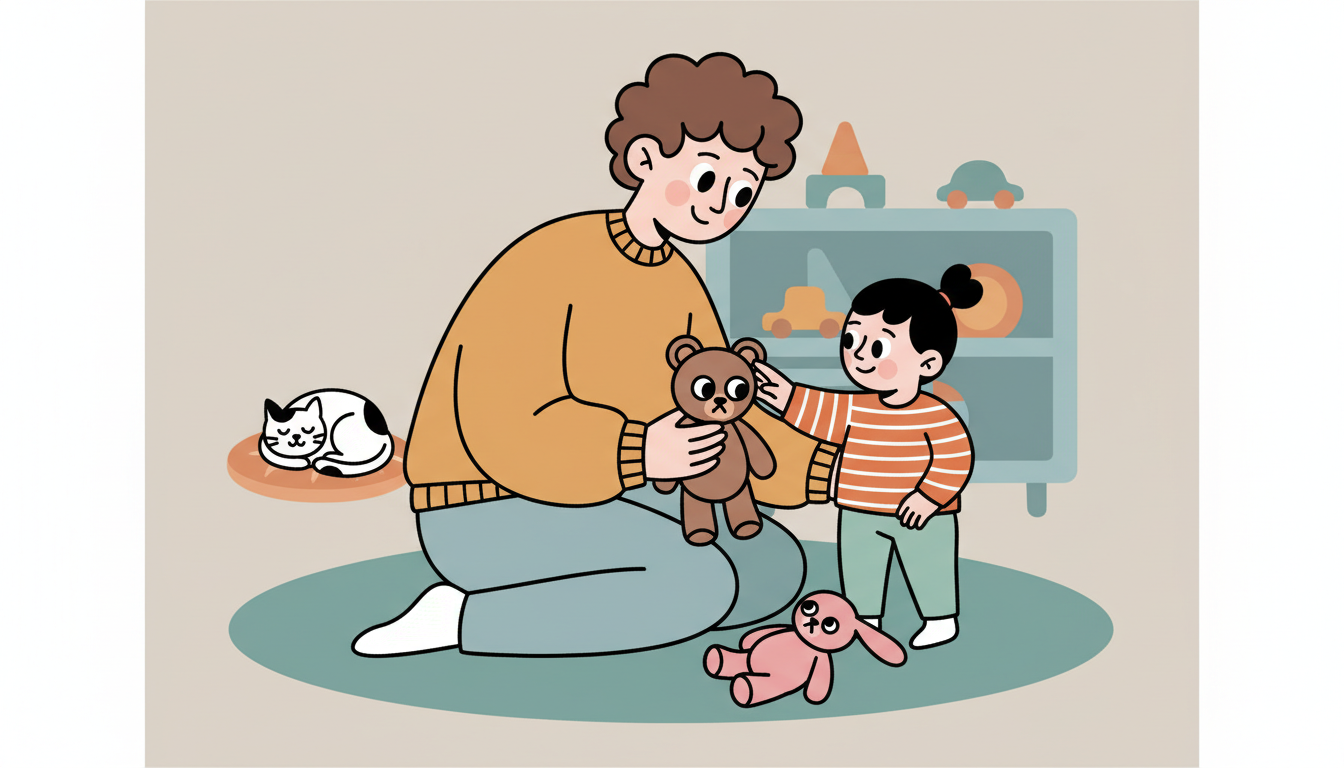
Use stuffed animals or dolls to act out simple emotional scenarios. You might say, 'Teddy fell down. How does Teddy feel?' Let your child respond, then help Teddy feel better together.
Steadily发育旅程的一部分——为你孩子量身定制。
如何进行这项活动
Use stuffed animals or dolls to act out simple emotional scenarios. You might say, 'Teddy fell down. How does Teddy feel?' Let your child respond, then help Teddy feel better together.
This play-based approach lets your child practice empathy and problem-solving in a safe, pretend context. It's easier to talk about a toy's feelings than their own big emotions.
为什么有效
Symbolic and pretend play is critical for cognitive, social, and emotional development at this age. Research shows that early emotional intelligence development leads to better emotional recognition and expression skills in adulthood (Goleman, 1995). Empathy is one of the five core components of EQ, and children with higher emotional intelligence experience significantly better relationship satisfaction and mental health outcomes (Bar-On, 2006).
家长小贴士
Follow your child's lead. If they want to make the stuffed animal do something different, go with it.
You can introduce simple solutions like, 'Should we give Teddy a hug to help him feel better?'
所需材料
Stuffed animals or dolls
学习方法
Symbolic and Pretend PlaySongs, Stories, and RhymesSocial Learning Through Peers

喜欢这个活动吗?让我们为你做好规划。
Steadily 为你的孩子个性化定制每一项活动——结合他们的兴趣、成长阶段以及正在塑造的特质——让游戏时间更有趣,让每一刻都富有价值。
了解 Steadily 的运作方式 →