Naming big feelings together
1–2 岁Family Connection无需任何材料
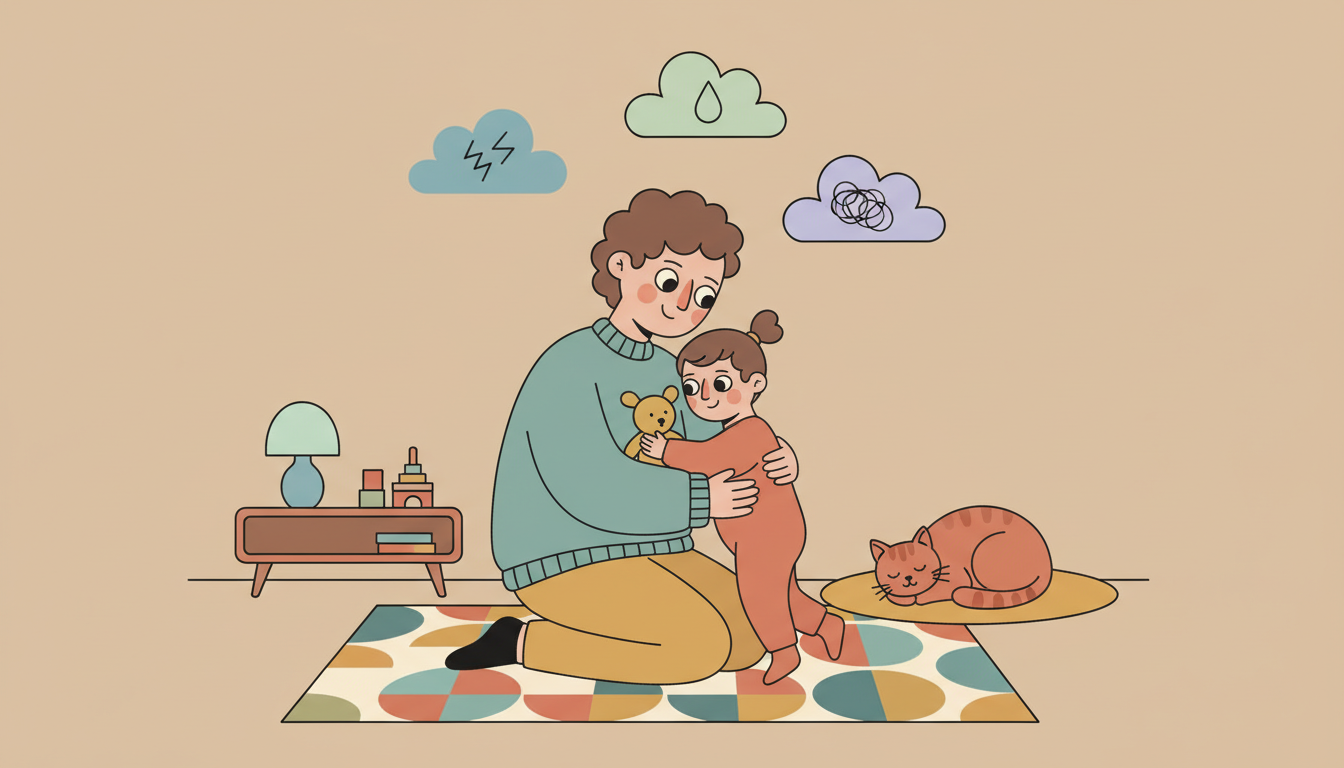
When your child gets upset during play or daily activities, kneel down to their level and calmly name what they might be feeling. Use simple words like mad, sad, or frustrated. Your calm presence helps them learn that feelings are okay and can be talked about. This creates a foundation for handling disagreements peacefully later on.
Steadily发育旅程的一部分——为你孩子量身定制。
如何进行这项活动
When your child gets upset during play or daily activities, kneel down to their level and calmly name what they might be feeling. Use simple words like mad, sad, or frustrated. Your calm presence helps them learn that feelings are okay and can be talked about. This creates a foundation for handling disagreements peacefully later on.
为什么有效
Your child is just beginning to connect words with their internal experiences. When you label emotions during conflicts, you're teaching the first step of conflict resolution: recognizing and naming feelings. Research shows that children who learn to calmly discuss disagreements and express frustration with words show 30% better emotional regulation throughout development (Shantz, 1987). At this age, your modeling is the primary teaching tool. Early training in these foundational skills leads to significantly better peer relationships and 25% fewer behavioral problems (Webster-Stratton & Reid, 2004).
家长小贴士
Stay calm and use a gentle voice, even when your child is very upset. Your regulation helps them learn to regulate.
Wait until the biggest wave of emotion passes before trying to talk. Sometimes just being present is enough.
所需材料
None
学习方法
Language-Rich EnvironmentImitation and Modeling

喜欢这个活动吗?让我们为你做好规划。
Steadily 为你的孩子个性化定制每一项活动——结合他们的兴趣、成长阶段以及正在塑造的特质——让游戏时间更有趣,让每一刻都富有价值。
了解 Steadily 的运作方式 →