Name that feeling
1–2 岁Family Connection无需任何材料
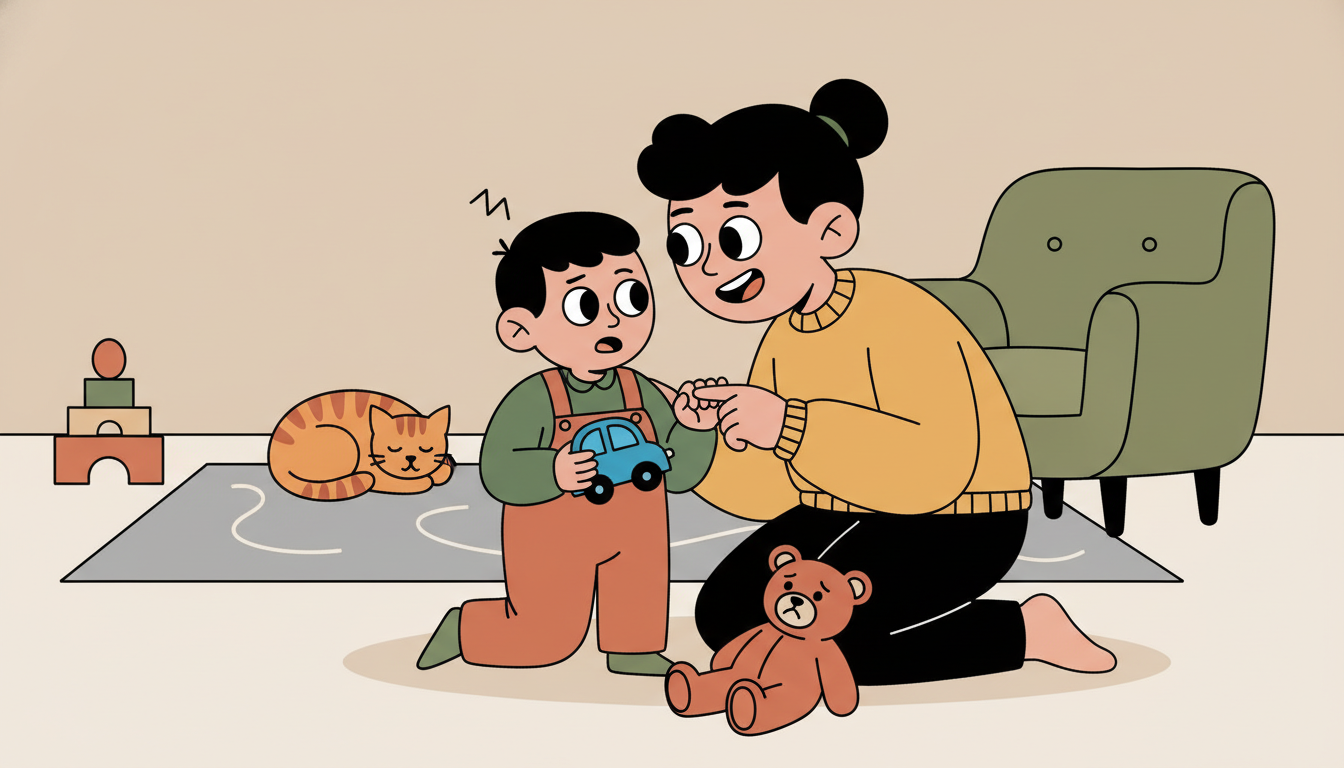
Throughout your time together, point out and name emotions you see in yourself, your child, and others around you. When your child looks frustrated with a toy, say 'You feel frustrated.' When you smile, say 'I feel happy.' When another child cries, say 'Baby is sad.' This simple labeling helps your child begin to recognize and understand emotions in themselves and others.
Steadily发育旅程的一部分——为你孩子量身定制。
如何进行这项活动
Throughout your time together, point out and name emotions you see in yourself, your child, and others around you. When your child looks frustrated with a toy, say 'You feel frustrated.' When you smile, say 'I feel happy.' When another child cries, say 'Baby is sad.' This simple labeling helps your child begin to recognize and understand emotions in themselves and others.
为什么有效
Labeling emotions builds the foundation for empathy by helping children recognize feelings in themselves and others. Research shows that parental empathy toward children predicts the child's own empathy development, and when parents model emotional awareness, children learn to understand and respond to others' emotions (Liu et al., 2020). At this age, children are beginning to move from emotional contagion to early cognitive empathy, making consistent emotion labeling particularly effective.
家长小贴士
Keep your emotion words simple and clear. Use the same basic emotion words consistently (happy, sad, mad, scared).
Match your facial expression to the emotion you are naming. Your child learns by watching your face.
Acknowledge your child's attempts to show concern for others, even small ones. Say 'You noticed baby is sad' when they look at a crying child.
所需材料
None
学习方法
Language-Rich EnvironmentImitation and ModelingBeginning Symbolic Play

喜欢这个活动吗?让我们为你做好规划。
Steadily 为你的孩子个性化定制每一项活动——结合他们的兴趣、成长阶段以及正在塑造的特质——让游戏时间更有趣,让每一刻都富有价值。
了解 Steadily 的运作方式 →