Mirror your emotions
1–2 岁Family Connection所需材料:Mirror (optional)
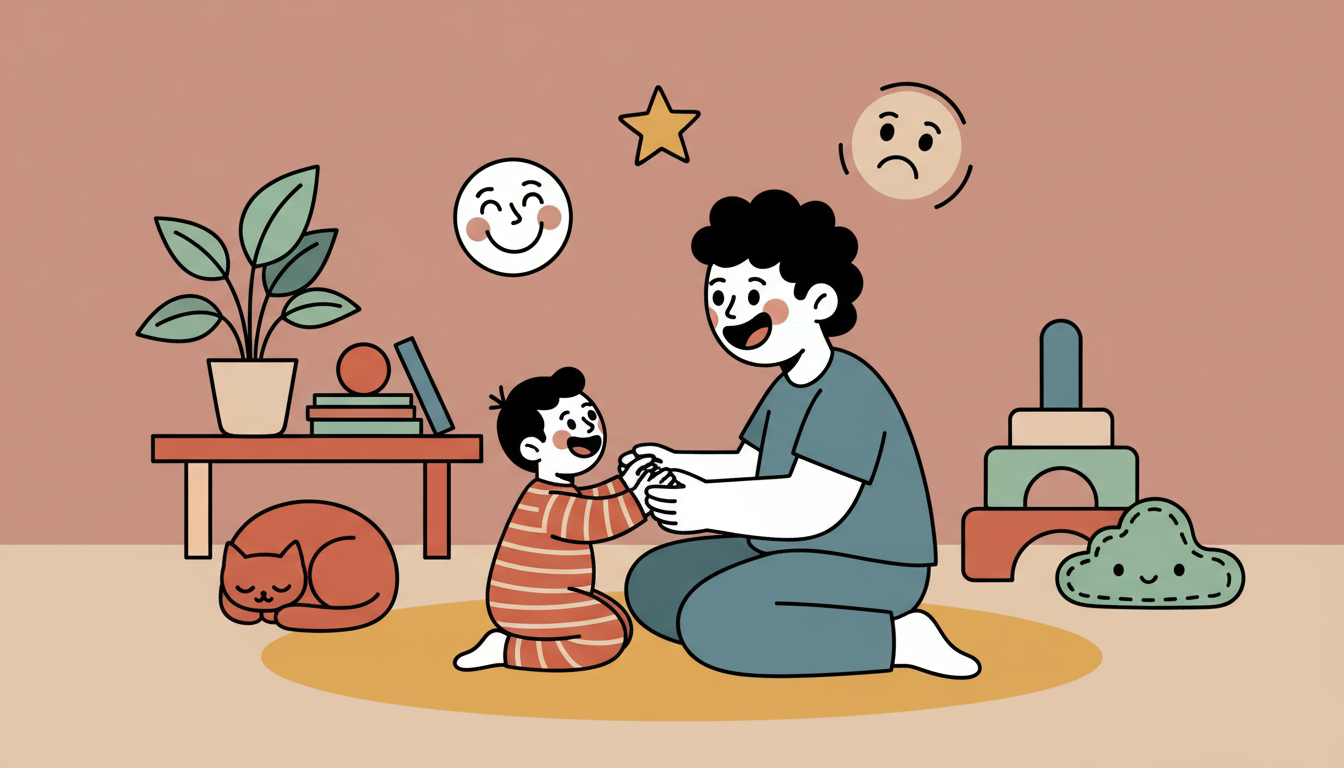
Sit facing your child and make different facial expressions together. Start with a big smile and say 'Happy.' Then try a frown and say 'Sad.' Encourage your child to copy your face. You can also mirror back your child's expressions, naming the feeling you see. This playful activity helps your child connect facial expressions with emotion words and builds emotional awareness.
Steadily发育旅程的一部分——为你孩子量身定制。
如何进行这项活动
Sit facing your child and make different facial expressions together. Start with a big smile and say 'Happy.' Then try a frown and say 'Sad.' Encourage your child to copy your face. You can also mirror back your child's expressions, naming the feeling you see. This playful activity helps your child connect facial expressions with emotion words and builds emotional awareness.
为什么有效
Recognizing emotions in facial expressions is a fundamental empathy skill. When parents create a safe space for children to explore and express emotions, children develop better emotional awareness and reduced anxiety (Bhansali, 2023). Imitation and modeling are powerful learning tools at this age, and practicing facial expressions helps children build the recognition skills needed for responding sensitively to others' emotions, a key predictor of positive relationships later in life.
家长小贴士
Use a mirror if you have one nearby. Seeing their own face helps children learn.
Stick to basic emotions your child sees often. Happy and sad are good starting points.
Make it playful and fun. Exaggerate your expressions a bit to make them clearer.
所需材料
Mirror (optional)
学习方法
Language-Rich EnvironmentImitation and ModelingBeginning Symbolic Play

喜欢这个活动吗?让我们为你做好规划。
Steadily 为你的孩子个性化定制每一项活动——结合他们的兴趣、成长阶段以及正在塑造的特质——让游戏时间更有趣,让每一刻都富有价值。
了解 Steadily 的运作方式 →