Truth or imagination game
3–4 ஆண்டுகள்Success Mindsetபொருட்கள் எதுவும் தேவையில்லை
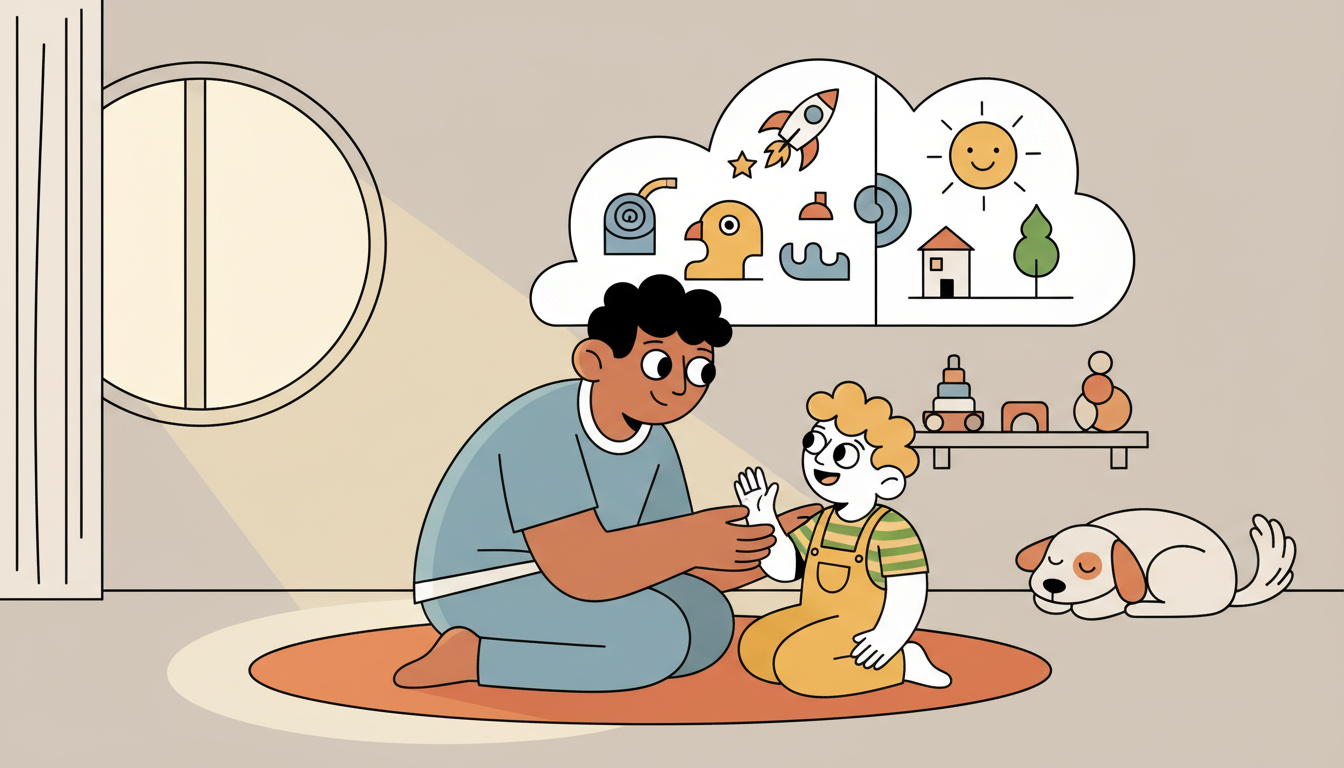
Take turns telling simple stories about your day. After each story, decide together if it was true or pretend. This helps your child distinguish between imagination and intentional deception. Make it playful and fun, celebrating both creative pretending and accurate truth-telling.
உன் குழந்தைக்கு ஏற்ப தனிப்பயனாக்கப்பட்ட Steadily வளர்ச்சி அத்தியாயத்தின் ஒரு பகுதி.
இந்தச் செயல்பாட்டை எப்படிச் செய்வது
Take turns telling simple stories about your day. After each story, decide together if it was true or pretend. This helps your child distinguish between imagination and intentional deception. Make it playful and fun, celebrating both creative pretending and accurate truth-telling.
இது ஏன் வேலை செய்கிறது
Children as young as 2 begin lying, but moral reasoning develops through middle childhood. At 36-48 months, children can begin to grasp simple moral concepts and distinguish fantasy from reality. Modeling and praising honesty are most effective approaches (Hoffman, 2000). This activity builds that distinction in an encouraging way.
பெற்றோருக்கான உதவிக்குறிப்புகள்
Start by clearly labeling your own stories as "real" or "pretend" to model the difference.
Praise both creativity and honesty. Say things like, "What a fun pretend story" or "Thank you for telling me what really happened."
தேவையான பொருட்கள்
None
கற்றல் முறைகள்
Narrative and Literacy-Rich ExperiencesCollaborative and Cooperative PlayInquiry-Based Learning

இந்தச் செயல்பாடு உனக்குப் பிடித்திருக்கிறதா? உனக்காகத் திட்டமிடும் வேலையை நாங்கள் செய்கிறோம்.
Steadily ஒவ்வொரு செயல்பாட்டையும் உனது குழந்தையின் ஆர்வங்கள், அவர்களின் வளர்ச்சி நிலை மற்றும் அவர்கள் வளர்த்துக் கொள்ளும் குணநலன்கள் ஆகியவற்றிற்கு ஏற்ப தனிப்பயனாக்குகிறது — இதனால் விளையாட்டு நேரம் மிகவும் வேடிக்கையாக இருப்பதோடு, ஒவ்வொரு தருணமும் பயனுள்ளதாக அமைகிறது.
Steadily எவ்வாறு செயல்படுகிறது என்பதை அறிந்துகொள் →