Naming feelings together
1–2 ஆண்டுகள்Emotional Wellbeingபொருட்கள் எதுவும் தேவையில்லை
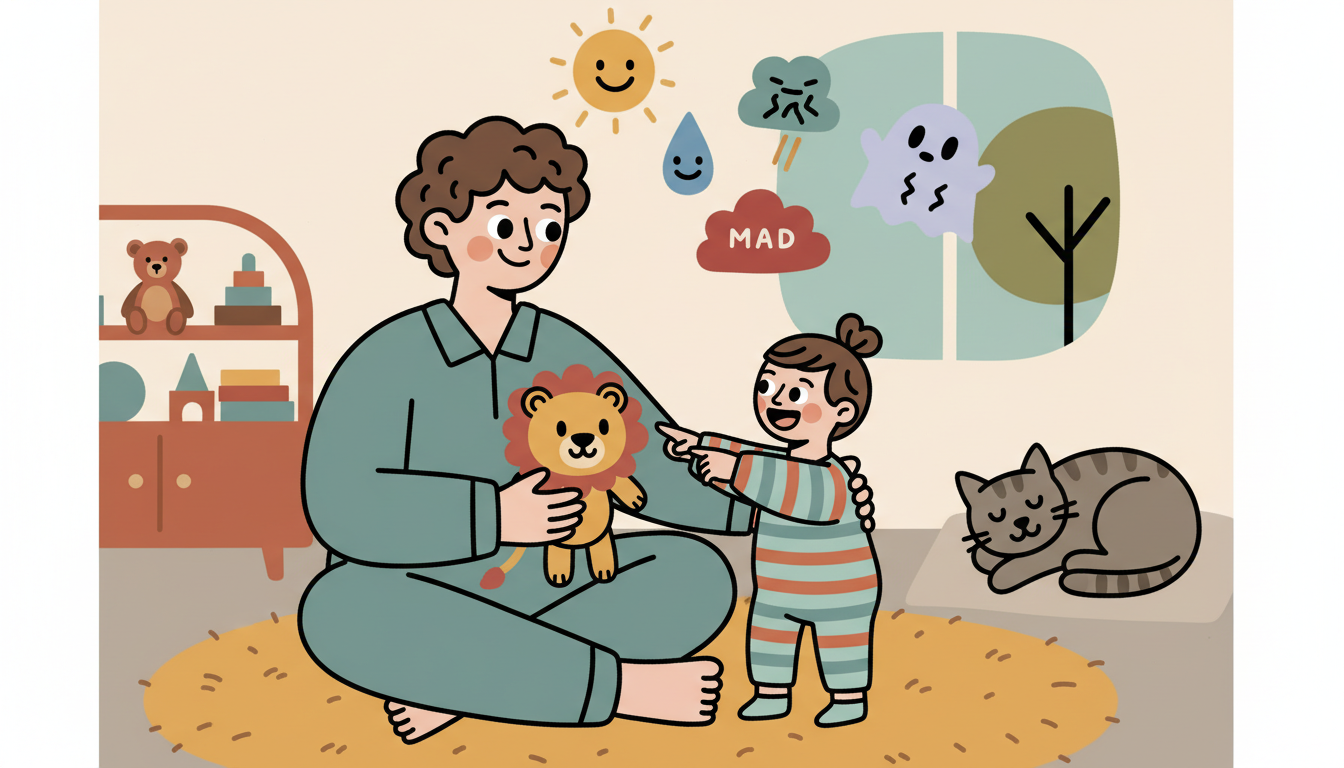
As you play with your child, label emotions as they happen. When your child laughs, say 'You're feeling happy.' When they seem frustrated with a toy, say 'You're feeling frustrated.' Use simple emotion words like happy, sad, mad, and scared. This helps your child connect words to their internal experiences.
உன் குழந்தைக்கு ஏற்ப தனிப்பயனாக்கப்பட்ட Steadily வளர்ச்சி அத்தியாயத்தின் ஒரு பகுதி.
இந்தச் செயல்பாட்டை எப்படிச் செய்வது
As you play with your child, label emotions as they happen. When your child laughs, say 'You're feeling happy.' When they seem frustrated with a toy, say 'You're feeling frustrated.' Use simple emotion words like happy, sad, mad, and scared. This helps your child connect words to their internal experiences.
இது ஏன் வேலை செய்கிறது
Language development at this age enables explicit emotion labeling and discussion. When children learn to name their emotions, they develop better emotional recognition and expression skills that carry into adulthood (Goleman, 1995). This builds the foundation for self-awareness, a core component of emotional intelligence.
பெற்றோருக்கான உதவிக்குறிப்புகள்
Keep it simple with one or two emotion words at a time.
Use a calm, matter-of-fact tone when naming emotions.
Label your own emotions too, like 'I'm feeling tired' or 'I'm feeling happy to see you.'
தேவையான பொருட்கள்
None
கற்றல் முறைகள்
Language-Rich EnvironmentImitation and ModelingBeginning Symbolic Play

இந்தச் செயல்பாடு உனக்குப் பிடித்திருக்கிறதா? உனக்காகத் திட்டமிடும் வேலையை நாங்கள் செய்கிறோம்.
Steadily ஒவ்வொரு செயல்பாட்டையும் உனது குழந்தையின் ஆர்வங்கள், அவர்களின் வளர்ச்சி நிலை மற்றும் அவர்கள் வளர்த்துக் கொள்ளும் குணநலன்கள் ஆகியவற்றிற்கு ஏற்ப தனிப்பயனாக்குகிறது — இதனால் விளையாட்டு நேரம் மிகவும் வேடிக்கையாக இருப்பதோடு, ஒவ்வொரு தருணமும் பயனுள்ளதாக அமைகிறது.
Steadily எவ்வாறு செயல்படுகிறது என்பதை அறிந்துகொள் →