Gentle holding when upset
6–12 மாதங்கள்Emotional Wellbeingபொருட்கள் எதுவும் தேவையில்லை
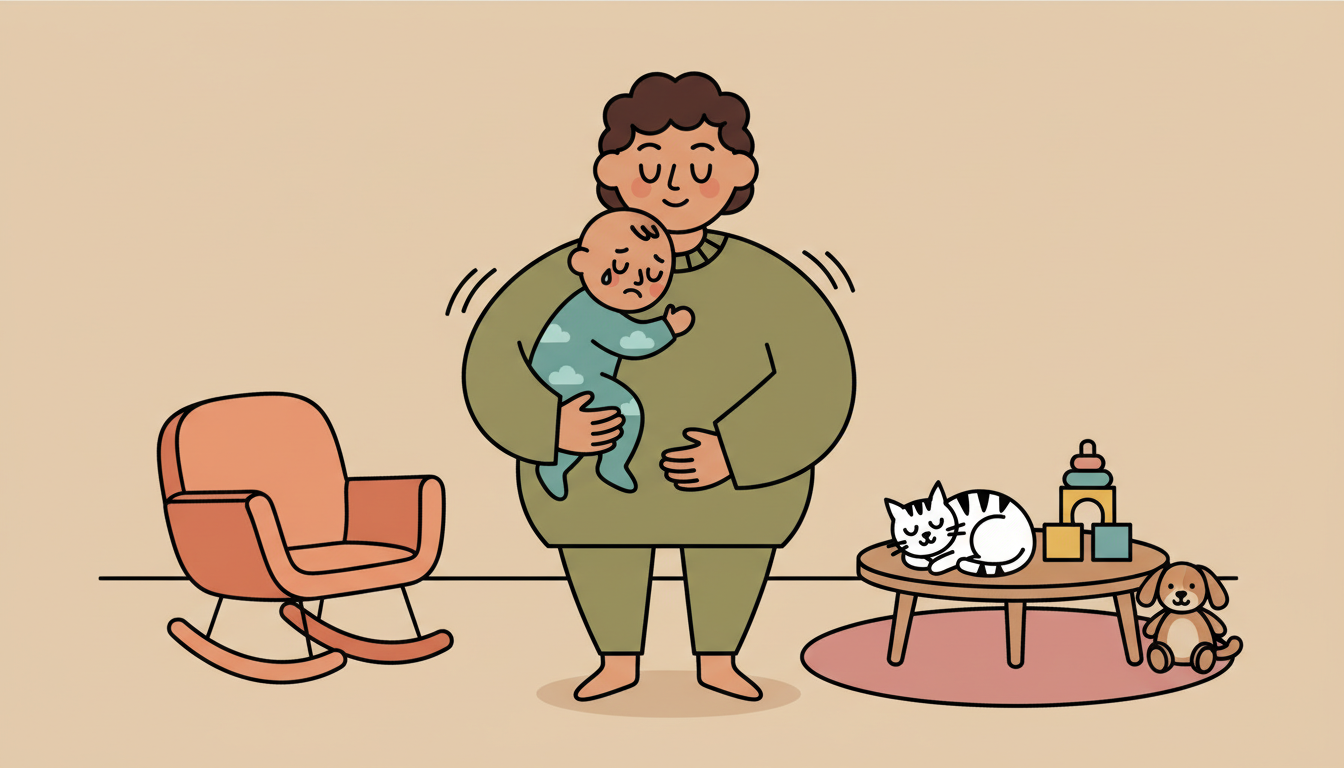
When your child is upset, hold them close and move gently (swaying, rocking, or walking). Let them feel your calm presence. Don't rush to stop the emotion, just be present with them while they experience it.
உன் குழந்தைக்கு ஏற்ப தனிப்பயனாக்கப்பட்ட Steadily வளர்ச்சி அத்தியாயத்தின் ஒரு பகுதி.
இந்தச் செயல்பாட்டை எப்படிச் செய்வது
When your child is upset, hold them close and move gently (swaying, rocking, or walking). Let them feel your calm presence. Don't rush to stop the emotion, just be present with them while they experience it.
Your calm body during their emotional moment teaches them that big feelings are normal and manageable with support.
இது ஏன் வேலை செய்கிறது
Responsive caregiving that includes soothing through physical comfort is a key practice for supporting emotional co-regulation in infants. When parents hold and comfort a distressed child without judgment, they teach the child that emotions are acceptable and manageable. This responsive interaction builds secure attachment and supports the development of emotional regulation capacity, which predicts better mental health, relationship quality, and life satisfaction throughout the lifespan (Bar-On, 2006).
பெற்றோருக்கான உதவிக்குறிப்புகள்
Keep your own breathing slow and deep. Your child will sense your calmness through your physical presence.
Sometimes they need to cry while being held. That's okay. Your presence shows them they're not alone in their feelings.
தேவையான பொருட்கள்
None
கற்றல் முறைகள்
Responsive InteractionSensory Exploration

இந்தச் செயல்பாடு உனக்குப் பிடித்திருக்கிறதா? உனக்காகத் திட்டமிடும் வேலையை நாங்கள் செய்கிறோம்.
Steadily ஒவ்வொரு செயல்பாட்டையும் உனது குழந்தையின் ஆர்வங்கள், அவர்களின் வளர்ச்சி நிலை மற்றும் அவர்கள் வளர்த்துக் கொள்ளும் குணநலன்கள் ஆகியவற்றிற்கு ஏற்ப தனிப்பயனாக்குகிறது — இதனால் விளையாட்டு நேரம் மிகவும் வேடிக்கையாக இருப்பதோடு, ஒவ்வொரு தருணமும் பயனுள்ளதாக அமைகிறது.
Steadily எவ்வாறு செயல்படுகிறது என்பதை அறிந்துகொள் →