Emotion story time
2–3 ஆண்டுகள்Emotional Wellbeingதேவையானவை: Picture books
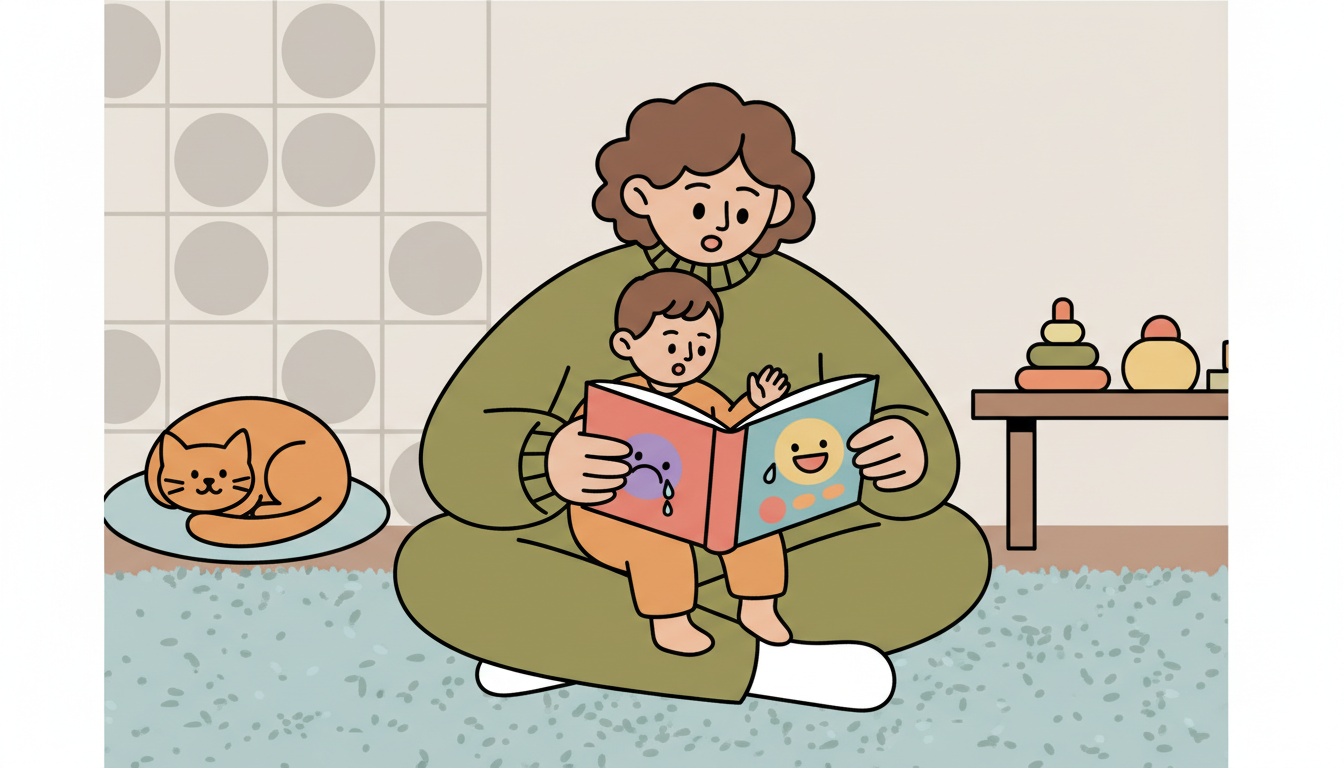
Read a picture book together and pause to talk about how characters might be feeling. Point to facial expressions and ask simple questions like, 'Is he happy or sad?' Name the emotions you see.
உன் குழந்தைக்கு ஏற்ப தனிப்பயனாக்கப்பட்ட Steadily வளர்ச்சி அத்தியாயத்தின் ஒரு பகுதி.
இந்தச் செயல்பாட்டை எப்படிச் செய்வது
Read a picture book together and pause to talk about how characters might be feeling. Point to facial expressions and ask simple questions like, 'Is he happy or sad?' Name the emotions you see.
This turns regular reading time into emotional learning. Stories provide a safe way to explore different feelings and build empathy.
இது ஏன் வேலை செய்கிறது
The language explosion at 24-36 months makes this the optimal time for emotional vocabulary development. Early emotional coaching through stories significantly improves children's emotional intelligence (Goleman, 1995). Children with higher emotional intelligence experience better relationship satisfaction and mental health in adulthood (Bar-On, 2006). Stories help children recognize emotions in others, building the empathy component of EQ.
பெற்றோருக்கான உதவிக்குறிப்புகள்
Use simple feeling words at first like happy, sad, mad, and scared. You can add more complex emotions as your child grows.
Connect the story to your child's experiences. Try saying, 'Remember when you felt sad like that?'
தேவையான பொருட்கள்
Picture books
கற்றல் முறைகள்
Symbolic and Pretend PlaySongs, Stories, and RhymesSocial Learning Through Peers

இந்தச் செயல்பாடு உனக்குப் பிடித்திருக்கிறதா? உனக்காகத் திட்டமிடும் வேலையை நாங்கள் செய்கிறோம்.
Steadily ஒவ்வொரு செயல்பாட்டையும் உனது குழந்தையின் ஆர்வங்கள், அவர்களின் வளர்ச்சி நிலை மற்றும் அவர்கள் வளர்த்துக் கொள்ளும் குணநலன்கள் ஆகியவற்றிற்கு ஏற்ப தனிப்பயனாக்குகிறது — இதனால் விளையாட்டு நேரம் மிகவும் வேடிக்கையாக இருப்பதோடு, ஒவ்வொரு தருணமும் பயனுள்ளதாக அமைகிறது.
Steadily எவ்வாறு செயல்படுகிறது என்பதை அறிந்துகொள் →