Name their feelings
6–12 månaderFamily ConnectionInga material behövs
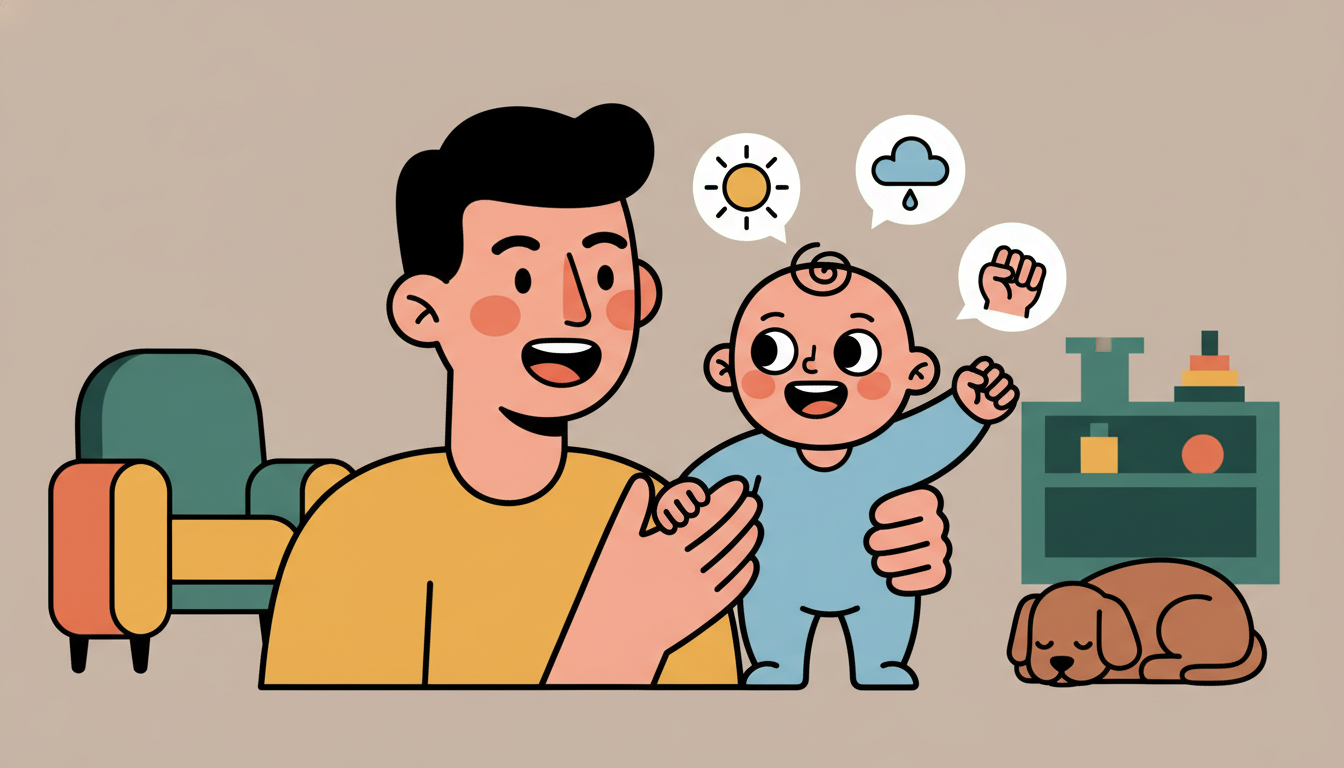
When your child shows emotion, put words to what you see. If they're laughing during play, you might say, "You're happy." If they seem frustrated reaching for something, you might say, "That's hard to reach. You feel frustrated." This practice shows respect for their emotional experience and builds trust that you understand them.
En del av Steadily-utvecklingsresan — personligt anpassad för ditt barn.
Så här gör ni aktiviteten
When your child shows emotion, put words to what you see. If they're laughing during play, you might say, "You're happy." If they seem frustrated reaching for something, you might say, "That's hard to reach. You feel frustrated." This practice shows respect for their emotional experience and builds trust that you understand them.
Varför det fungerar
Acknowledging your child's emotions demonstrates that you respect their internal experience. This consistent emotional responsiveness builds trust in the relationship. Children demonstrating reliability and respect toward parents' boundaries show 40% better emotional regulation and trust-building capabilities throughout development (Kochanska & Aksan, 2006).
Tips till föräldrar
Keep your tone calm and matter-of-fact. You're not trying to fix their feelings, just showing you notice and respect them.
It's okay if you're not always right about which emotion they're feeling. The important part is that you're paying attention and trying to understand.
Material som behövs
None
Lärandemetoder
Responsive InteractionRepetition and Routine

Gillade du den här aktiviteten? Låt oss sköta planeringen åt dig.
Steadily anpassar varje aktivitet efter ditt barn — deras intressen, deras utvecklingssteg och de egenskaper de bygger upp — så att lektiden blir roligare och varje ögonblick räknas.
Läs mer om hur Steadily fungerar →