Feelings and faces
1–2 årFamily ConnectionInga material behövs
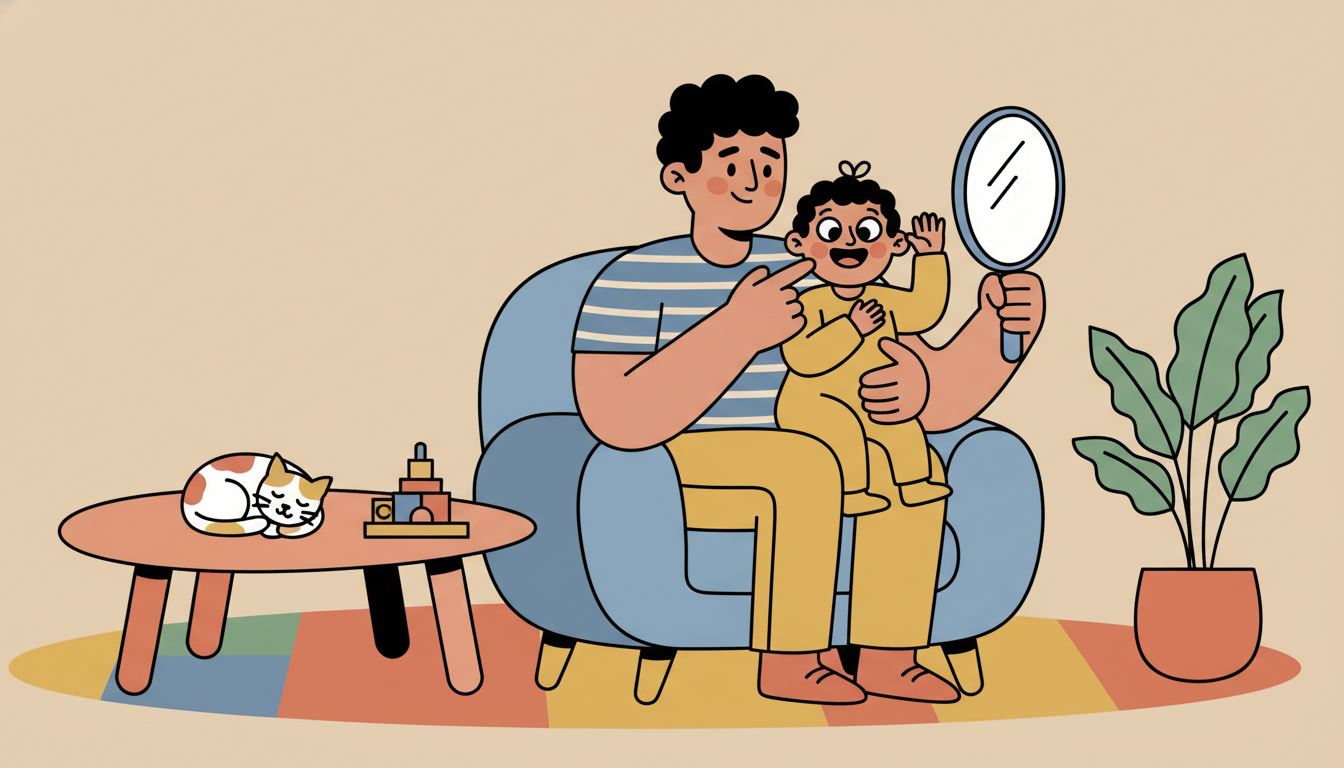
Throughout your day, name your child's feelings when you notice them. Say things like you look happy or I see you feel frustrated. Use a calm, warm tone. You can also make faces together in a mirror and name the emotions you both show.
En del av Steadily-utvecklingsresan — personligt anpassad för ditt barn.
Så här gör ni aktiviteten
Throughout your day, name your child's feelings when you notice them. Say things like you look happy or I see you feel frustrated. Use a calm, warm tone. You can also make faces together in a mirror and name the emotions you both show.
Varför det fungerar
Naming and validating feelings establishes a safe space for open communication, which research shows is essential for building strong parent-child relationships (Hartos & Power, 2000). Quality communication that includes empathy and appropriate responses enhances relationship quality and supports your child's psychological development (Zhang & Li, 2024). Starting this practice during the language explosion period helps your child develop both emotional vocabulary and the habit of expressing feelings openly.
Tips till föräldrar
Keep emotion words simple. Happy, sad, mad, and scared work well for this age.
Name your own feelings too. This helps your child learn that everyone has emotions.
Stay calm and matter of fact. Your child is learning that feelings can be talked about safely.
Material som behövs
None
Lärandemetoder
Language-Rich EnvironmentImitation and Modeling

Gillade du den här aktiviteten? Låt oss sköta planeringen åt dig.
Steadily anpassar varje aktivitet efter ditt barn — deras intressen, deras utvecklingssteg och de egenskaper de bygger upp — så att lektiden blir roligare och varje ögonblick räknas.
Läs mer om hur Steadily fungerar →