Story feelings talk
3–4 årEmotional WellbeingMaterial: Picture books
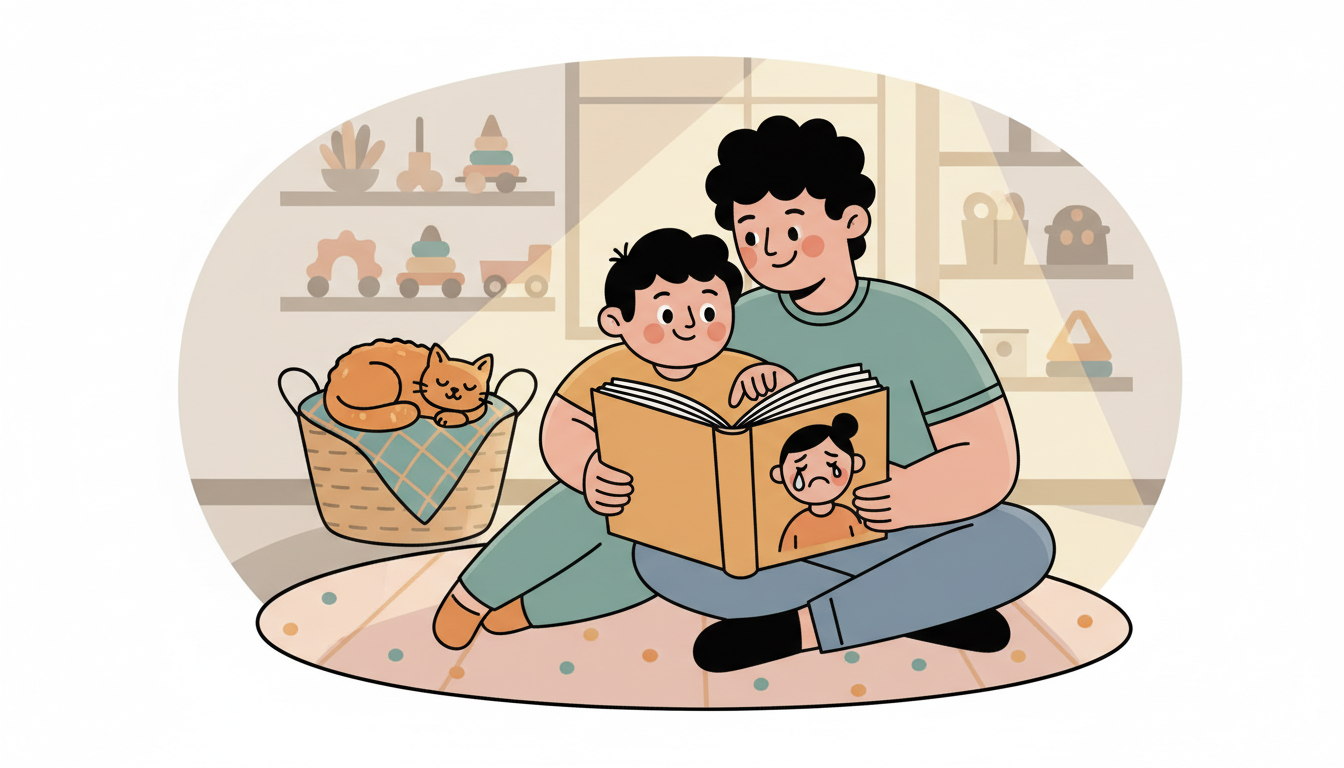
During your reading time, pause to discuss how story characters feel. Ask your child why they think the character feels that way. Point to facial expressions in pictures. Connect character emotions to times your child felt similar feelings. This builds empathy and emotional vocabulary through familiar stories.
En del av Steadily-utvecklingsresan — personligt anpassad för ditt barn.
Så här gör ni aktiviteten
During your reading time, pause to discuss how story characters feel. Ask your child why they think the character feels that way. Point to facial expressions in pictures. Connect character emotions to times your child felt similar feelings. This builds empathy and emotional vocabulary through familiar stories.
Varför det fungerar
Theory of mind emerges at this age, enabling understanding of others' perspectives and emotions for the first time. Students with higher emotional intelligence show significantly better psychological well-being and enhanced social interactions (Brackett et al., 2011). Story discussions strengthen emotional understanding during this sensitive period.
Tips till föräldrar
Choose books with clear facial expressions in the illustrations.
Ask how do you think they feel before giving answers.
Connect story emotions to your child's real experiences.
Material som behövs
Picture books
Lärandemetoder
Narrative and Literacy-Rich ExperiencesCollaborative and Cooperative PlayInquiry-Based Learning

Gillade du den här aktiviteten? Låt oss sköta planeringen åt dig.
Steadily anpassar varje aktivitet efter ditt barn — deras intressen, deras utvecklingssteg och de egenskaper de bygger upp — så att lektiden blir roligare och varje ögonblick räknas.
Läs mer om hur Steadily fungerar →