Name feelings in the moment
4–5 årFamily ConnectionInga material behövs
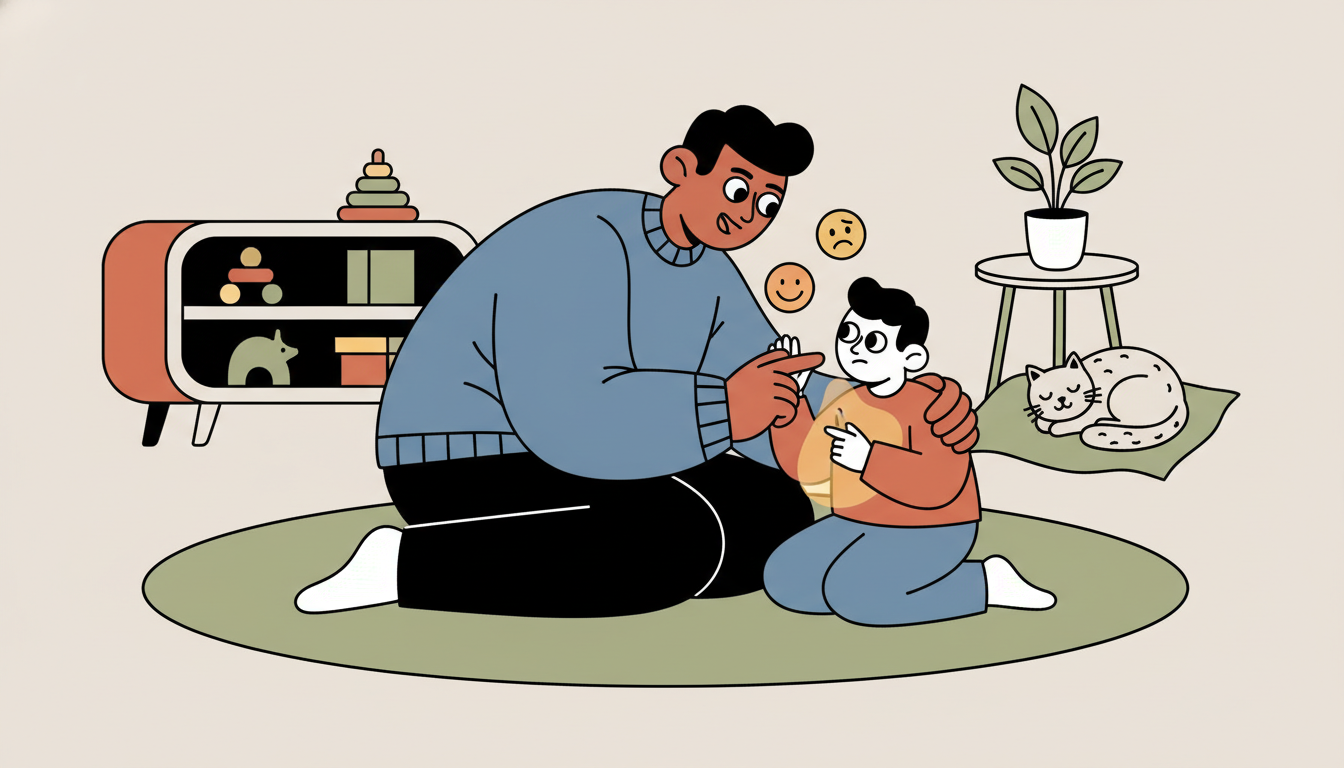
Throughout your activities together, help your child identify and name their feelings as they happen. When you notice your child showing emotion, offer words for it. You might say it looks like they are feeling proud, disappointed, or curious. This builds emotional vocabulary and helps children express needs clearly instead of acting out.
En del av Steadily-utvecklingsresan — personligt anpassad för ditt barn.
Så här gör ni aktiviteten
Throughout your activities together, help your child identify and name their feelings as they happen. When you notice your child showing emotion, offer words for it. You might say it looks like they are feeling proud, disappointed, or curious. This builds emotional vocabulary and helps children express needs clearly instead of acting out.
Varför det fungerar
Teaching vocabulary for complex emotions supports children's ability to express needs and concerns clearly, a key component of effective communication (Widiastuti & Purwandari, 2019). When children can name their feelings, they are better able to communicate openly and honestly (Hartos & Power, 2000). Empathy and appropriate responses to emotional expression enhance relationship quality and psychological development (Zhang & Li, 2024).
Tips till föräldrar
Use a variety of feeling words beyond happy and sad.
Describe what you observe before naming the feeling.
Validate all feelings as normal and acceptable.
Material som behövs
None
Lärandemetoder
Cooperative LearningStructured Academic LearningProject-Based and Thematic Learning

Gillade du den här aktiviteten? Låt oss sköta planeringen åt dig.
Steadily anpassar varje aktivitet efter ditt barn — deras intressen, deras utvecklingssteg och de egenskaper de bygger upp — så att lektiden blir roligare och varje ögonblick räknas.
Läs mer om hur Steadily fungerar →