Mirror feeling faces
2–3 årEmotional WellbeingMaterial: Mirror
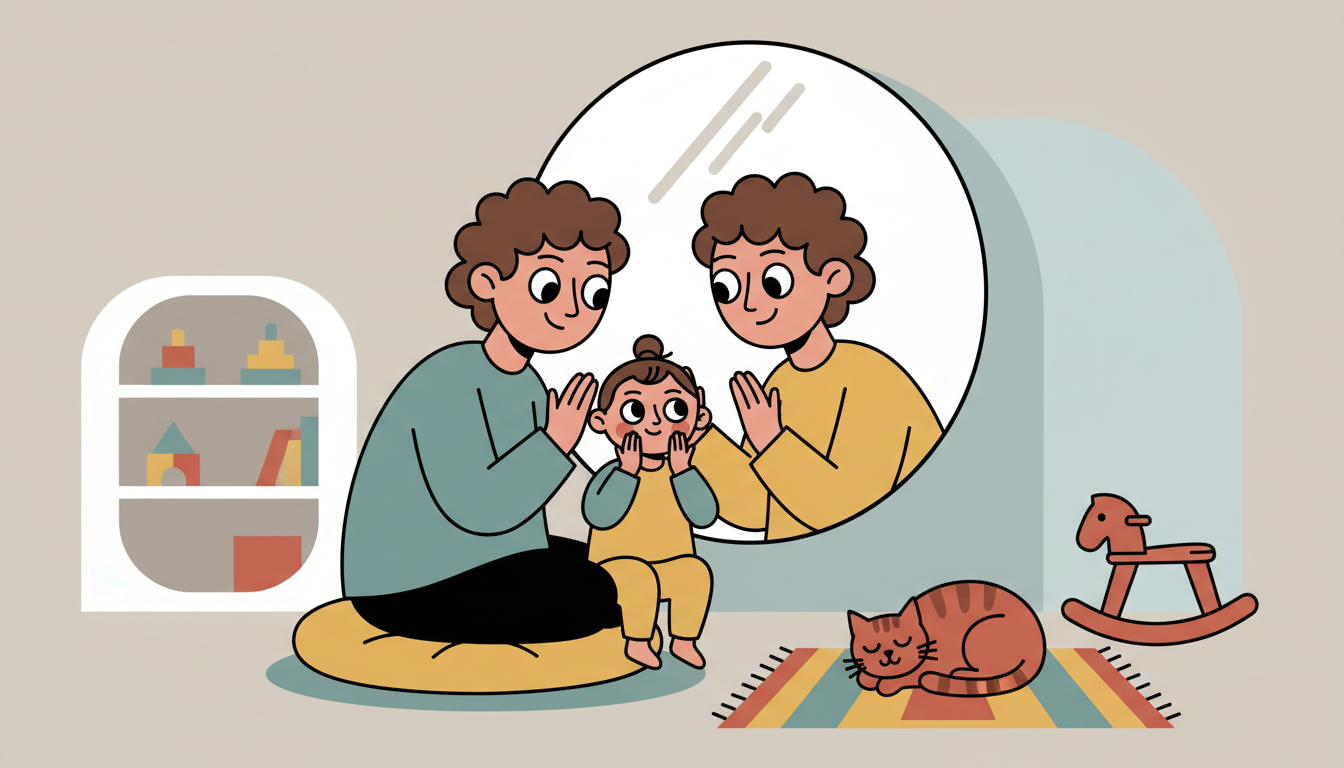
Sit with your child in front of a mirror and make different facial expressions together. Name each emotion as you make the face. Try happy, sad, surprised, angry, and silly faces.
En del av Steadily-utvecklingsresan — personligt anpassad för ditt barn.
Så här gör ni aktiviteten
Sit with your child in front of a mirror and make different facial expressions together. Name each emotion as you make the face. Try happy, sad, surprised, angry, and silly faces.
This activity builds emotional vocabulary during natural play time. Your child learns to connect facial expressions with feeling words, which is the foundation of emotional recognition.
Varför det fungerar
At this age, children are developing the language skills needed to label emotions for the first time. Research shows that children whose emotions were acknowledged and labeled by parents at age 2-3 showed significantly better emotional regulation and understanding at age 4-5 (Goleman, 1995). Making faces in the mirror helps children connect internal feelings with external expressions, building the foundation for emotional intelligence including self-awareness and empathy.
Tips till föräldrar
Start with your child's current mood and name it. Let them lead sometimes and guess what feeling they're showing.
If they resist making certain faces, that's okay. You can model the expression and simply say the word.
Material som behövs
Mirror
Lärandemetoder
Symbolic and Pretend PlaySongs, Stories, and RhymesSocial Learning Through Peers

Gillade du den här aktiviteten? Låt oss sköta planeringen åt dig.
Steadily anpassar varje aktivitet efter ditt barn — deras intressen, deras utvecklingssteg och de egenskaper de bygger upp — så att lektiden blir roligare och varje ögonblick räknas.
Läs mer om hur Steadily fungerar →