Mirror and reflect feelings
4–5 årFamily ConnectionInga material behövs
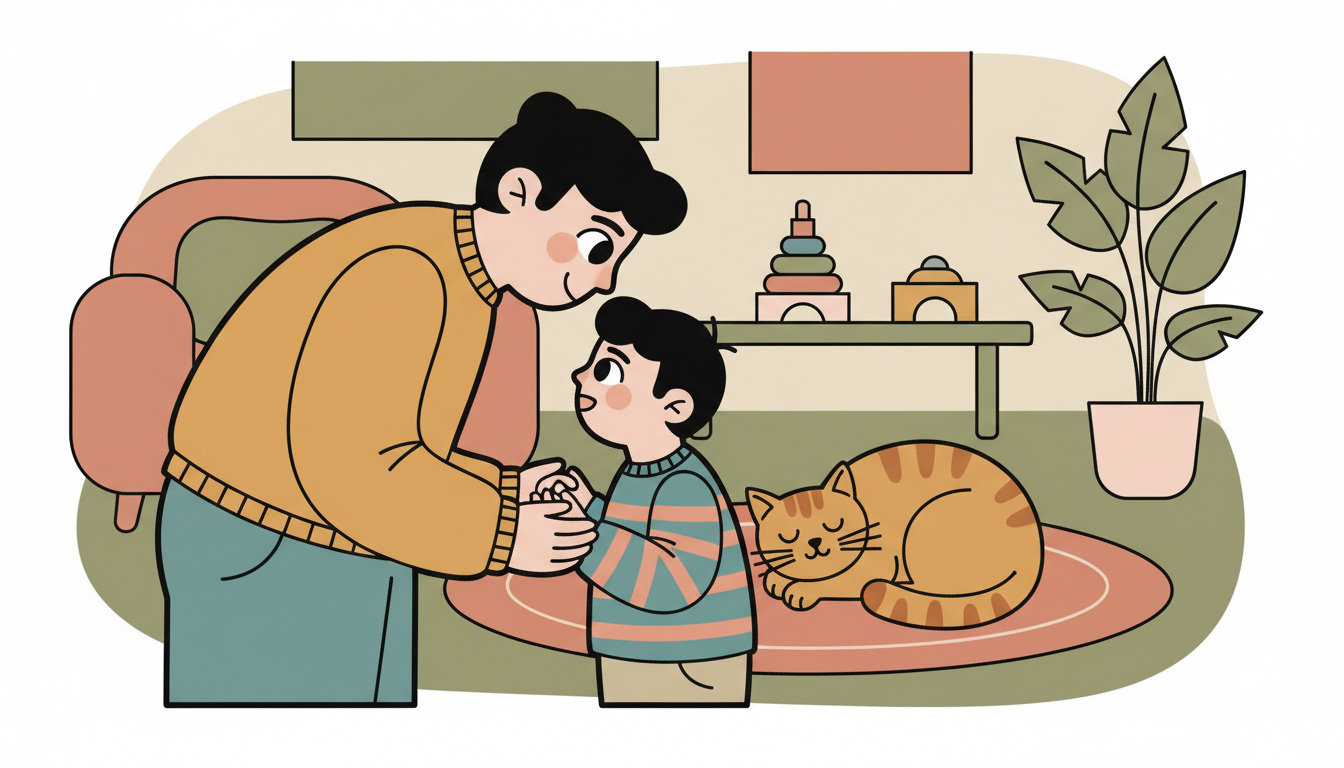
When your child expresses a feeling or concern, reflect it back to them in your own words. If they say they are upset about something, you might say it sounds like they are feeling frustrated. This shows you understand and validates their experience. Mirroring helps children feel heard and teaches them emotional vocabulary for future conversations.
En del av Steadily-utvecklingsresan — personligt anpassad för ditt barn.
Så här gör ni aktiviteten
When your child expresses a feeling or concern, reflect it back to them in your own words. If they say they are upset about something, you might say it sounds like they are feeling frustrated. This shows you understand and validates their experience. Mirroring helps children feel heard and teaches them emotional vocabulary for future conversations.
Varför det fungerar
Research identifies mirroring and empathy as key factors that enhance parent-child relationship quality and children's psychological development (Zhang & Li, 2024). When parents validate feelings before problem-solving, children learn that their emotions matter. This builds trust and encourages continued open communication, which strongly correlates with enduring parent-child relationships (Hartos & Power, 2000).
Tips till föräldrar
Listen carefully before responding to get the feeling right.
Use a calm, warm tone when reflecting back.
Avoid jumping to solutions before acknowledging the feeling.
Material som behövs
None
Lärandemetoder
Cooperative LearningStructured Academic LearningProject-Based and Thematic Learning

Gillade du den här aktiviteten? Låt oss sköta planeringen åt dig.
Steadily anpassar varje aktivitet efter ditt barn — deras intressen, deras utvecklingssteg och de egenskaper de bygger upp — så att lektiden blir roligare och varje ögonblick räknas.
Läs mer om hur Steadily fungerar →