Emotion matching partners
3–4 årSuccess MindsetMaterial: Mirror (optional)
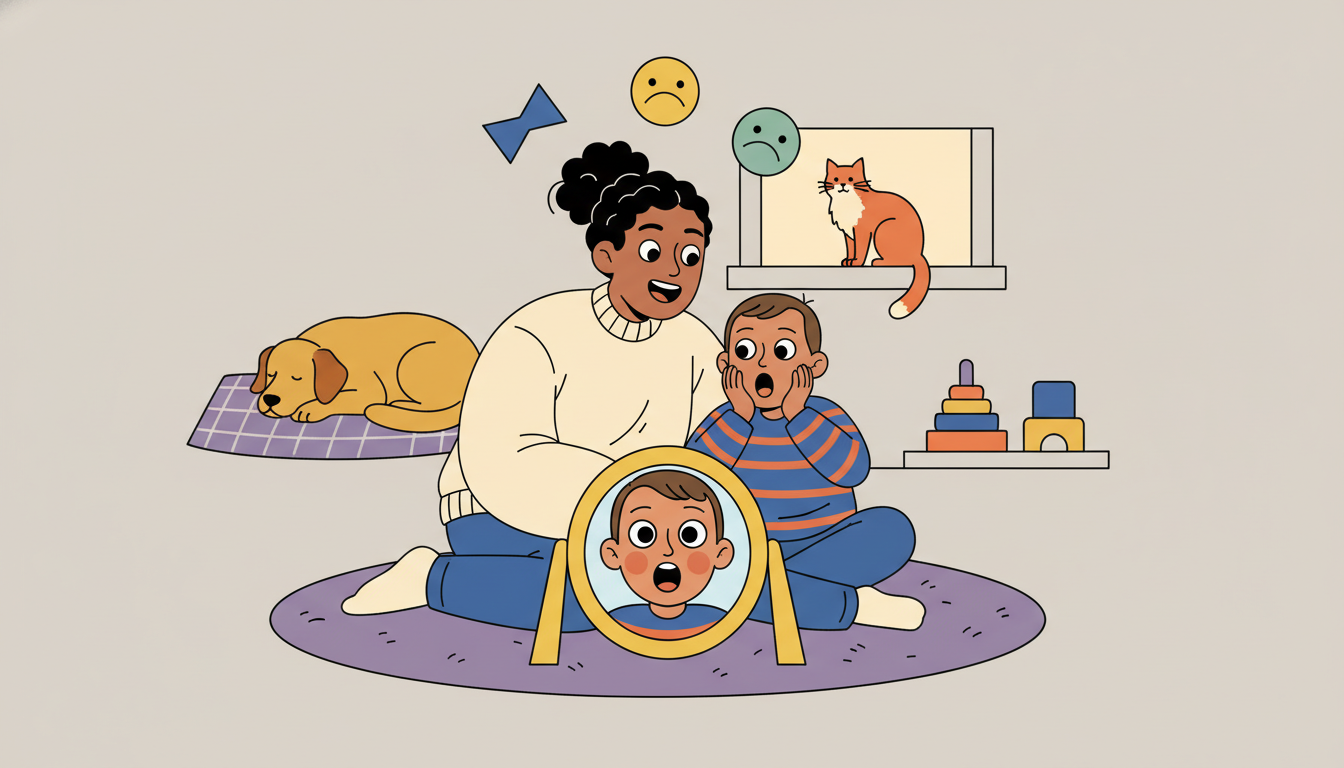
Take turns making facial expressions showing different emotions while the other person guesses the feeling. Then discuss times when you've both felt that way. This helps your child read social cues and understand that others have feelings too. You can use a mirror to practice together.
En del av Steadily-utvecklingsresan — personligt anpassad för ditt barn.
Så här gör ni aktiviteten
Take turns making facial expressions showing different emotions while the other person guesses the feeling. Then discuss times when you've both felt that way. This helps your child read social cues and understand that others have feelings too. You can use a mirror to practice together.
Varför det fungerar
Understanding and responding to social cues is a core component of social intelligence that predicts later success. Children with better social skills showed 50-70% higher likelihood of stable adult employment and educational completion (Durlak et al., 2011). At 36-48 months, theory of mind development enables perspective-taking, making this the optimal window for practicing emotion recognition and empathy skills that form the foundation of positive peer relationships.
Tips till föräldrar
Start with basic emotions like happy, sad, angry, and surprised before moving to more complex ones.
Share real examples: 'I felt frustrated when the car wouldn't start. When do you feel frustrated?'
Validate your child's interpretations even if they're not exact. The practice of reading cues matters most.
Material som behövs
Mirror (optional)
Lärandemetoder
Collaborative and Cooperative PlayStructured Learning ActivitiesProject-Based Learning

Gillade du den här aktiviteten? Låt oss sköta planeringen åt dig.
Steadily anpassar varje aktivitet efter ditt barn — deras intressen, deras utvecklingssteg och de egenskaper de bygger upp — så att lektiden blir roligare och varje ögonblick räknas.
Läs mer om hur Steadily fungerar →