Calm voice practice
4–5 årFamily ConnectionInga material behövs
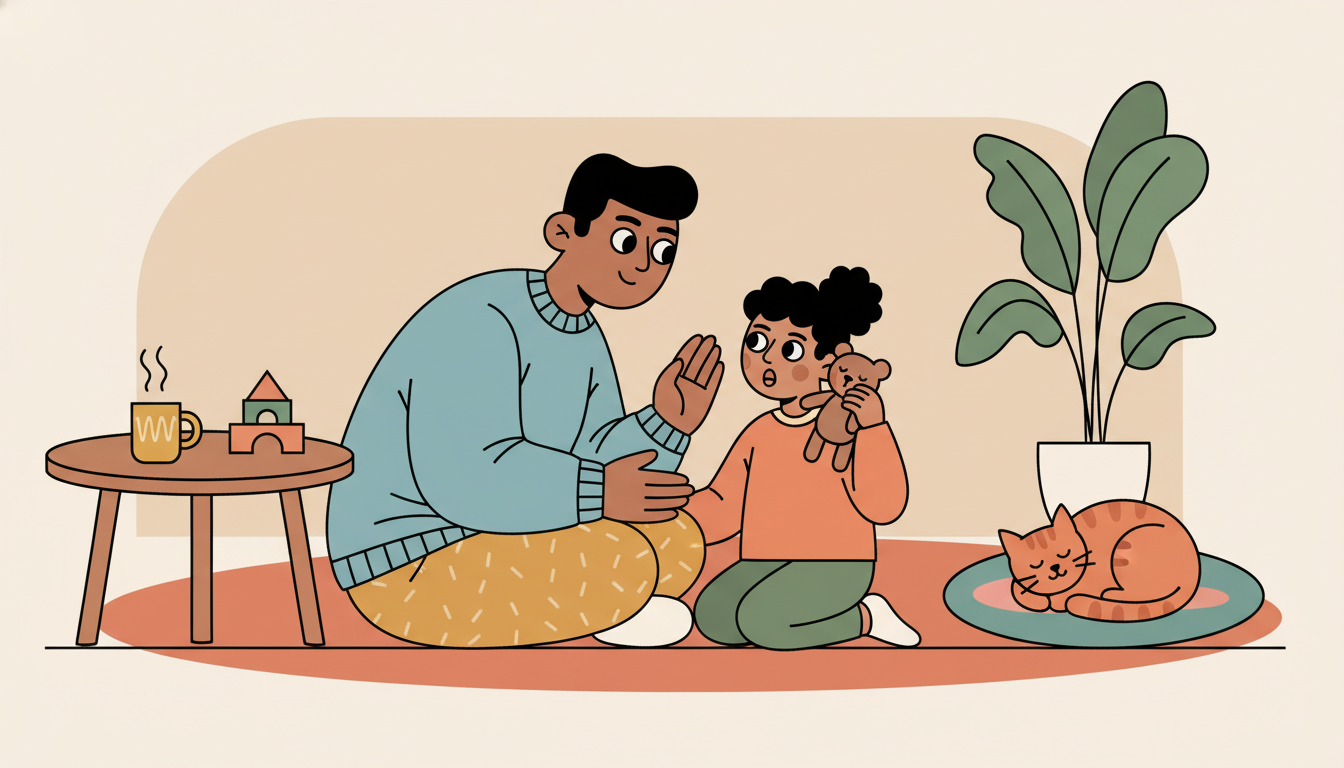
When your child gets upset during a disagreement, model and teach using a calm voice to express feelings. You might say your own feelings in a calm way first, then coach your child to try the same. Praise any effort to use words instead of yelling or physical responses. If needed, take a brief calm-down break before continuing the conversation about the conflict.
En del av Steadily-utvecklingsresan — personligt anpassad för ditt barn.
Så här gör ni aktiviteten
When your child gets upset during a disagreement, model and teach using a calm voice to express feelings. You might say your own feelings in a calm way first, then coach your child to try the same. Praise any effort to use words instead of yelling or physical responses. If needed, take a brief calm-down break before continuing the conversation about the conflict.
Varför det fungerar
Children who learn to calmly discuss disagreements show 30% better emotional regulation and relationship maintenance throughout development (Shantz, 1987). Staying regulated during your child's dysregulation models the exact skill you want them to develop. At this age, children can understand explicit teaching about emotional expression and have the language capacity to express frustration with words when coached.
Tips till föräldrar
Your own calm tone matters more than what you say. Children learn by watching you.
Keep your coaching brief. A simple reminder like calm words helps is often enough.
Recognize that learning this skill takes time and many practice opportunities.
Material som behövs
None
Lärandemetoder
Cooperative LearningMetacognitive StrategiesStructured Academic Learning

Gillade du den här aktiviteten? Låt oss sköta planeringen åt dig.
Steadily anpassar varje aktivitet efter ditt barn — deras intressen, deras utvecklingssteg och de egenskaper de bygger upp — så att lektiden blir roligare och varje ögonblick räknas.
Läs mer om hur Steadily fungerar →