Feeling faces check-in
3–4 årFamily ConnectionInga material behövs
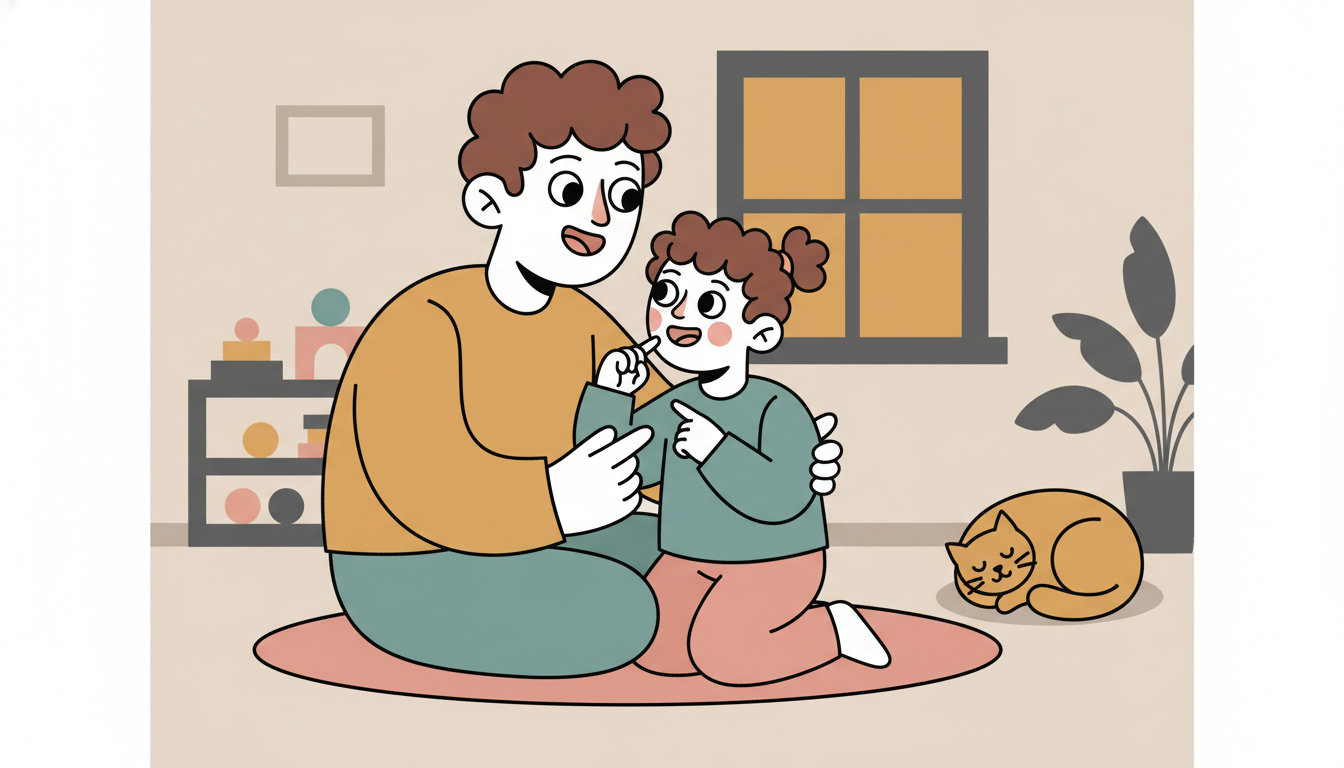
Several times during your time together, pause and ask your child 'How are you feeling right now?' Encourage them to tell you in words rather than just pointing or nodding. Share your own feelings too, using simple statements like 'I feel happy when we play together' or 'I feel tired after work.'
En del av Steadily-utvecklingsresan — personligt anpassad för ditt barn.
Så här gör ni aktiviteten
Several times during your time together, pause and ask your child 'How are you feeling right now?' Encourage them to tell you in words rather than just pointing or nodding. Share your own feelings too, using simple statements like 'I feel happy when we play together' or 'I feel tired after work.'
Varför det fungerar
Frequent emotional check-ins build the communication quality factors of mirroring and appropriate response that enhance children's psychological development (Zhang & Li, 2024). When parents validate and reflect feelings before problem-solving, children learn that their emotional experiences are understood and valued. This practice establishes the open communication patterns that correlate with enduring parent-child relationships (Hartos & Power, 2000).
Tips till föräldrar
Make this feel natural rather than like a test by weaving it into activities you're already doing.
When your child shares a feeling, reflect it back like 'It sounds like you're feeling frustrated that the blocks keep falling.'
Use your own feeling statements to model how to express emotions clearly.
Material som behövs
None
Lärandemetoder
Narrative and Literacy-Rich ExperiencesCollaborative and Cooperative PlayInquiry-Based Learning

Gillade du den här aktiviteten? Låt oss sköta planeringen åt dig.
Steadily anpassar varje aktivitet efter ditt barn — deras intressen, deras utvecklingssteg och de egenskaper de bygger upp — så att lektiden blir roligare och varje ögonblick räknas.
Läs mer om hur Steadily fungerar →