Emotion color matching
3–4 årEmotional WellbeingMaterial: Crayons or markers
Paper
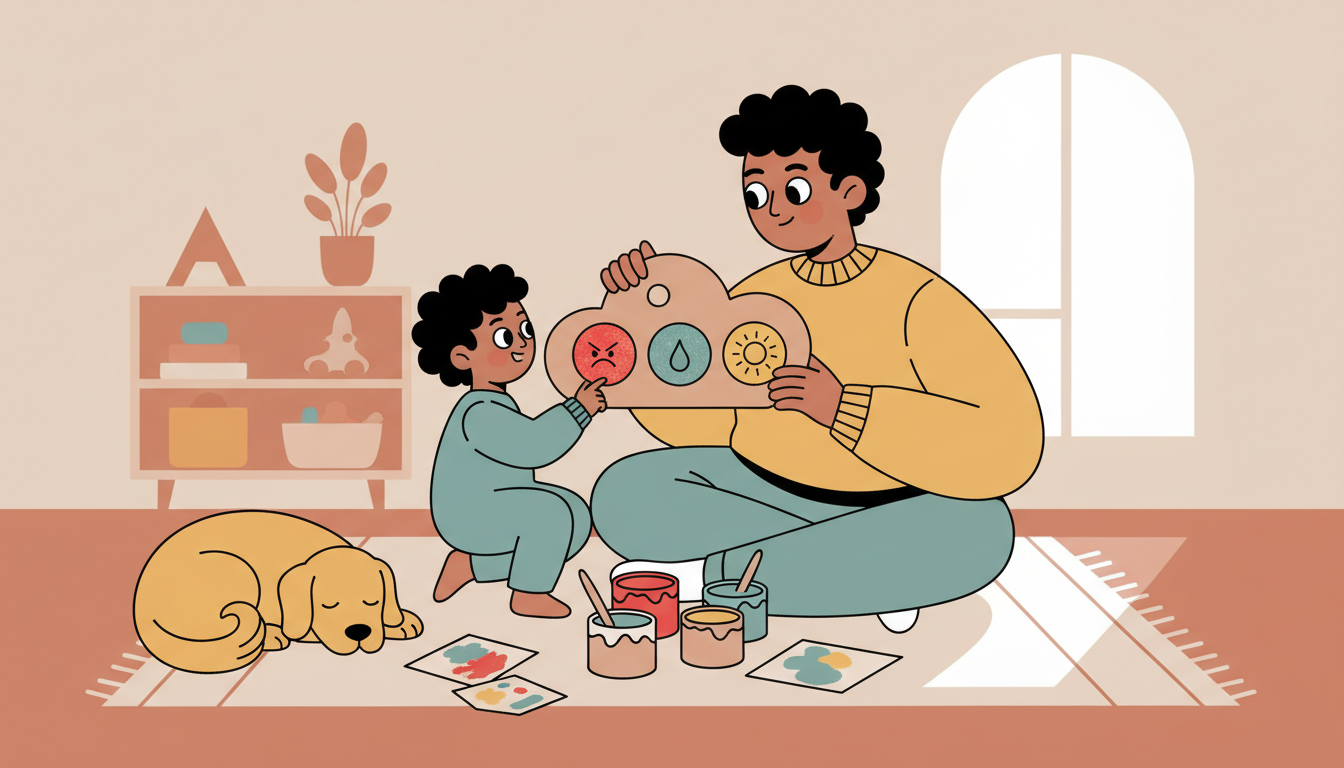
Assign colors to different emotions together. Maybe red for angry, blue for sad, yellow for happy. Throughout your time together, check in by asking what color they feel. You share your color too. Draw or paint with emotion colors. This gives your child concrete language for abstract feelings.
En del av Steadily-utvecklingsresan — personligt anpassad för ditt barn.
Så här gör ni aktiviteten
Assign colors to different emotions together. Maybe red for angry, blue for sad, yellow for happy. Throughout your time together, check in by asking what color they feel. You share your color too. Draw or paint with emotion colors. This gives your child concrete language for abstract feelings.
Varför det fungerar
Concrete representations help young children understand abstract emotional concepts during the age when emotional vocabulary naturally expands. Emotional intelligence development in early childhood leads to better emotional recognition, expression, and regulation skills in adulthood (Goleman, 1995). Color coding makes emotions tangible during this critical period.
Tips till föräldrar
Let your child choose which colors match which feelings.
Keep it simple with three or four emotions at first.
Model sharing your own emotion colors honestly throughout the day.
Material som behövs
Crayons or markers
Paper
Lärandemetoder
Narrative and Literacy-Rich ExperiencesCollaborative and Cooperative PlayInquiry-Based Learning

Gillade du den här aktiviteten? Låt oss sköta planeringen åt dig.
Steadily anpassar varje aktivitet efter ditt barn — deras intressen, deras utvecklingssteg och de egenskaper de bygger upp — så att lektiden blir roligare och varje ögonblick räknas.
Läs mer om hur Steadily fungerar →