Two-choice problem solving
1–2 årFamily ConnectionInga material behövs
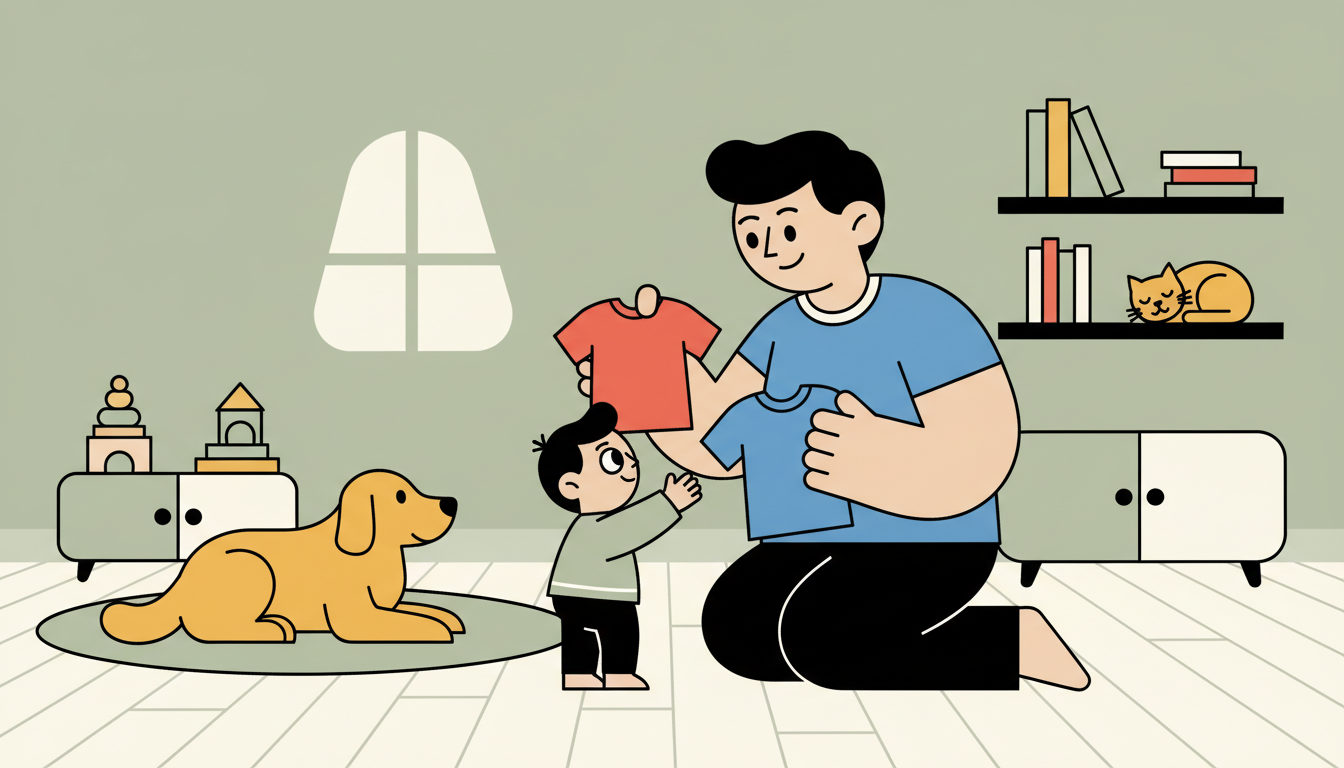
When a conflict arises, offer your child two simple choices to resolve it. For example, if they don't want to get dressed, say 'Red shirt or blue shirt?' This gives them a sense of control while still moving forward. Keep choices simple and show both options. This teaches early problem-solving and compromise.
En del av Steadily-utvecklingsresan — personligt anpassad för ditt barn.
Så här gör ni aktiviteten
When a conflict arises, offer your child two simple choices to resolve it. For example, if they don't want to get dressed, say 'Red shirt or blue shirt?' This gives them a sense of control while still moving forward. Keep choices simple and show both options. This teaches early problem-solving and compromise.
Varför det fungerar
At 12-24 months, children are developing basic problem-solving abilities through trial and error. Offering two choices respects their growing autonomy while teaching that conflicts can have multiple solutions. This approach reduces power struggles and models collaborative problem-solving. Children who learn these collaborative problem-solving approaches maintain stronger family bonds across developmental transitions (Robin & Foster, 1989). Early exposure to problem-solving skills leads to significantly better peer relationships and 25% fewer behavioral problems (Webster-Stratton & Reid, 2004).
Tips till föräldrar
Hold up both choices or point to them so your child can see what you mean. Visual support helps at this age.
Stay calm and patient while they choose. It may take a minute for them to decide, and that's okay.
Material som behövs
None
Lärandemetoder
Language-Rich EnvironmentImitation and Modeling

Gillade du den här aktiviteten? Låt oss sköta planeringen åt dig.
Steadily anpassar varje aktivitet efter ditt barn — deras intressen, deras utvecklingssteg och de egenskaper de bygger upp — så att lektiden blir roligare och varje ögonblick räknas.
Läs mer om hur Steadily fungerar →