Stuffed animal feelings
2–3 årEmotional WellbeingMaterial: Stuffed animals or dolls
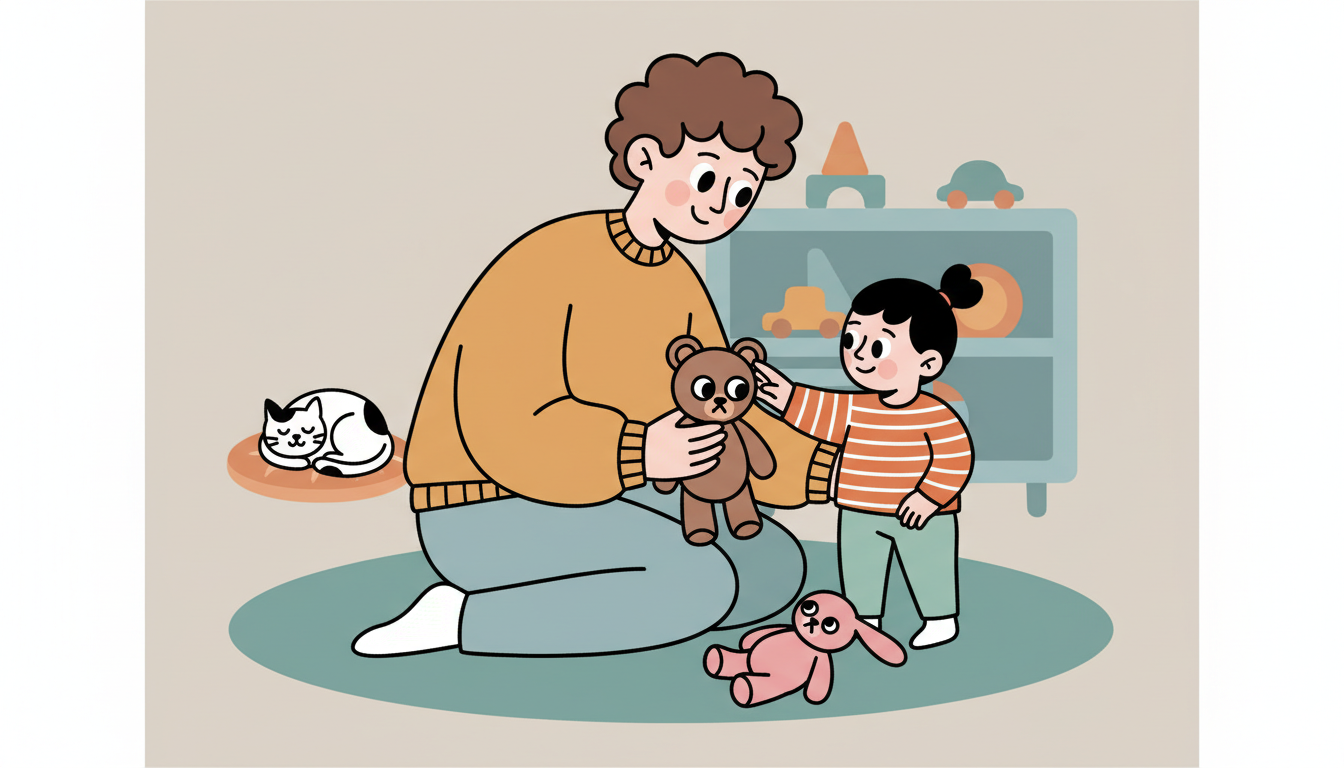
Use stuffed animals or dolls to act out simple emotional scenarios. You might say, 'Teddy fell down. How does Teddy feel?' Let your child respond, then help Teddy feel better together.
En del av Steadily-utvecklingsresan — personligt anpassad för ditt barn.
Så här gör ni aktiviteten
Use stuffed animals or dolls to act out simple emotional scenarios. You might say, 'Teddy fell down. How does Teddy feel?' Let your child respond, then help Teddy feel better together.
This play-based approach lets your child practice empathy and problem-solving in a safe, pretend context. It's easier to talk about a toy's feelings than their own big emotions.
Varför det fungerar
Symbolic and pretend play is critical for cognitive, social, and emotional development at this age. Research shows that early emotional intelligence development leads to better emotional recognition and expression skills in adulthood (Goleman, 1995). Empathy is one of the five core components of EQ, and children with higher emotional intelligence experience significantly better relationship satisfaction and mental health outcomes (Bar-On, 2006).
Tips till föräldrar
Follow your child's lead. If they want to make the stuffed animal do something different, go with it.
You can introduce simple solutions like, 'Should we give Teddy a hug to help him feel better?'
Material som behövs
Stuffed animals or dolls
Lärandemetoder
Symbolic and Pretend PlaySongs, Stories, and RhymesSocial Learning Through Peers

Gillade du den här aktiviteten? Låt oss sköta planeringen åt dig.
Steadily anpassar varje aktivitet efter ditt barn — deras intressen, deras utvecklingssteg och de egenskaper de bygger upp — så att lektiden blir roligare och varje ögonblick räknas.
Läs mer om hur Steadily fungerar →