Feelings in picture books
1–2 årEmotional WellbeingMaterial: Picture books with expressive characters
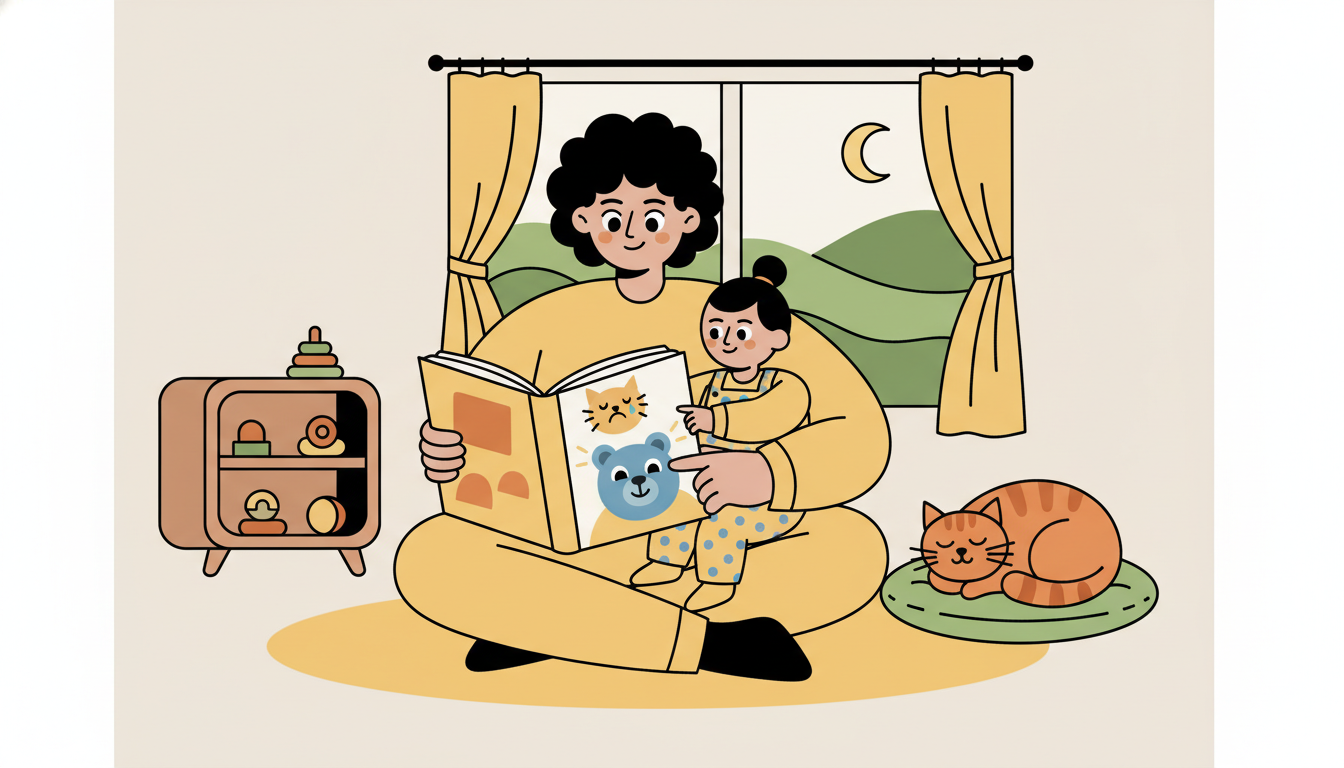
During reading time, point to characters' faces and name their emotions. Ask simple questions like 'Is the bear happy or sad?' Let your child point to the faces. You can use the same book many times, focusing on different emotions each time. This builds emotional vocabulary naturally during a routine you already do.
En del av Steadily-utvecklingsresan — personligt anpassad för ditt barn.
Så här gör ni aktiviteten
During reading time, point to characters' faces and name their emotions. Ask simple questions like 'Is the bear happy or sad?' Let your child point to the faces. You can use the same book many times, focusing on different emotions each time. This builds emotional vocabulary naturally during a routine you already do.
Varför det fungerar
Reading about feelings in a language-rich environment supports the vocabulary explosion happening at this age. Research shows that emotional intelligence development in early childhood leads to better emotional recognition and expression skills in adulthood, with improved concentration and study habits (Goleman, 1995). Books provide safe scenarios to explore emotions.
Tips till föräldrar
Choose books with clear, expressive illustrations of faces.
Pause to let your child look at and process the pictures.
Connect the character's emotions to your child's experiences, like 'The rabbit is sad, just like when you dropped your toy.'
Material som behövs
Picture books with expressive characters
Lärandemetoder
Language-Rich EnvironmentImitation and ModelingBeginning Symbolic Play

Gillade du den här aktiviteten? Låt oss sköta planeringen åt dig.
Steadily anpassar varje aktivitet efter ditt barn — deras intressen, deras utvecklingssteg och de egenskaper de bygger upp — så att lektiden blir roligare och varje ögonblick räknas.
Läs mer om hur Steadily fungerar →