Pause before responding
6–12 månaderSuccess MindsetInga material behövs
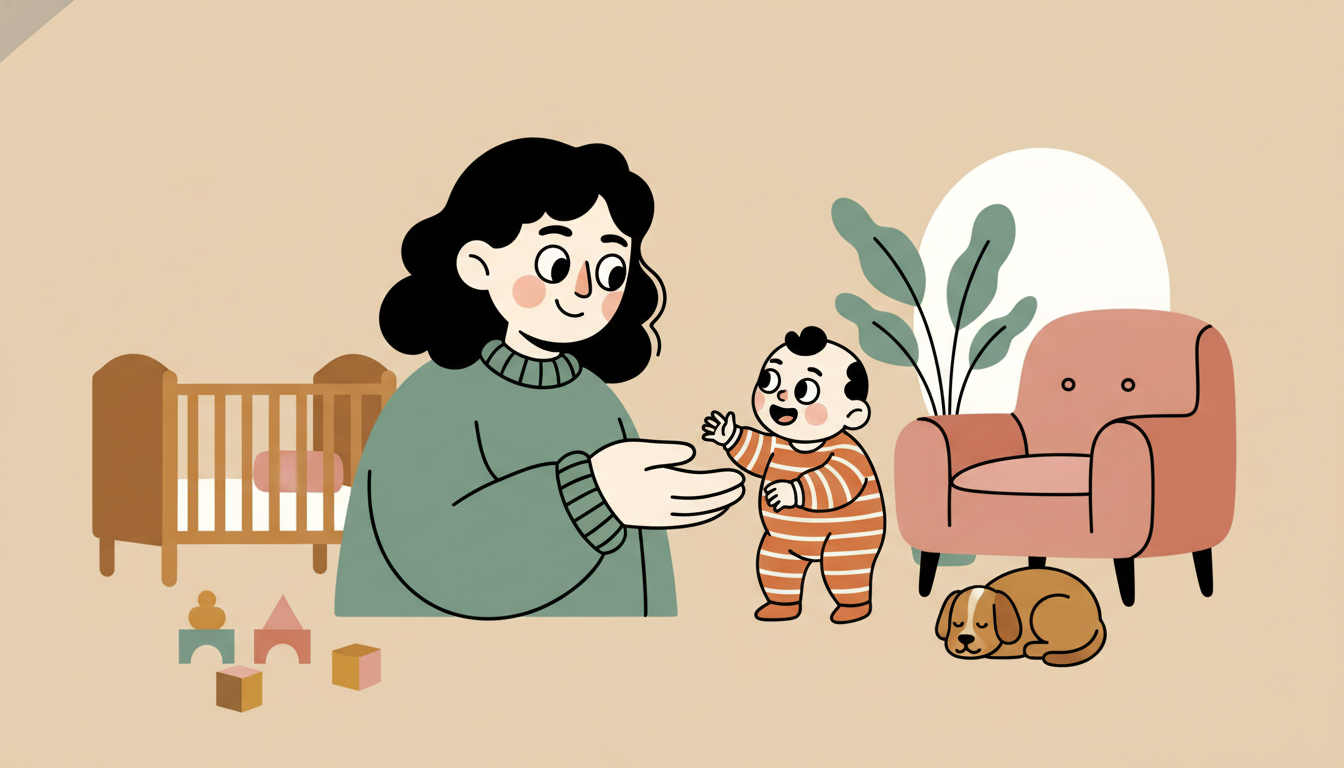
When your child babbles or makes sounds to get your attention, make eye contact and smile, then wait two to three seconds before responding with words or actions. This brief pause is not ignoring but rather giving your child a moment to experience anticipation. It teaches that communication involves brief waiting periods and turn-taking.
En del av Steadily-utvecklingsresan — personligt anpassad för ditt barn.
Så här gör ni aktiviteten
When your child babbles or makes sounds to get your attention, make eye contact and smile, then wait two to three seconds before responding with words or actions. This brief pause is not ignoring but rather giving your child a moment to experience anticipation. It teaches that communication involves brief waiting periods and turn-taking.
Varför det fungerar
Responsive interaction with appropriate pauses builds neural connections that support self-regulation and executive function. These serve-and-return exchanges are crucial for brain development. Research shows that self-regulation capacities developed early in life predict later academic achievement and success across multiple domains (Blair, C., & Diamond, A., 2008).
Tips till föräldrar
Keep your expression warm and engaged during the pause so your child knows you heard them.
Start with very short pauses and lengthen gradually over weeks.
Respond consistently after the pause so your child learns to trust the pattern.
Material som behövs
None
Lärandemetoder
Repetition and RoutineResponsive Interaction

Gillade du den här aktiviteten? Låt oss sköta planeringen åt dig.
Steadily anpassar varje aktivitet efter ditt barn — deras intressen, deras utvecklingssteg och de egenskaper de bygger upp — så att lektiden blir roligare och varje ögonblick räknas.
Läs mer om hur Steadily fungerar →