Naming feelings together
1–2 anosEmotional WellbeingNenhum material necessário
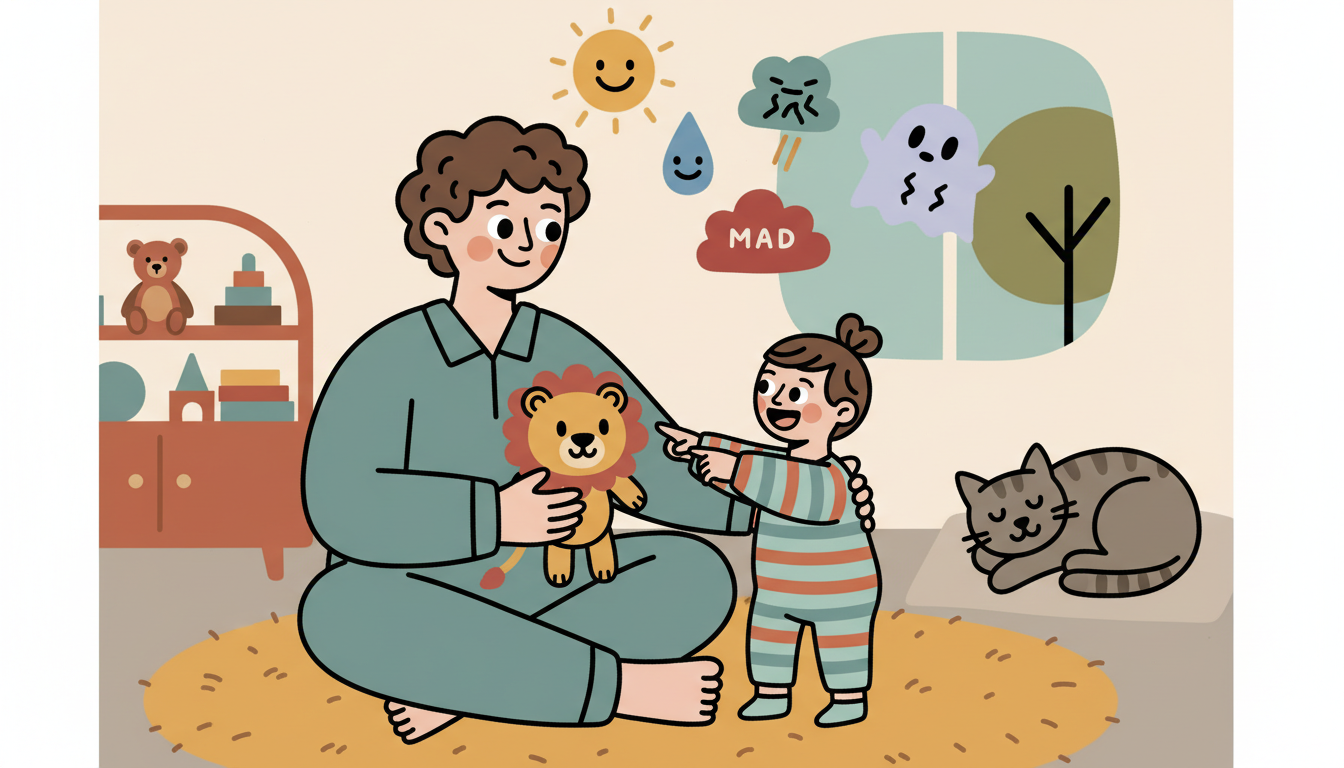
As you play with your child, label emotions as they happen. When your child laughs, say 'You're feeling happy.' When they seem frustrated with a toy, say 'You're feeling frustrated.' Use simple emotion words like happy, sad, mad, and scared. This helps your child connect words to their internal experiences.
Parte da jornada de desenvolvimento da Steadily — personalizada para o seu filho.
Como fazer esta atividade
As you play with your child, label emotions as they happen. When your child laughs, say 'You're feeling happy.' When they seem frustrated with a toy, say 'You're feeling frustrated.' Use simple emotion words like happy, sad, mad, and scared. This helps your child connect words to their internal experiences.
Por que funciona
Language development at this age enables explicit emotion labeling and discussion. When children learn to name their emotions, they develop better emotional recognition and expression skills that carry into adulthood (Goleman, 1995). This builds the foundation for self-awareness, a core component of emotional intelligence.
Dicas para os pais
Keep it simple with one or two emotion words at a time.
Use a calm, matter-of-fact tone when naming emotions.
Label your own emotions too, like 'I'm feeling tired' or 'I'm feeling happy to see you.'
Materiais necessários
None
Métodos de aprendizagem
Language-Rich EnvironmentImitation and ModelingBeginning Symbolic Play

Adoraste esta atividade? Deixa o planeamento por nossa conta.
Steadily personaliza cada atividade para o teu filho — os seus interesses, a sua fase e os traços que está a desenvolver — para que a hora de brincar seja mais divertida e cada momento conte.
Descobre como funciona a Steadily →