Feeling faces matching
1–2 anosFamily ConnectionMateriais: Paper and crayons to draw simple faces, or pictures from magazines
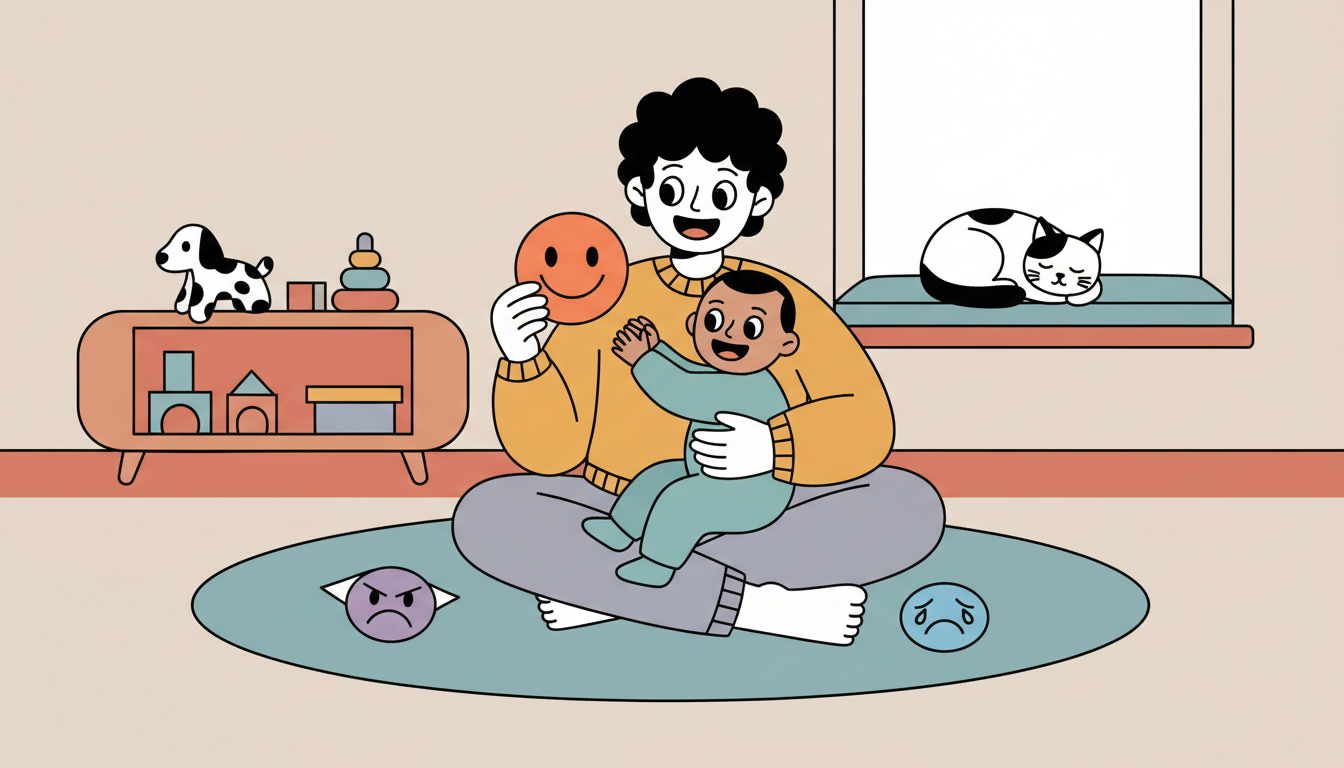
Cut out or draw simple faces showing different emotions (happy, sad, angry). Show your child one face at a time and name the feeling. Then make that expression yourself and help your child copy it. Keep just two or three emotion faces at first. This simple matching activity helps your child learn to recognize and reproduce emotional expressions, building the foundation for understanding how others feel.
Parte da jornada de desenvolvimento da Steadily — personalizada para o seu filho.
Como fazer esta atividade
Cut out or draw simple faces showing different emotions (happy, sad, angry). Show your child one face at a time and name the feeling. Then make that expression yourself and help your child copy it. Keep just two or three emotion faces at first. This simple matching activity helps your child learn to recognize and reproduce emotional expressions, building the foundation for understanding how others feel.
Por que funciona
Recognizing emotions in facial expressions is fundamental to empathy development. Research shows that childhood behaviors including recognizing and responding sensitively to emotions predict stronger adult empathy and relationship quality (Eisenberg et al., 2015). This matching activity uses the toddler's emerging ability to recognize and match similar items while building emotional vocabulary. The imitation component leverages one of the most powerful learning methods at this age, helping children internalize the connection between facial expressions and emotional states.
Dicas para os pais
Start with happy and sad. These are the easiest emotions for toddlers to recognize.
Use simple, clear drawings. Complicated pictures can be confusing.
Praise your child's attempts to make the faces. Say 'You made a sad face just like the picture.'
Materiais necessários
Paper and crayons to draw simple faces, or pictures from magazines
Métodos de aprendizagem
Language-Rich EnvironmentImitation and ModelingBeginning Symbolic Play

Adoraste esta atividade? Deixa o planeamento por nossa conta.
Steadily personaliza cada atividade para o teu filho — os seus interesses, a sua fase e os traços que está a desenvolver — para que a hora de brincar seja mais divertida e cada momento conte.
Descobre como funciona a Steadily →