Mirror and reflect feelings
4–5 anosFamily ConnectionNenhum material necessário
When your child expresses a feeling or concern, reflect it back to them in your own words. If they say they are upset about something, you might say it sounds like they are feeling frustrated. This shows you understand and validates their experience. Mirroring helps children feel heard and teaches them emotional vocabulary for future conversations.
Parte da jornada de desenvolvimento da Steadily — personalizada para o seu filho.
Como fazer esta atividade
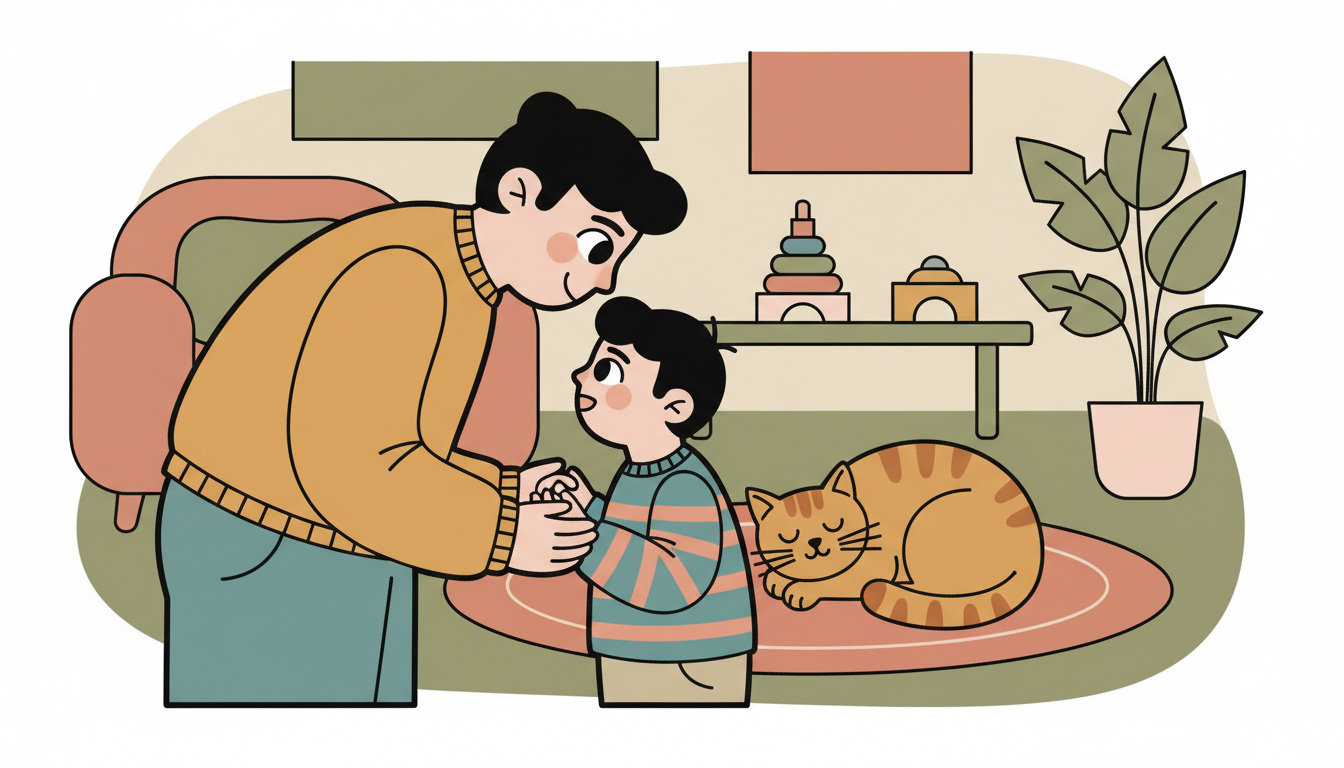
When your child expresses a feeling or concern, reflect it back to them in your own words. If they say they are upset about something, you might say it sounds like they are feeling frustrated. This shows you understand and validates their experience. Mirroring helps children feel heard and teaches them emotional vocabulary for future conversations.
Por que funciona
Research identifies mirroring and empathy as key factors that enhance parent-child relationship quality and children's psychological development (Zhang & Li, 2024). When parents validate feelings before problem-solving, children learn that their emotions matter. This builds trust and encourages continued open communication, which strongly correlates with enduring parent-child relationships (Hartos & Power, 2000).
Dicas para os pais
Listen carefully before responding to get the feeling right.
Use a calm, warm tone when reflecting back.
Avoid jumping to solutions before acknowledging the feeling.
Materiais necessários
None
Métodos de aprendizagem
Cooperative LearningStructured Academic LearningProject-Based and Thematic Learning

Adoraste esta atividade? Deixa o planeamento por nossa conta.
Steadily personaliza cada atividade para o teu filho — os seus interesses, a sua fase e os traços que está a desenvolver — para que a hora de brincar seja mais divertida e cada momento conte.
Descobre como funciona a Steadily →