Feelings in our story
2–3 anosFamily ConnectionMateriais: Picture books with clear facial expressions
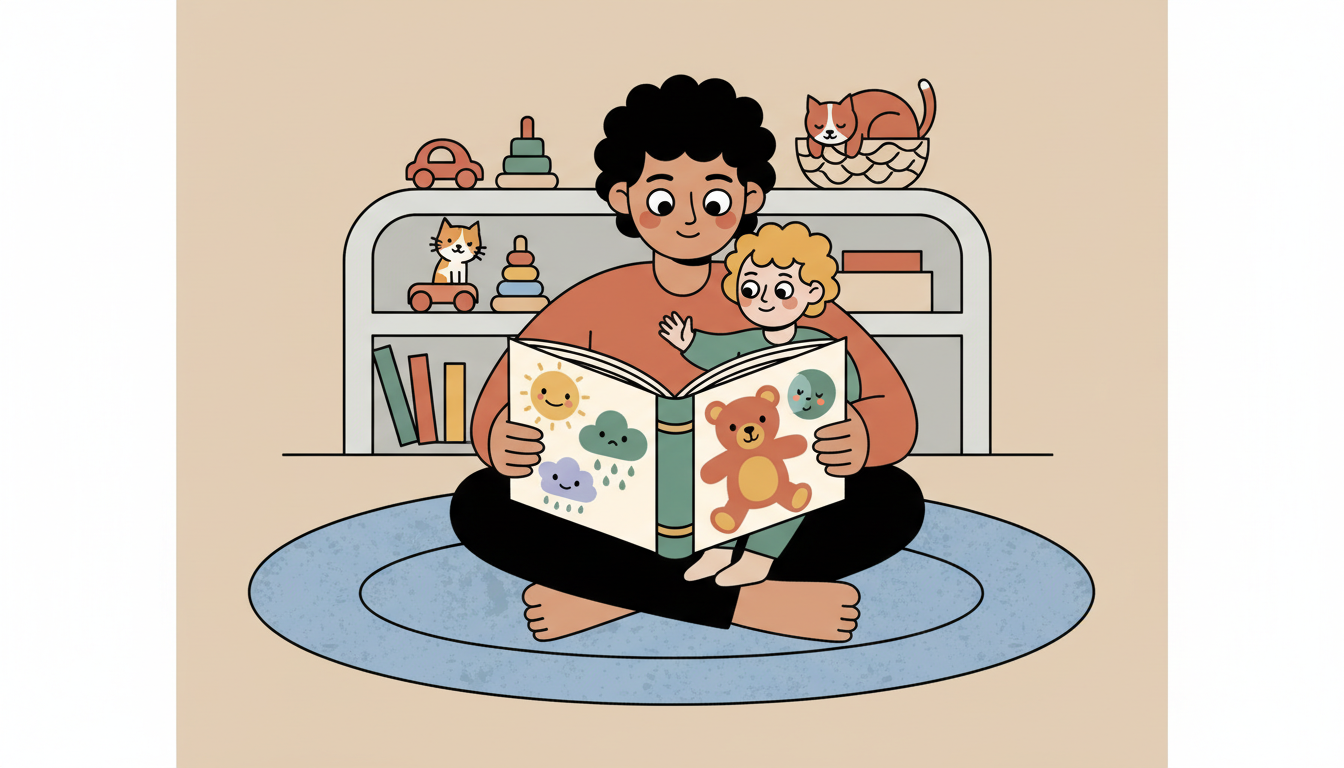
During story time, pause to point out characters' emotions. Ask simple questions like 'Is teddy happy or sad?' Help your child notice facial expressions in the pictures. Name the emotions you see together. This turns reading time into an empathy learning moment.
Parte da jornada de desenvolvimento da Steadily — personalizada para o seu filho.
Como fazer esta atividade
During story time, pause to point out characters' emotions. Ask simple questions like 'Is teddy happy or sad?' Help your child notice facial expressions in the pictures. Name the emotions you see together. This turns reading time into an empathy learning moment.
Por que funciona
Reading books about feelings and discussing characters' emotions helps children begin distinguishing self from others and recognizing that others have feelings. This activity leverages the critical developmental window when basic empathetic awareness becomes possible for the first time (Hoffman, M. L., 2000). Songs, stories, and rhymes enhance learning during this age, making books an ideal tool for empathy development.
Dicas para os pais
Start with basic emotions like happy, sad, and mad. Use the same emotion words consistently.
Point to your own face to show the emotion, then point to the character. Your child learns by watching you model empathy.
Materiais necessários
Picture books with clear facial expressions
Métodos de aprendizagem
Symbolic and Pretend PlaySongs, Stories, and RhymesSocial Learning Through Peers

Adoraste esta atividade? Deixa o planeamento por nossa conta.
Steadily personaliza cada atividade para o teu filho — os seus interesses, a sua fase e os traços que está a desenvolver — para que a hora de brincar seja mais divertida e cada momento conte.
Descobre como funciona a Steadily →