Feelings during playtime
2–3 anosFamily ConnectionMateriais: Whatever toys you are already playing with
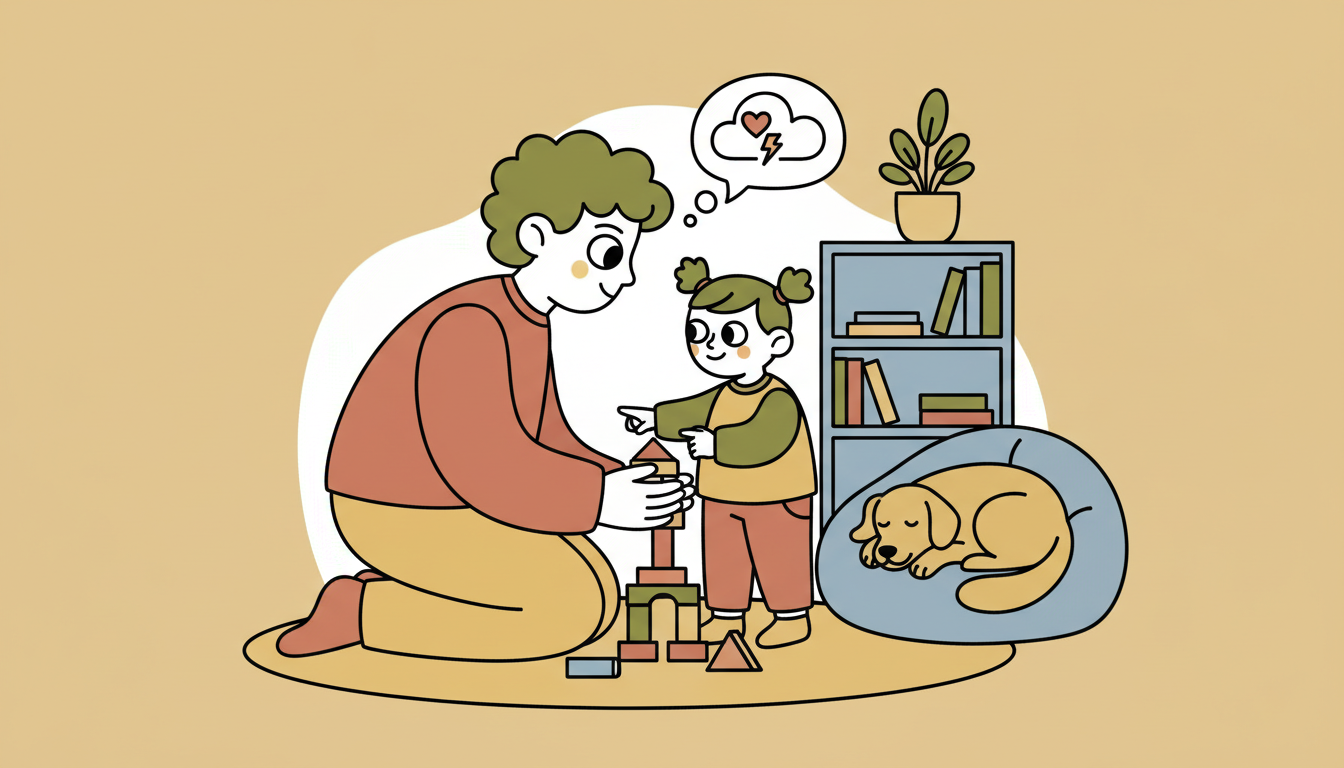
As you play together, narrate the feelings you observe. When your child laughs, say 'You are so happy playing with the blocks.' If they get frustrated, say 'You feel frustrated when the tower falls down. That is hard.' Naming feelings in the moment helps your child connect emotions to experiences.
Parte da jornada de desenvolvimento da Steadily — personalizada para o seu filho.
Como fazer esta atividade
As you play together, narrate the feelings you observe. When your child laughs, say 'You are so happy playing with the blocks.' If they get frustrated, say 'You feel frustrated when the tower falls down. That is hard.' Naming feelings in the moment helps your child connect emotions to experiences.
Por que funciona
Validating children's empathetic and emotional responses in real time builds emotional intelligence. When parents show empathy to their child while teaching about emotions, children develop the safe foundation needed to recognize emotions in themselves and others (Bhansali, B., 2023). Children with empathetic parents show significantly higher social competence (Liu, S., Wang, L., Zhang, L., & Tian, L., 2020).
Dicas para os pais
Notice and name both positive and challenging emotions. All feelings are valid.
Use simple, clear words. Repeat the same emotion words across different situations so your child learns the patterns.
Materiais necessários
Whatever toys you are already playing with
Métodos de aprendizagem
Symbolic and Pretend PlaySongs, Stories, and RhymesSocial Learning Through Peers

Adoraste esta atividade? Deixa o planeamento por nossa conta.
Steadily personaliza cada atividade para o teu filho — os seus interesses, a sua fase e os traços que está a desenvolver — para que a hora de brincar seja mais divertida e cada momento conte.
Descobre como funciona a Steadily →