Name what baby feels
6–12 mesesFamily ConnectionNenhum material necessário
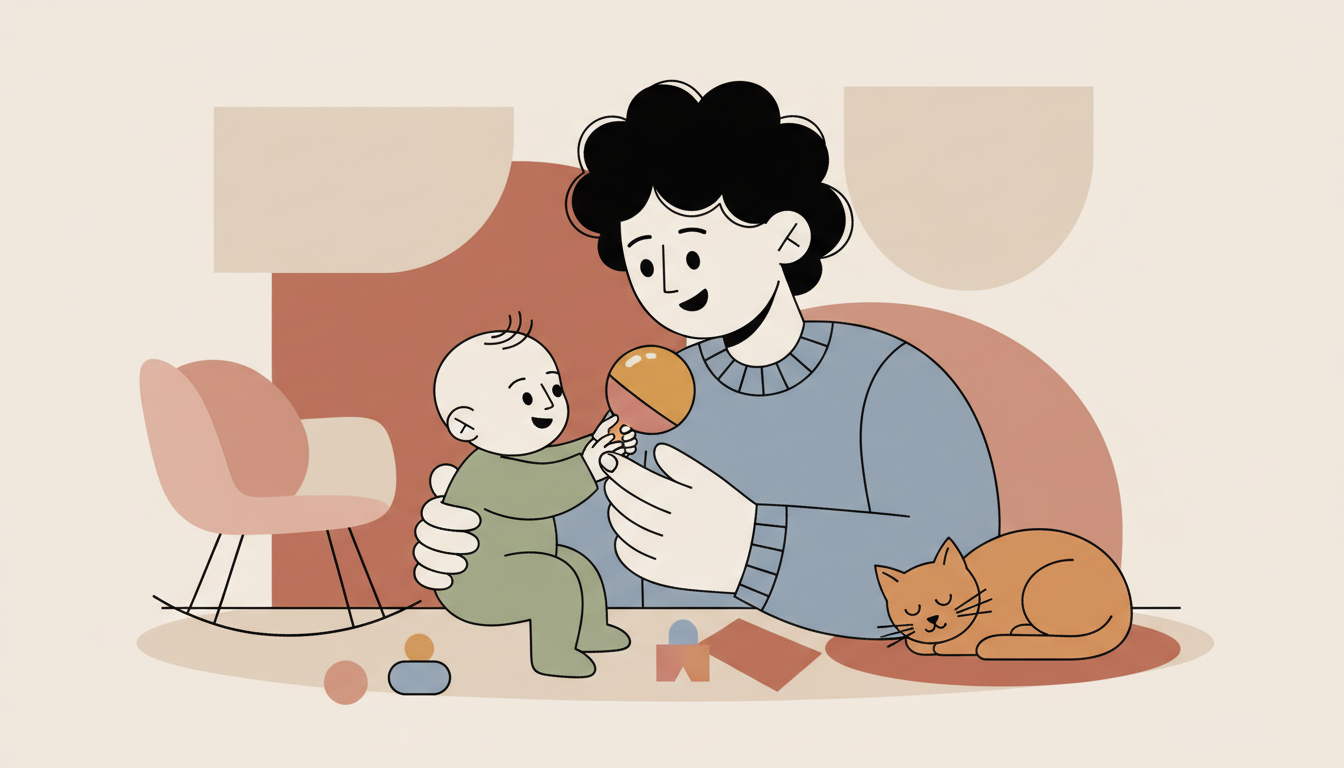
As you interact with your baby, put words to what they might be feeling. When they reach for a toy, you might say, "You're excited about that rattle." When they cry, try "You feel frustrated right now." You're not expecting them to understand the words yet, but you're showing them that feelings can be recognized and shared. This builds the foundation for emotional intelligence.
Parte da jornada de desenvolvimento da Steadily — personalizada para o seu filho.
Como fazer esta atividade
As you interact with your baby, put words to what they might be feeling. When they reach for a toy, you might say, "You're excited about that rattle." When they cry, try "You feel frustrated right now." You're not expecting them to understand the words yet, but you're showing them that feelings can be recognized and shared. This builds the foundation for emotional intelligence.
Por que funciona
Labeling emotions helps babies begin to understand their internal experiences. When parents show empathy by naming feelings, they demonstrate care and compassion consistently, which is how empathy emerges in children (Hoffman, 2000). Research confirms that recognizing and responding sensitively to emotions in early childhood predicts stronger empathy development later (Eisenberg et al., 2015).
Dicas para os pais
Use a calm, warm voice even when naming difficult feelings like frustration or sadness.
Keep it simple with one feeling word at a time.
This practice helps you tune into your baby's emotional world too.
Materiais necessários
None
Métodos de aprendizagem
Responsive InteractionSensory Exploration

Adoraste esta atividade? Deixa o planeamento por nossa conta.
Steadily personaliza cada atividade para o teu filho — os seus interesses, a sua fase e os traços que está a desenvolver — para que a hora de brincar seja mais divertida e cada momento conte.
Descobre como funciona a Steadily →