Name their feelings
6–12 mesesFamily ConnectionNenhum material necessário
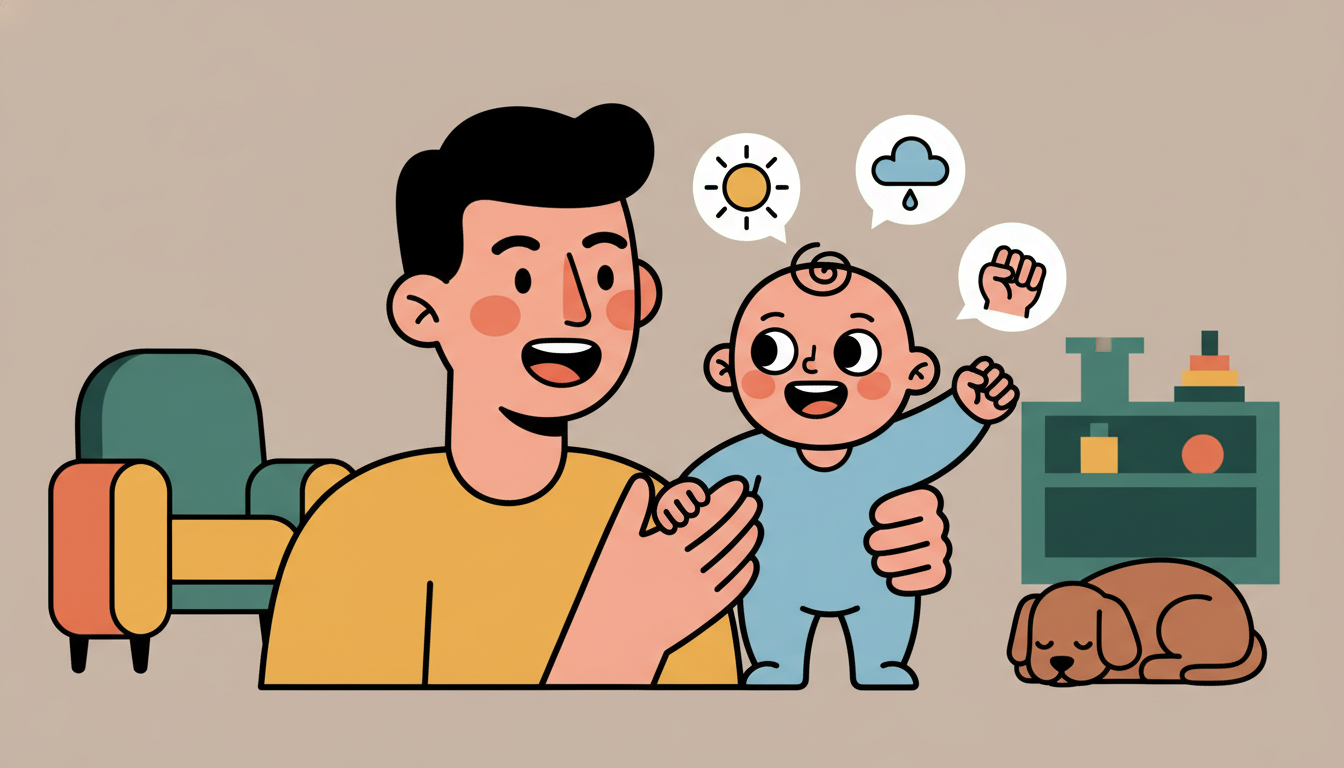
When your child shows emotion, put words to what you see. If they're laughing during play, you might say, "You're happy." If they seem frustrated reaching for something, you might say, "That's hard to reach. You feel frustrated." This practice shows respect for their emotional experience and builds trust that you understand them.
Parte da jornada de desenvolvimento da Steadily — personalizada para o seu filho.
Como fazer esta atividade
When your child shows emotion, put words to what you see. If they're laughing during play, you might say, "You're happy." If they seem frustrated reaching for something, you might say, "That's hard to reach. You feel frustrated." This practice shows respect for their emotional experience and builds trust that you understand them.
Por que funciona
Acknowledging your child's emotions demonstrates that you respect their internal experience. This consistent emotional responsiveness builds trust in the relationship. Children demonstrating reliability and respect toward parents' boundaries show 40% better emotional regulation and trust-building capabilities throughout development (Kochanska & Aksan, 2006).
Dicas para os pais
Keep your tone calm and matter-of-fact. You're not trying to fix their feelings, just showing you notice and respect them.
It's okay if you're not always right about which emotion they're feeling. The important part is that you're paying attention and trying to understand.
Materiais necessários
None
Métodos de aprendizagem
Responsive InteractionRepetition and Routine

Adoraste esta atividade? Deixa o planeamento por nossa conta.
Steadily personaliza cada atividade para o teu filho — os seus interesses, a sua fase e os traços que está a desenvolver — para que a hora de brincar seja mais divertida e cada momento conte.
Descobre como funciona a Steadily →