Name that feeling
1–2 anosFamily ConnectionNenhum material necessário
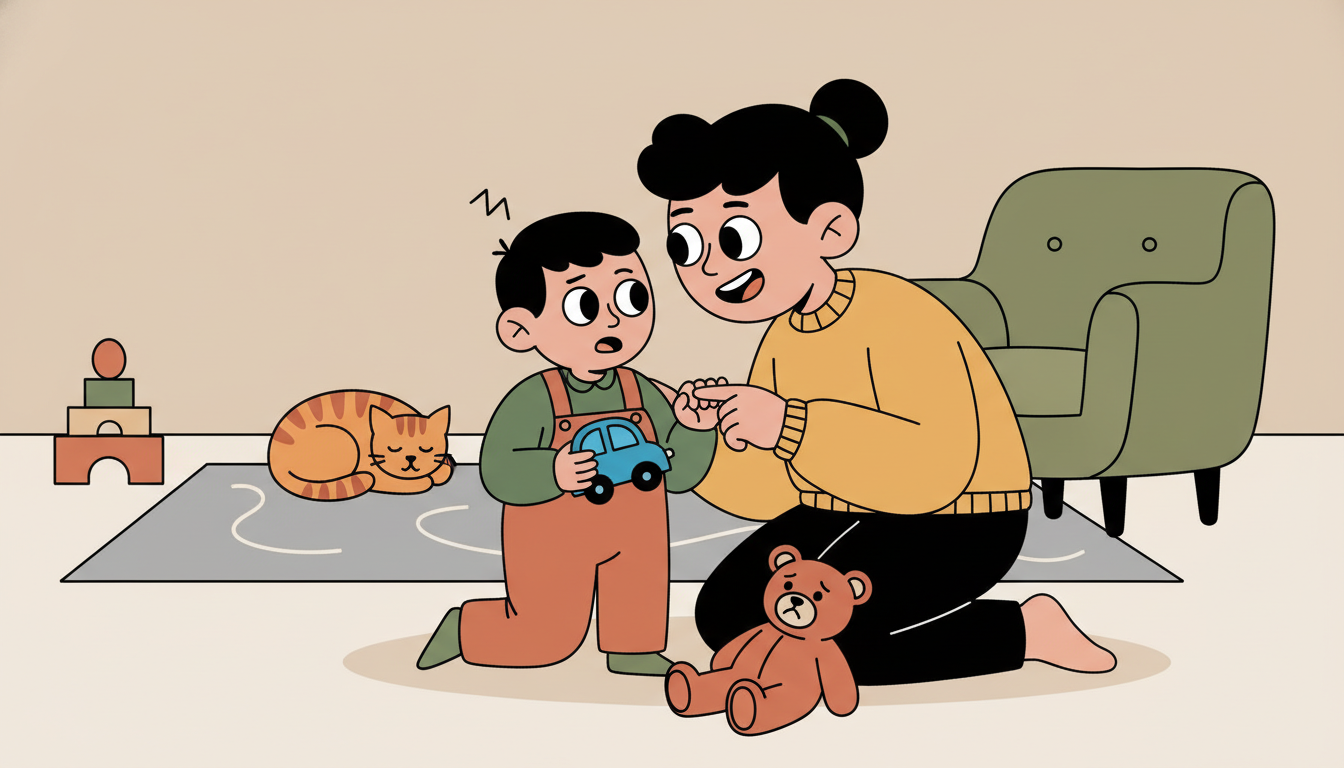
Throughout your time together, point out and name emotions you see in yourself, your child, and others around you. When your child looks frustrated with a toy, say 'You feel frustrated.' When you smile, say 'I feel happy.' When another child cries, say 'Baby is sad.' This simple labeling helps your child begin to recognize and understand emotions in themselves and others.
Parte da jornada de desenvolvimento da Steadily — personalizada para o seu filho.
Como fazer esta atividade
Throughout your time together, point out and name emotions you see in yourself, your child, and others around you. When your child looks frustrated with a toy, say 'You feel frustrated.' When you smile, say 'I feel happy.' When another child cries, say 'Baby is sad.' This simple labeling helps your child begin to recognize and understand emotions in themselves and others.
Por que funciona
Labeling emotions builds the foundation for empathy by helping children recognize feelings in themselves and others. Research shows that parental empathy toward children predicts the child's own empathy development, and when parents model emotional awareness, children learn to understand and respond to others' emotions (Liu et al., 2020). At this age, children are beginning to move from emotional contagion to early cognitive empathy, making consistent emotion labeling particularly effective.
Dicas para os pais
Keep your emotion words simple and clear. Use the same basic emotion words consistently (happy, sad, mad, scared).
Match your facial expression to the emotion you are naming. Your child learns by watching your face.
Acknowledge your child's attempts to show concern for others, even small ones. Say 'You noticed baby is sad' when they look at a crying child.
Materiais necessários
None
Métodos de aprendizagem
Language-Rich EnvironmentImitation and ModelingBeginning Symbolic Play

Adoraste esta atividade? Deixa o planeamento por nossa conta.
Steadily personaliza cada atividade para o teu filho — os seus interesses, a sua fase e os traços que está a desenvolver — para que a hora de brincar seja mais divertida e cada momento conte.
Descobre como funciona a Steadily →