Mirror and reflect feelings
4–5 jaarFamily ConnectionGeen materialen nodig
When your child expresses a feeling or concern, reflect it back to them in your own words. If they say they are upset about something, you might say it sounds like they are feeling frustrated. This shows you understand and validates their experience. Mirroring helps children feel heard and teaches them emotional vocabulary for future conversations.
Onderdeel van de Steadily ontwikkelingsreis — gepersonaliseerd voor jouw kind.
Hoe doe je deze activiteit
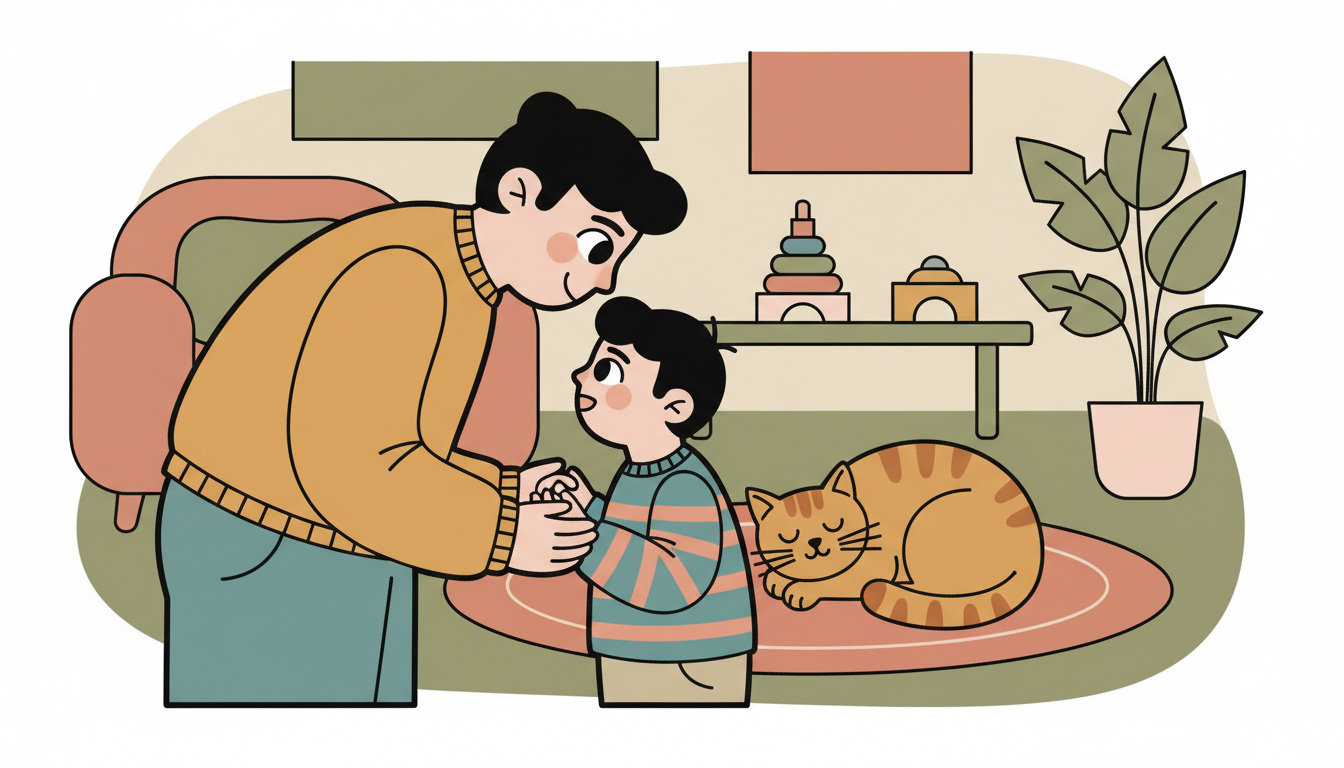
When your child expresses a feeling or concern, reflect it back to them in your own words. If they say they are upset about something, you might say it sounds like they are feeling frustrated. This shows you understand and validates their experience. Mirroring helps children feel heard and teaches them emotional vocabulary for future conversations.
Waarom het werkt
Research identifies mirroring and empathy as key factors that enhance parent-child relationship quality and children's psychological development (Zhang & Li, 2024). When parents validate feelings before problem-solving, children learn that their emotions matter. This builds trust and encourages continued open communication, which strongly correlates with enduring parent-child relationships (Hartos & Power, 2000).
Tips voor ouders
Listen carefully before responding to get the feeling right.
Use a calm, warm tone when reflecting back.
Avoid jumping to solutions before acknowledging the feeling.
Benodigde materialen
None
Leermethoden
Cooperative LearningStructured Academic LearningProject-Based and Thematic Learning

Vond je deze activiteit leuk? Laat ons de planning voor je doen.
Steadily personaliseert elke activiteit voor jouw kind — hun interesses, hun fase, de eigenschappen die ze ontwikkelen — zodat speeltijd leuker is en elk moment telt.
Ontdek hoe Steadily werkt →