Feelings in our story
2–3 jaarFamily ConnectionMaterialen: Picture books with clear facial expressions
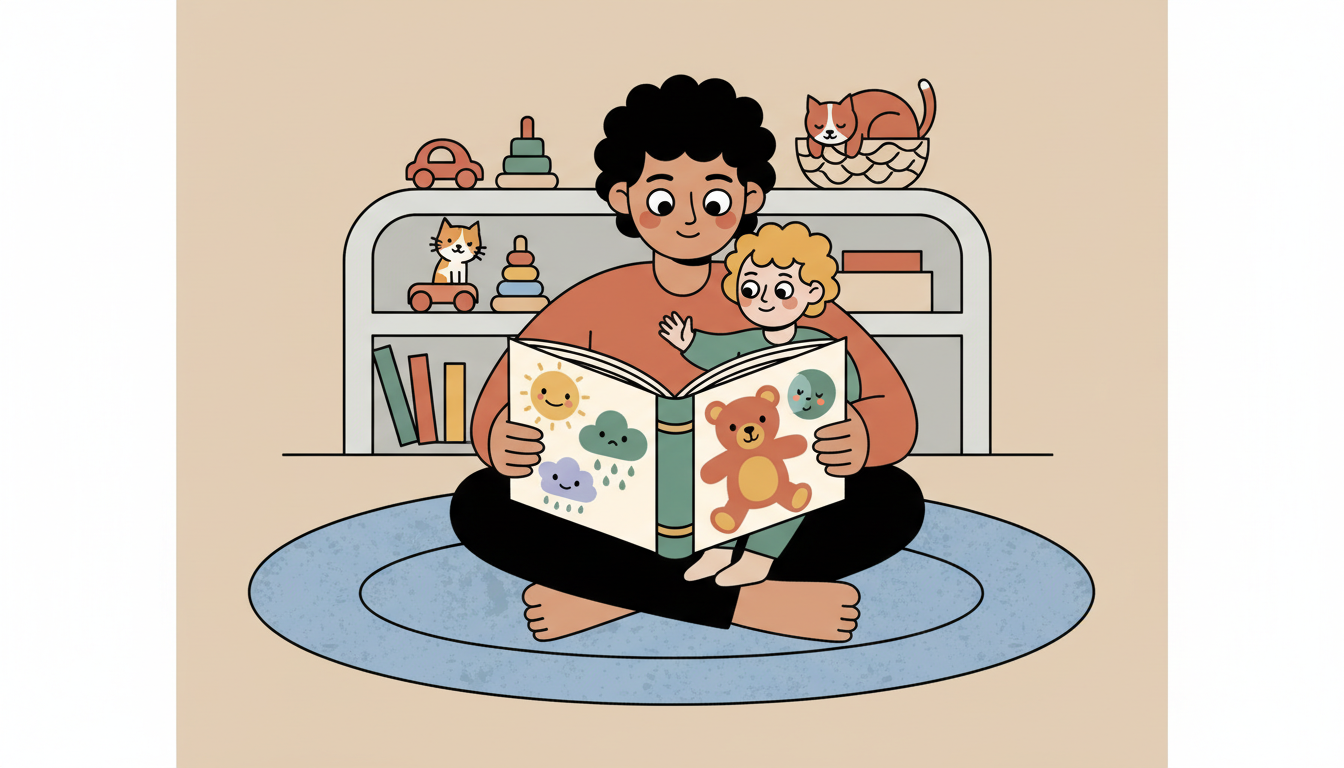
During story time, pause to point out characters' emotions. Ask simple questions like 'Is teddy happy or sad?' Help your child notice facial expressions in the pictures. Name the emotions you see together. This turns reading time into an empathy learning moment.
Onderdeel van de Steadily ontwikkelingsreis — gepersonaliseerd voor jouw kind.
Hoe doe je deze activiteit
During story time, pause to point out characters' emotions. Ask simple questions like 'Is teddy happy or sad?' Help your child notice facial expressions in the pictures. Name the emotions you see together. This turns reading time into an empathy learning moment.
Waarom het werkt
Reading books about feelings and discussing characters' emotions helps children begin distinguishing self from others and recognizing that others have feelings. This activity leverages the critical developmental window when basic empathetic awareness becomes possible for the first time (Hoffman, M. L., 2000). Songs, stories, and rhymes enhance learning during this age, making books an ideal tool for empathy development.
Tips voor ouders
Start with basic emotions like happy, sad, and mad. Use the same emotion words consistently.
Point to your own face to show the emotion, then point to the character. Your child learns by watching you model empathy.
Benodigde materialen
Picture books with clear facial expressions
Leermethoden
Symbolic and Pretend PlaySongs, Stories, and RhymesSocial Learning Through Peers

Vond je deze activiteit leuk? Laat ons de planning voor je doen.
Steadily personaliseert elke activiteit voor jouw kind — hun interesses, hun fase, de eigenschappen die ze ontwikkelen — zodat speeltijd leuker is en elk moment telt.
Ontdek hoe Steadily werkt →