The feelings faces practice
3–4 jaarFamily ConnectionMaterialen: Paper and crayons or markers
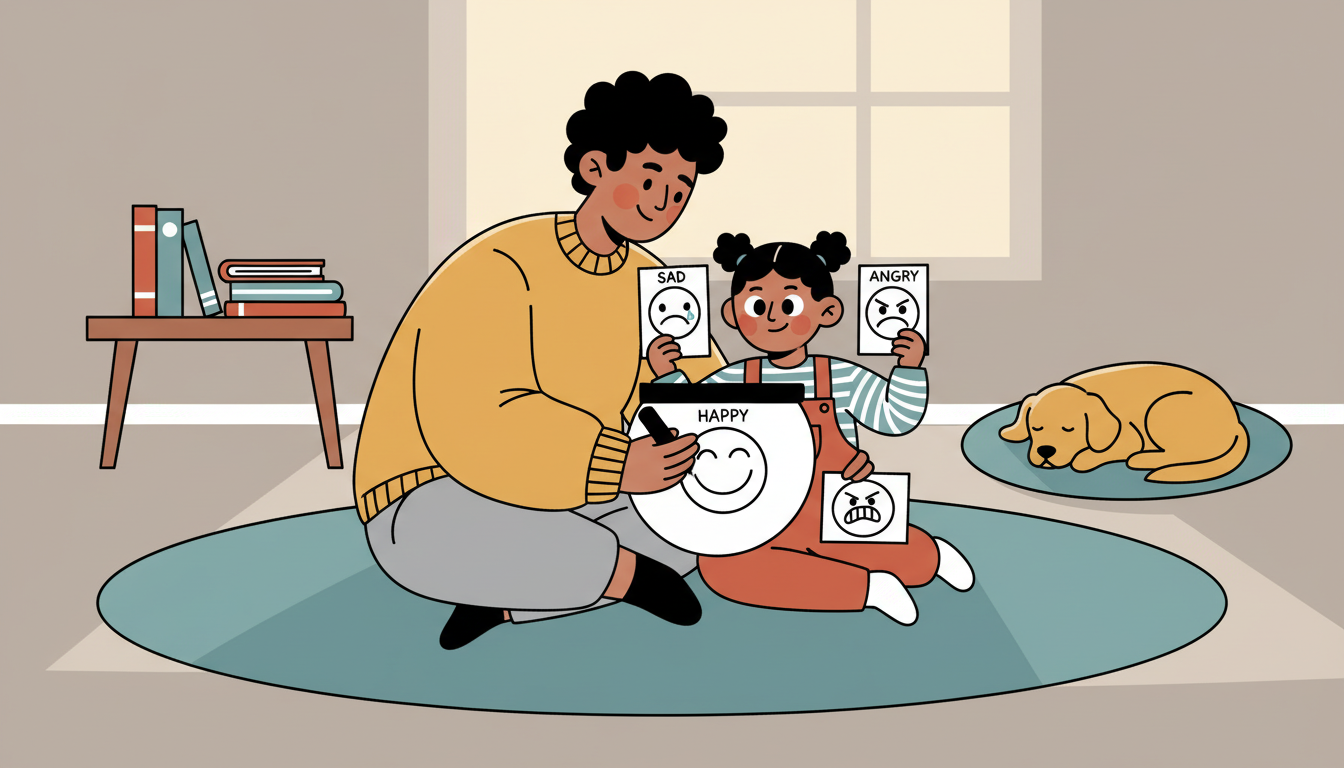
Make simple drawings of faces showing different emotions: happy, sad, angry, frustrated. When conflicts happen, ask your child to point to how they feel. Then you point to how you feel. This helps them understand that both people have feelings in a disagreement. Talk about how to make the sad or angry faces turn into happy faces together.
Onderdeel van de Steadily ontwikkelingsreis — gepersonaliseerd voor jouw kind.
Hoe doe je deze activiteit
Make simple drawings of faces showing different emotions: happy, sad, angry, frustrated. When conflicts happen, ask your child to point to how they feel. Then you point to how you feel. This helps them understand that both people have feelings in a disagreement. Talk about how to make the sad or angry faces turn into happy faces together.
Waarom het werkt
Understanding emotions is essential for effective conflict resolution. Children who learn to identify and express feelings show 30% better emotional regulation (Shantz, 1987). At this age, children are developing theory of mind and can begin to understand that others have different feelings. The visual faces make abstract emotions concrete and easier to discuss.
Tips voor ouders
Keep the face drawings simple. Even basic circles with different mouths work well.
Use the faces during small, everyday conflicts to build the habit.
Validate whatever feeling your child identifies. All feelings are okay, even if the behavior needs to change.
Benodigde materialen
Paper and crayons or markers
Leermethoden
Collaborative and Cooperative PlayNarrative and Literacy-Rich ExperiencesStructured Learning Activities

Vond je deze activiteit leuk? Laat ons de planning voor je doen.
Steadily personaliseert elke activiteit voor jouw kind — hun interesses, hun fase, de eigenschappen die ze ontwikkelen — zodat speeltijd leuker is en elk moment telt.
Ontdek hoe Steadily werkt →