Puzzle persistence practice
3–4 jaarSuccess MindsetMaterialen: Simple puzzle with six to 10 pieces
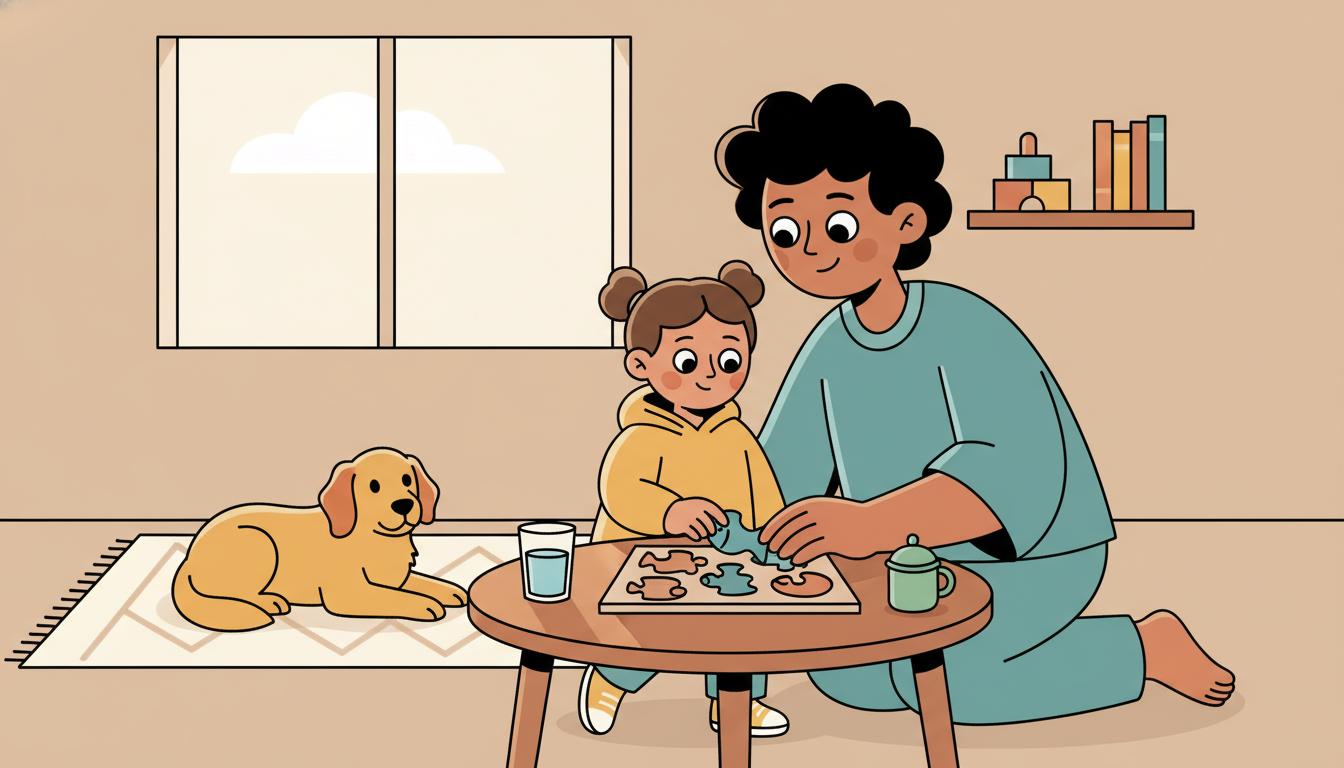
Start a simple puzzle together with six to 10 pieces. Before completing it, suggest taking a break to do something else, like have a drink of water. Tell your child you'll finish the puzzle after the break. This teaches that stopping an enjoyable activity and returning to it later is possible, building task persistence and delayed completion satisfaction.
Onderdeel van de Steadily ontwikkelingsreis — gepersonaliseerd voor jouw kind.
Hoe doe je deze activiteit
Start a simple puzzle together with six to 10 pieces. Before completing it, suggest taking a break to do something else, like have a drink of water. Tell your child you'll finish the puzzle after the break. This teaches that stopping an enjoyable activity and returning to it later is possible, building task persistence and delayed completion satisfaction.
Waarom het werkt
Task persistence in early childhood contributes to academic success and later educational attainment (Duckworth & Carlson, 2013). This activity teaches your child that they can pause a task and return to it, building both self-control and sustained attention. At 36-48 months, children are developing the ability to plan and follow through on activities, and this practice strengthens those emerging skills.
Tips voor ouders
Choose a puzzle at your child's skill level so the activity stays positive.
Keep the break short, just one to two minutes, so your child can successfully return to the task.
When you resume, acknowledge that waiting was hard but celebrate finishing together.
Benodigde materialen
Simple puzzle with six to 10 pieces
Leermethoden
Structured Learning ActivitiesCollaborative and Cooperative PlayInquiry-Based Learning

Vond je deze activiteit leuk? Laat ons de planning voor je doen.
Steadily personaliseert elke activiteit voor jouw kind — hun interesses, hun fase, de eigenschappen die ze ontwikkelen — zodat speeltijd leuker is en elk moment telt.
Ontdek hoe Steadily werkt →