Feeling faces pretend play
2–3 jaarFamily ConnectionMaterialen: Stuffed animals or dolls
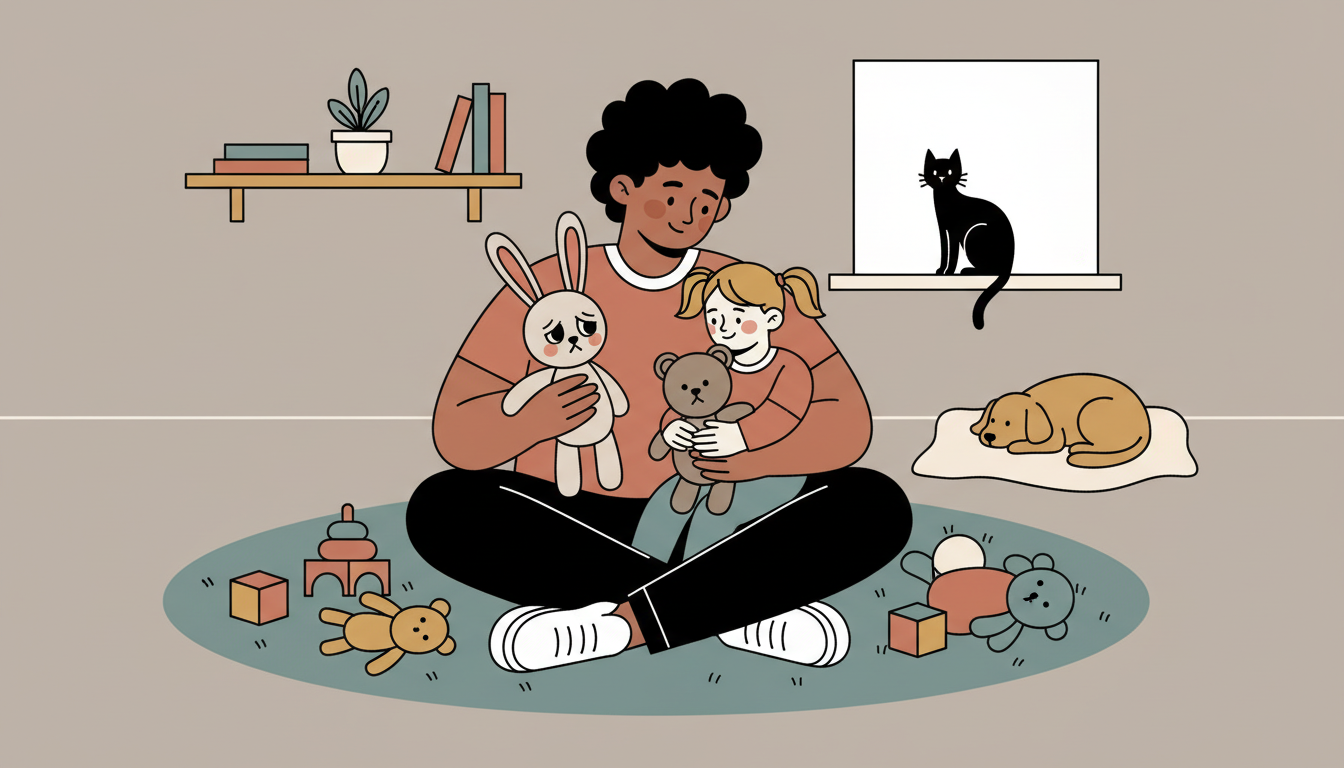
Use stuffed animals or dolls to act out different feelings during play. Make one toy sad and have it go to another toy for a hug. Say "Bunny feels sad. Bunny goes to mama for a cuddle." Then invite your child to help the sad toy feel better. This teaches that coming to someone you trust when you feel bad is a healthy way to cope.
Onderdeel van de Steadily ontwikkelingsreis — gepersonaliseerd voor jouw kind.
Hoe doe je deze activiteit
Use stuffed animals or dolls to act out different feelings during play. Make one toy sad and have it go to another toy for a hug. Say "Bunny feels sad. Bunny goes to mama for a cuddle." Then invite your child to help the sad toy feel better. This teaches that coming to someone you trust when you feel bad is a healthy way to cope.
Waarom het werkt
Pretend play helps children understand emotions and relationships in a safe context. Secure attachments help children learn to empathize, develop relationships, and cope with stress (Canadian Psychological Association, 2024). Through symbolic play, your child practices emotional expression and learns that seeking comfort from trusted adults is a positive coping strategy, which supports their developing attachment security.
Tips voor ouders
Name the emotions simply as you play. Use words like happy, sad, scared, or frustrated.
Show how the parent toy responds with warmth and comfort. This models the secure base your child needs.
Follow your child's lead. If they want to make all the toys happy, that's fine. The key is showing comfort works.
Benodigde materialen
Stuffed animals or dolls
Leermethoden
Symbolic and Pretend PlaySongs, Stories, and RhymesInteractive Play-Based Learning

Vond je deze activiteit leuk? Laat ons de planning voor je doen.
Steadily personaliseert elke activiteit voor jouw kind — hun interesses, hun fase, de eigenschappen die ze ontwikkelen — zodat speeltijd leuker is en elk moment telt.
Ontdek hoe Steadily werkt →